The Supply edit Comparison / Autumn 2026
DF64 Gen 2 vs Niche Zero
One invites you to experiment. The other gets on with breakfast. Two single-dose grinders, and the question of what makes a good morning.
A research-based buying guide. We have not hands-on tested these grinders. How we chose
Find your grinderThe contenders
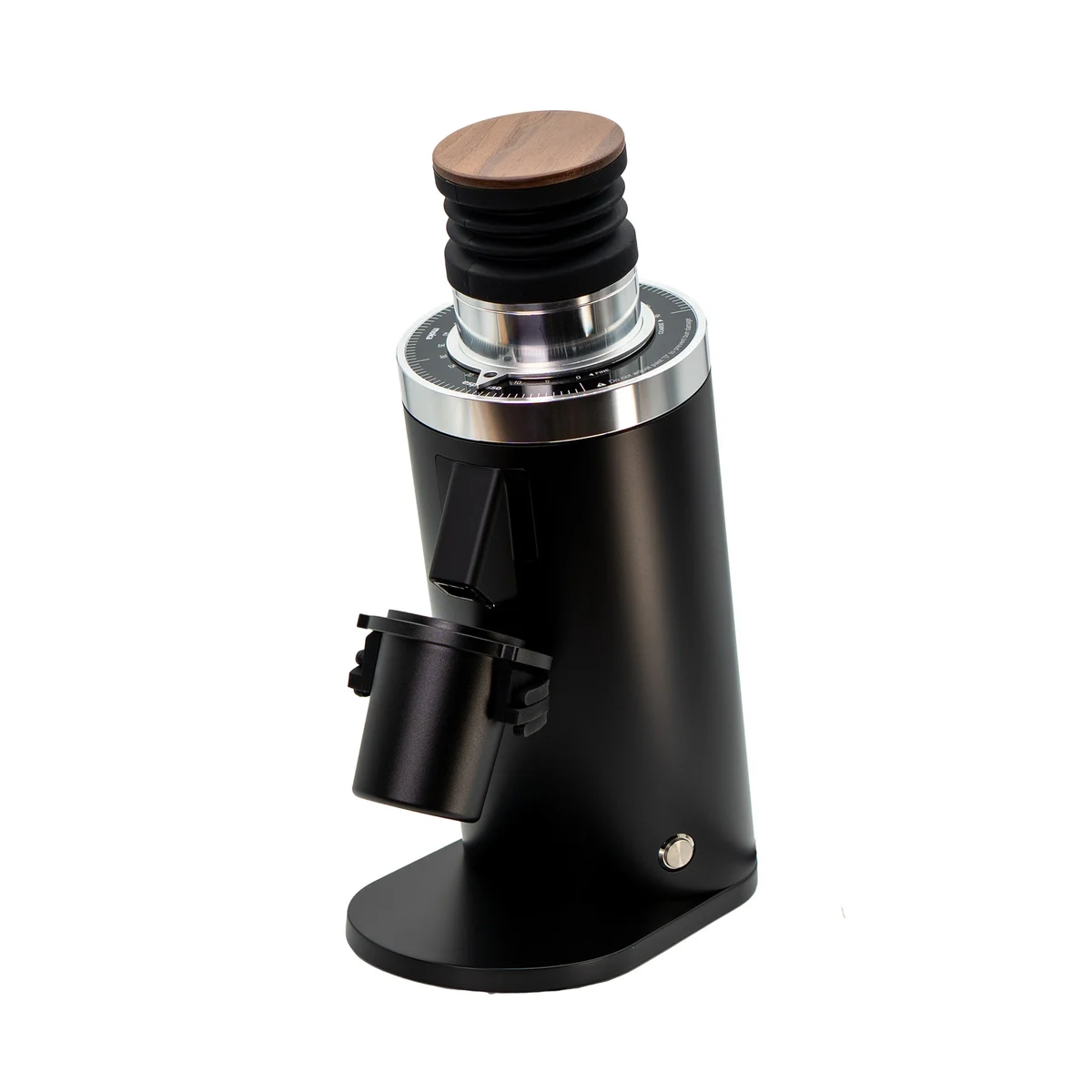
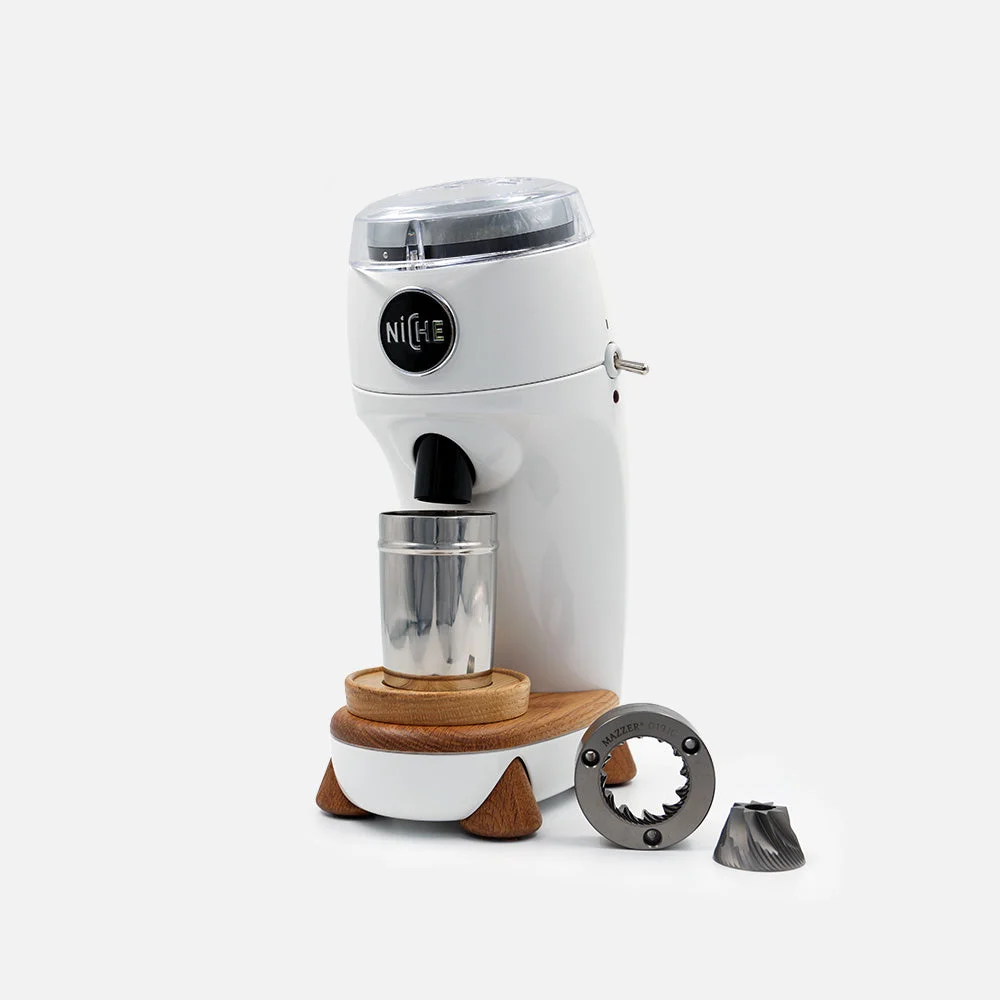
Two approaches to the daily grind.
Product photographs shown together; not to scale.
Some mornings, coffee is a small research project. Other mornings, someone is looking for their keys. A good grinder should suit the version of you who actually turns up.
The DF64 Gen 2 is our value pick between these two, especially for someone curious about different coffees, brewing methods, and eventually different burrs. The Niche Zero is our pick for an espresso-first routine when ease of use matters more than upgrade potential and its delivered price fits the budget. Buying the Niche is a reasonable decision. Buying it because you expect the price difference to guarantee better espresso is a less convincing one.
This is our Autumn 2026 comparison for US readers. We mean the fixed-speed DF64 Gen 2, also sold as the DF64 II, with standard burrs, and the original 63 mm Niche Zero. The DF64V and Niche Duo are different grinders with different arguments to make.
Researched September 21, 2026. This is an assessment of published evidence, not a Supply Coffee hands-on test. Links are non-affiliate. Prices and configurations belong to this edition; see the buying notes before ordering.
The decision
DF64 Gen 2 or Niche Zero: which should you buy?
You want more room to explore for the money, make both espresso and filter coffee, and can live with a louder grinder and a bellows in the routine. Start with the stock burrs. Curiosity needn’t arrive with a second invoice.
You mostly make espresso, particularly the rounded, substantial sort, and want a straightforward morning companion. Its appeal is the whole experience. The compromise is paying more without the DF64’s range of aftermarket burr choices.
Our deciding question: would you rather spend a free Saturday comparing burr sets, or never think about burr sets again? Neither answer is a character flaw. It does make the shopping considerably easier.
At a glance
The differences worth caring about
| What matters | DF64 Gen 2 / DF64 II | Niche Zero |
|---|---|---|
| Listed price | $399 USDMiiCoffee; before tax | £449 GBP displayedUS selection; shipping and import costs extra |
| Burrs | 64 mm stainless steel flat | 63 mm conical |
| Adjustment | Stepless; fixed motor speed | Stepless |
| Single-dose routine | Weigh beans, grind, use bellows | Weigh beans, close lid, grind |
| Experimentation | Compatible aftermarket 64 mm burr options | Buy for the supplied burr system |
| Counter planning | Seller lists 5″ W × 9″ D × 14″ H | 122 × 211 × 311 mm (W × D × H); 435 mm with lid upright |
| Our strongest reason to buy | Value and flexibility | A simpler espresso routine |
Specifications: MiiCoffee DF64 II and Niche Zero. Dimensions follow each seller’s convention and are not our measurements. Allow room to load beans and remove the cup. Neither stock status nor a delivered US total is guaranteed by these listings.
The cup
Espresso: body, clarity, and a little perspective
In Luke Makes Coffee’s May 2025 side-by-side comparison, the Niche produced the fuller, more syrupy espresso; the DF64’s shot seemed lighter and more fruit-forward. He used the same beans and a similar recipe. That is useful firsthand evidence of a difference, although it is one reviewer’s tasting, not a blind panel or a promise about every coffee.
Think of body as the weight and texture of the drink, and clarity as how readily you can pick apart its flavors. Neither is a synonym for quality. A chocolate-led espresso with enough presence for a small cappuccino can be every bit as satisfying as a bright shot you sip slowly from a favorite cup.
Our reading of that comparison makes the Niche particularly attractive for the first drinker and the DF64 worth considering for the second. But we would resist making the familiar shorthand—conical equals body, flat equals clarity—into a rule. Burr geometry, the particular coffee, and the recipe complicate the picture. A millimeter of nominal burr diameter certainly does not settle it.
Asser Christensen’s DF64 Gen 2 review is helpful here: he describes good body as well as flavor separation from the standard burrs, and a brighter profile than the original DF64. The Gen 2 needn’t become an expensive modification project to make enjoyable espresso.
If you mostly drink milk drinks, we would give daily convenience more weight than small reported flavor differences. If you enjoy exploring light-roast espresso, the DF64’s options become more relevant. Choose around your coffee, not the winning side of a burr debate.
The second brew
One grinder for espresso and pour-over?
Both cover those brewing methods. Between the two, we would choose the DF64 Gen 2 for a household equally interested in espresso and filter. Christensen found the Gen 2 an improvement for filter and explored several compatible burr sets with distinct results. That gives the curious brewer somewhere to go if their preferences change.
The evidence is not unanimous. Coffeeness’s comparison favors the Niche for pour-over. We give more weight to Christensen’s detailed account of the Gen 2 burrs, but that disagreement matters: the Niche is not disqualified from making a pleasant filter coffee, and the DF64 does not win every cup by specification.
If filter is your main event and espresso a hypothetical future hobby, pause before making either your default. A dedicated pour-over setup may fit your actual habits better. Buying for the coffee you make is usually more satisfying than buying for the coffee you might become interested in.
At home
The grinder you live with
Noise and the morning routine
Luke’s comparison found the DF64 faster but noticeably louder, and the Niche easier to clean. His results support our preference for the Niche when a calmer routine is the priority. We are not turning his sound readings into universal specifications: kitchens, microphone positions, beans, and grind settings differ. Neither grinder comes with a guarantee that your household will sleep through breakfast.
The DF64’s bellows add a small finishing gesture. For some people, that is an entirely fair exchange for the purchase price. For others, the simpler sequence is precisely what they want to pay for. There is no need to pretend that a pleasant object and a pleasant routine are frivolous considerations.
Low retention still calls for care
In Luke’s dose-in/dose-out demonstration, both returned nearly all the coffee; the DF64 used its bellows. That supports a low-waste workflow, not a claim that no old grounds can remain inside. “Zero” on the housing should not persuade you to retire the cleaning brush.
Owner accounts add useful friction to the polished reviews. In this r/espresso discussion, some DF64 Gen 2 users report a year or more of happy daily use; others describe inconsistent shots, alignment concerns, or an unsatisfactory return experience. These are self-selected anecdotes with different sellers and configurations, not a failure-rate study. They make a good case for choosing a seller carefully, rather than declaring every DF64 either flawless or doomed.
Keep the routine practical: follow the current manual, unplug before internal cleaning, and contact the seller if performance changes unexpectedly. You should not have to earn a repair qualification before breakfast.
The buying notes
Price, revisions, and who picks up the phone
For this edition, MiiCoffee lists the stock DF64 II at $399 USD, before tax; confirm shipping for your address. Niche’s product page displays £449 for the US selection, and its shipping policy lists £70 to the USA. That is £519 before any applicable local taxes, duties, and currency-conversion costs, not a delivered dollar quote.
Niche says orders outside the UK are not charged UK VAT, but local charges may be collected by its courier. We have deliberately kept the quoted currency: applying an undated exchange rate would make the comparison look more precise than it is. Confirm the final price, US electrical version, availability, and delivery estimate before ordering. Both sites returned conflicting availability messages during research.
“Gen 2” is not the whole specification
MiiCoffee’s current listing identifies V2.6, with a revised anti-popcorn disc. Its history also describes changes to the chute and power button. Espresso Outlet labels its Turin version Gen 2.7 and advertises prices from $359, with some configurations on preorder. Our $399 reference is a specific MiiCoffee listing, not a claim to the lowest market price. Compare the exact burrs, revision, and delivery terms.
Early Gen 2 reviews remain useful, but they do not establish how every later batch performs. Do not quietly substitute a DF64V review for this fixed-speed model, either. Similar names can conceal quite different purchases.
Support is part of the purchase
MiiCoffee’s warranty provides a one-year route through that seller, with the customer paying inbound shipping and MiiCoffee paying to send the repaired unit back. A DF64 bought elsewhere does not automatically inherit it. Niche’s linked manual and guarantee describe one-year parts coverage, replacement parts with fitting advice, and covered-parts shipping. That manual is an older document; confirm current US terms directly. Before paying either seller, establish who handles a fault and who pays to move the grinder.
Our advice on upgrades is equally unromantic: buy the stock DF64, learn what you like, and change the burrs only when you can name the result you want. An optional upgrade is useful. An upgrade purchased to cure the anxiety of not having upgraded is less so.
A few good questions
Before you decide
Is the DF64 Gen 2 better than the Niche Zero?
It is our stronger value choice for an experiment-minded buyer. We prefer the Niche for an espresso-focused buyer who values a simpler routine enough to pay its delivered cost. We do not have evidence of a universal taste or reliability winner.
Does the DF64 need SSP burrs or alignment work?
We would not budget for either as an automatic first step. Published Gen 2 reviews support starting with the standard burrs. If the grinder behaves inconsistently, involve your seller before modifying it. Upgrade compatibility is an option, not a requirement to enjoy the purchase.
Can the Niche Zero make light-roast espresso?
We would not exclude it just because the beans are lightly roasted. Our preference for the DF64 in that situation is about the range of flavors and future burr options you may want to explore; it is not a claim that the Niche cannot brew the coffee.
Should I replace a Niche I already like?
We would keep it until there is a specific problem to solve. Wanting a different flavor profile is a useful reason to compare grinders. Discovering that another machine offers excellent value is not, by itself, a reason to replace a satisfying one.
Research & sources
How we reached this view
Supply Coffee has not tested these grinders. We researched manufacturer and seller information, firsthand reviews, and owner discussions, checking the original sources. Specifications establish what is being sold; reviewers inform the discussion of use and flavor; our recommendations weigh those findings against different readers’ needs.
- MiiCoffee DF64 II specifications and revision history, alongside its USD price listing and warranty. Commercial seller evidence, checked September 21, 2026.
- Niche Zero specifications and displayed price, plus the shipping policy and manual. Manufacturer evidence; shipping policy dated April 22, 2026.
- Luke Makes Coffee: Niche Zero vs DF64 Gen 2, May 15, 2025. Direct firsthand comparison; its older European prices are not our US price evidence.
- The Coffee Chronicler: DF64 Gen 2 review. Detailed burr and brewing observations; affiliate links disclosed. Covers earlier hardware, not a test of today’s V2.6 listing.
- Coffeeness: DF64 review, updated July 3, 2026. A dissenting filter preference; its older specifications do not override the current seller listing.
- r/espresso: Your experience with DF64 Gen 2? Mixed ownership reports. Unverified anecdotes, used to identify questions about support and maintenance.
We have no controlled taste panel, long-term comparative reliability data, or measurements of the current production units. The strongest unresolved question is how much the reported workflow and flavor differences matter with your own coffee. A future hands-on comparison should test several roast styles, document the exact burrs and revisions, and separate dose consistency from retained-coffee exchange.