The Supply edit 01 / Autumn 2026
Best Espresso Grinders Under $500
A better morning, a smaller bill. Four considered picks for people who care about espresso—and still have other things to do.
A research-based buying guide. We have not hands-on tested these grinders. How we chose →
Meet the shortlist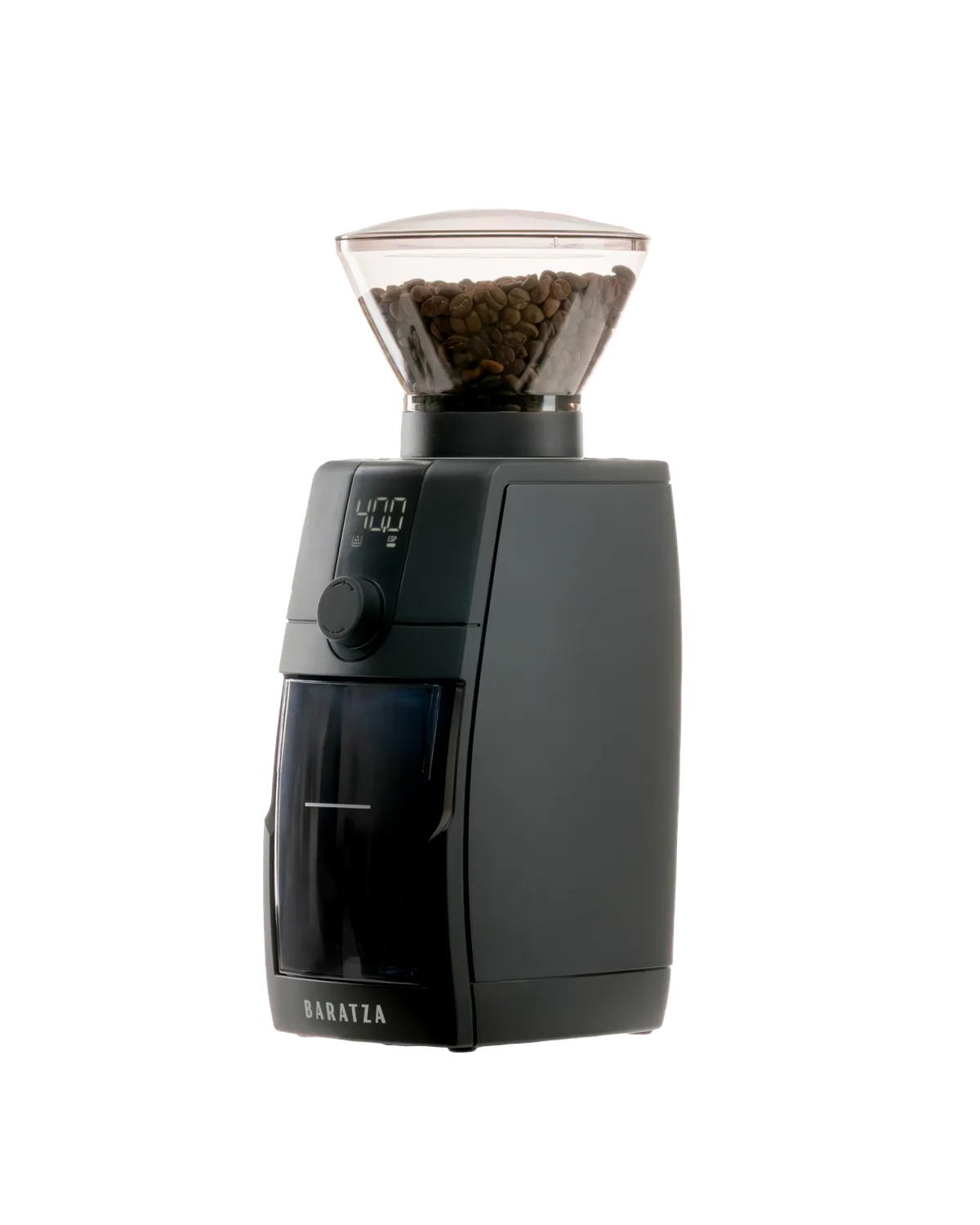
Baratza Encore ESP ProProduct image
Courtesy of Baratza
The espresso machine gets the admiring glances. The grinder gets the early shift. Before the cup is warm, before the first email, it has already done the job that makes the rest of the ritual possible.
Fortunately, it needn’t be a $1,000 job. Our pick for most home espresso routines is the Baratza Encore ESP Pro at $299.95: its combination of fine adjustment, flexible dosing, and a clear US support route makes a persuasive everyday package. If you already weigh every dose, the $229 DF54 is the more economical place to start. Spending closer to $500 only makes sense if you can name what you want the extra money to do.
This is our Autumn 2026 edit for US buyers, researched on September 17. It is a judgment about the market at this moment, with enough room for a new grinder—or a disappointing old one—to change our minds.
01 / At a glance
The best espresso grinders under $500, by routine
Listed US-dollar prices checked September 17, 2026, before tax and any shipping or import charges. New grinders with standard burrs; no coupons or open-box deals required. Prices are a dated reference, not a live offer. Confirm the exact voltage, configuration, stock, and delivered total with the seller.
| Grinder / Best for | Listed price | Burrs & routine | The trade-off |
|---|---|---|---|
| Baratza Encore ESP ProBest for most home routines | $299.95 | 40 mm conicalHopper or single dose | Cleaning takes care; timer measures seconds, not grams |
| MiiCoffee DF54Best single-dose value | $229 | 54 mm flatSingle dose, manual stop | Chute care and hardware revision matter |
| MiiCoffee DF64 II (Gen 2)Best for the curious enthusiast | $399 | 64 mm flat, stock steelSingle dose, manual stop | More money and counter space; upgrades cost extra |
| 1Zpresso J-UltraBest manual option | $199 | 48 mm conicalHand grinding | You supply the effort, for every shot |
02 / Best for most home routines
Baratza Encore ESP Pro
The one we’d start with. $299.95
Some mornings you want to weigh a different coffee for every cup. Others, you want the familiar bag, the familiar mug, and very little discussion. The ESP Pro makes room for both. It is our first recommendation for someone who likes espresso but doesn’t necessarily want grinder ownership to become a second hobby.
Baratza’s specification gives it stepless adjustment, auto-stop single dosing, anti-static technology, and a timer adjustable in tenths of a second. Stepless means you can settle between the fixed clicks of a simpler grinder. That matters when one setting lets the shot run too quickly and the next slows it too much.
The case for it goes beyond a feature list. In Coffee Kev’s ESP Pro review, he found dialing in approachable and successfully used lighter roasts, while flagging awkward burr reassembly and a display that shows time rather than the changing grind setting during operation. Those are his observations, not our test results. They make a more useful picture than an unqualified promise of effortless espresso.
We also give weight to Baratza’s US and Canadian warranty: one year for covered defects, including ground transportation to and from its repair facility. That is a concrete support provision, not proof that a grinder will never fail.
A timer is not a scale. Check the dose when you change beans or grind setting. And if you enjoy choosing aftermarket burrs, the DF64 II offers a more explicit route into that pursuit. The ESP Pro earns its recommendation through everyday utility, not a claim to the finest possible cup.
03 / Best single-dose value
MiiCoffee DF54
A small machine with a sensible bill. $229
Single dosing is a modest ceremony: weigh the beans, pour them in, grind, then move the grounds into the basket. It suits the household with a morning blend, an afternoon decaf, and a third bag bought because the label mentioned apricot. If that sounds familiar, the DF54 is where we would put the money.
For the $229 US listing, you get 54 mm flat burrs, stepless adjustment, an aluminum body, and an ionizer intended to reduce static. The practical attraction is fine control at a low price. Flat burrs alone do not establish that a grinder tastes better than a conical rival.
The Coffee Chronicler’s comparison preferred the DF54 to the original Encore ESP for his espresso use, including demanding lighter roasts. The comparison predates the ESP Pro and used a supplied DF54 review unit; it is evidence for the DF54’s capability, not a head-to-head victory over our everyday pick.
There is a small-print detail worth making large: check the revision. MiiCoffee’s page now identifies v1.5, following earlier changes to the chute and declumper. CoffeeGeek’s 2026 guide also discusses earlier clogging reports and the revised chute. We would ask a seller which version will actually arrive, rather than assuming every DF54 badge means the same current package.
This is a hands-on routine with a bellows and a chute to keep clean. MiiCoffee lists a one-year warranty; support belongs to the seller you choose. We do not have evidence that revisions eliminate every clog or that the manufacturer’s near-zero retention claim holds with every coffee.
04 / Best for the curious enthusiast
MiiCoffee DF64 II (Gen 2)
Room to experiment. No obligation to. $399
The DF64 II makes sense for the person who reads about burr geometry for pleasure. That is a perfectly respectable way to spend a Sunday. It is also a reason to buy a particular grinder, rather than a reason everyone else should spend another $170.
The MiiCoffee listing specifies stock 64 mm stainless-steel flat burrs, stepless adjustment, a 250-watt motor, an ionizer, and support for SSP burr upgrades. It lists a one-year warranty. Our $399 reference price is for the standard grinder, not an upgraded burr package.
Our reason to step up from the DF54 is the option to explore a different burr set later. That is a purchase of flexibility. It is not a measured promise of sweeter shots, nor permission to assume any 64 mm burr fits. Check the exact compatible set, installation requirements, and seller’s warranty terms first.
It occupies more space than the DF54, and optional burrs can carry the total beyond this guide’s ceiling. If your ambition is two enjoyable cappuccinos before leaving the house, our cheaper picks leave more money for coffee. Buy the bigger platform when you want the platform.
05 / Best manual option
1Zpresso J-Ultra
Good espresso. Some assembly of effort required. $199
The J-Ultra is the outlier on the counter: no cord, no motor, no button to press while you look for your cup. For a solo espresso drinker who enjoys the preparation, that can be part of its appeal. For someone making a round of flat whites, it can become a rather extended appeal.
1Zpresso specifies 48 mm burrs and an external adjustment ring with 8-micron burr movement per click. That figure describes the adjustment mechanism, not a guarantee that every ground particle measures the same size. A magnetic catch cup and folding handle round out a thoughtful manual package; the manufacturer lists it at $199 with a one-year limited warranty.
Your hands provide the power. Fine espresso grinding demands effort, especially when you repeat it for several drinks. Anyone with grip or wrist limitations should favor an electric option. We like this as a deliberate manual choice, not as homework assigned to people with a smaller budget.
06 / The rest of the field
Worth a look, with a qualification
Fellow Opus 2: the newcomer to watch
This is not the original Opus. Fellow lists the Opus 2 from $199.95, with 48 mm conical burrs and a stepless side dial. Its page also carries unavailable and delayed-shipping messages. The specification is promising; the combination of uncertain availability and limited longer-term evidence keeps it outside our four principal recommendations this edition. Complaints about the original Opus’s adjustment system should not be pasted onto its successor.
Eureka Mignon Notte: for a dedicated espresso corner
Seattle Coffee Gear lists the Notte at $299, with 50 mm flat burrs, stepless adjustment, and press-and-hold dosing. It is an appealing espresso-only routine, particularly if you stay with one bag. Owner discussion raises the nuisance of returning between espresso and filter settings on the small dial. The listing showed conflicting availability signals, including “Out of Stock,” so we would confirm stock before choosing it over the shortlist.
Baratza Encore ESP and Breville Smart Grinder Pro: the lower-cost route
The standard Encore ESP is listed at $199.95 and offers 20 espresso settings within its 40-position range. It remains a reasonable way into espresso when the extra $100 for the Pro matters. The $199.95 Smart Grinder Pro offers programmable dosing and 60 settings. Our preference for the Pro above is its stepless adjustment and flexible routine; it doesn’t make these cheaper machines obsolete.
The $500 ceiling is a ceiling, not a target
MiiCoffee also lists the DF64V Gen 3 at $499. It qualifies on sticker price, but leaves almost no headroom if $500 is your total budget. We have not established enough comparative evidence to displace the simpler DF64 II here. The Option-O Lagom Casa is listed at $526 before shipping, so it falls outside this guide altogether, whatever an older price roundup says.
07 / Before you buy
Choose the morning you want
Start with the basket. These recommendations are aimed at people dialing in espresso with a conventional, non-pressurized basket. A pressurized basket is more forgiving; it is not a good reason, by itself, to spend the entire $500.
Pick a routine before a burr shape. A hopper keeps a supply of beans ready for repeated drinks. Single dosing means weighing each portion before grinding, useful when you switch coffees. Neither makes you a more serious coffee person. One may simply suit the people sharing your kitchen better.
Look for adjustment you can live with. Espresso needs both a fine grind and control over small changes. Stepless adjustment helps, but a well-designed stepped espresso grinder can work too. A large number of settings across a whole brewing range does not tell you how many are useful for your basket.
Budget for the supporting cast. Keep room for a scale and beans to learn with. Record the dose and beverage yield, then change one variable at a time. Our coffee ratio calculator can help with the arithmetic; the espresso setup guide covers the rest of the counter. A burr upgrade can wait until you know what you want to change.
08 / The reporting
How we chose—and what we can’t claim
We researched manufacturer pages, US retailer listings, independent reviews, and owner discussions. Selection favored espresso adjustment, a clearly described daily routine, price below $500, and an identifiable support route. We separated standard configurations from upgrades, and current models from their predecessors.
Supply Coffee has not tested these grinders side by side. We have no original grind-distribution measurements, blind tasting results, noise readings, or long-term failure data. “Best” here means our editorial recommendation for the stated use, based on the available evidence. It does not mean a laboratory winner.
Opinions helped us decide what to investigate. Coffee Kev informed the ESP Pro’s convenience case and cleaning caveats. The Coffee Chronicler supplied a useful DF54 comparison with the original ESP. CoffeeGeek provided a wider 2026 field and context on DF54 revisions. These publications may use affiliate links or supplied samples; their experiences are attributed, not adopted as ours.
An r/espresso owner discussion helped sharpen the questions about changing beans, hopper use, and the Eureka adjustment dial. Forum accounts are self-selected, often concern older revisions, and cannot establish failure rates or a universal taste preference.
Product specifications and price sources are linked beside the relevant claims and in the comparison table. All shopping links in this article are direct, non-affiliate links.
09 / A few good questions
Before the first shot
What is the best espresso grinder under $500 for a beginner?
Our Autumn 2026 recommendation is the Baratza Encore ESP Pro for its stepless adjustment, choice of dosing routines, and documented US support. If you already want to weigh every dose and keep the bill lower, start with the DF54.
Is the DF64 II worth the extra money over the DF54?
At the listed prices, it costs $170 more. We would pay that for the 64 mm burr upgrade path. We would not pay it simply because 64 is a larger number than 54, or assume the stock grinder will produce a cup everyone prefers.
Can one grinder handle espresso and pour-over?
Yes; the ESP Pro and both DF models are sold for that range. The practical issue is returning to your espresso setting and dealing with any grounds left from the previous grind. Write down your settings and expect to check the first shot after switching.
Do I need to spend the whole $500?
No. Our principal picks cost $199–$399 before extras. Buy the grinder that matches your routine, give yourself time to learn it, and put something interesting in the hopper. That is the part you actually get to drink.