The Supply edit Buying guide / Autumn 2026
Best Coffee Grinders Under $200
Start with the Baratza Encore for everyday filter coffee. Four alternatives cover tighter budgets, espresso and grinding by hand—with change left for the beans.
A research-based buying guide. We have not hands-on tested these grinders. How we chose
Find your grinder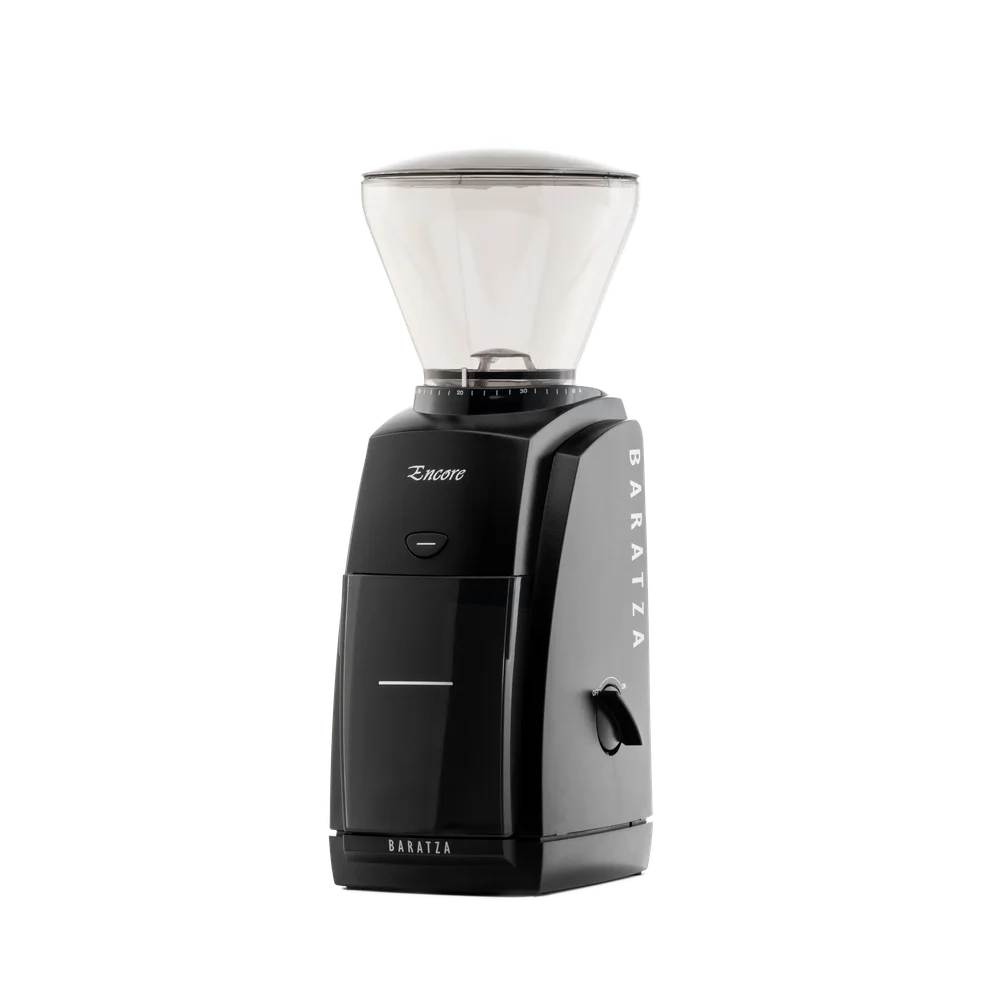
For most people making drip or pour-over coffee, we would start with the $149.95 Baratza Encore. Its appeal is wonderfully unglamorous: straightforward controls, useful filter grinding and a documented route to parts and repair. If the budget is tighter, the $79.99 OXO Compact leaves more money for coffee, at the cost of a fussier cleanup.
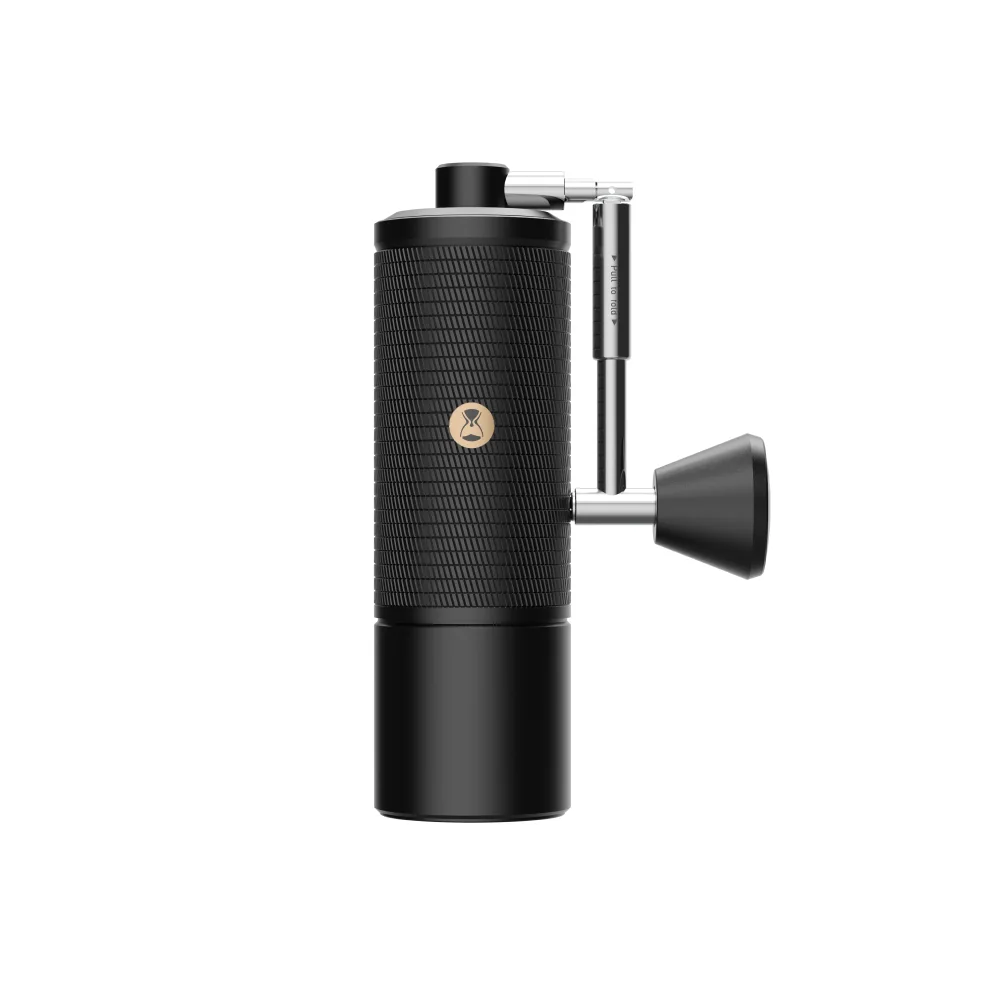
Espresso changes the answer. Choose the Encore ESP for a familiar hopper routine, or the Fellow Opus 2 if you weigh individual doses and switch between espresso and filter. Both list at $199.95. The $110 Timemore C5 Pro is our manual option for one-cup filter brewing, provided your morning has room for the cranking.
This Autumn 2026 US guide was researched on September 22. Recommendations are our editorial judgment from manufacturer documentation and attributed outside testing. The shopping links here are direct, non-affiliate links.
01 / Spend for your routine
Five grinders, five useful reasons to choose
“Under $200” means a new grinder’s listed US-dollar price, before sales tax, shipping or import charges. No coupon, subscription or refurbished unit is required. The Opus 2 price is for standard black or white, not the $249.95 wood-accent versions. Prices were checked September 22, 2026; confirm the exact model, US voltage where applicable, stock and checkout total before ordering.
| Grinder / Best fit | Listed price | Daily routine | Main compromise |
|---|---|---|---|
| Baratza EncoreEveryday drip and pour-over | $149.95 | Electric; hopper or weighed dose | Manual stop; limited espresso adjustment |
| OXO CompactSpend less on basic filter coffee | $79.99 | Electric; 50 g capacity | Static and a fussy grounds-container routine |
| Baratza Encore ESPA first espresso setup | $199.95 | Electric; finer espresso clicks | Still stepped; demanding light roasts can expose limits |
| Fellow Opus 2Weighed doses, multiple brew methods | $199.95 | Electric; stepless dial and automatic stop | Mostly plastic; early dial issues need context |
| Timemore Chestnut C5 ProOne-cup filter coffee by hand | $110 | Manual; 25 g catch cup | Refills for larger batches; effort for every dose |
If $200 is your entire checkout budget, start below the ceiling. The Encore leaves $50.05 before tax and extras; the OXO leaves $120.01. At an illustrative 8% sales-tax rate, a $199.95 grinder alone becomes $215.95. That is arithmetic, not a bargain hiding in the small print.
02 / Our starting point for filter coffee
Baratza Encore
For the daily pot, with room to learn. $149.95
The original Encore makes sense when your coffee comes from a dripper, an automatic brewer or a French press, and espresso is not waiting in next month’s shopping cart. Turn the hopper to choose a grind size, switch it on, then switch it off. There is no touchscreen to admire before breakfast.
Its manual documents 40 grind settings, a pulse button and a removable ring burr for cleaning. In Wirecutter’s comparative testing, the Encore remained its overall pick; CoffeeGeek’s 2026 assessment also retained it as a worthwhile brew grinder. Our recommendation gives additional weight to Baratza’s public repair guidance and parts route. That makes ownership more legible; it does not establish a failure rate or guarantee that every part is always stocked.
You stop the motor yourself, and a pulse button does not measure grams. Weigh the beans or finished grounds when repeatability matters. The adjustment is too limiting for us to recommend it for dialing in an ordinary, unpressurized espresso basket. If espresso is a real plan, put the extra $50 toward the ESP now.
Check the Encore at Baratza · Explore the Encore in our catalog
03 / Keep more of the budget
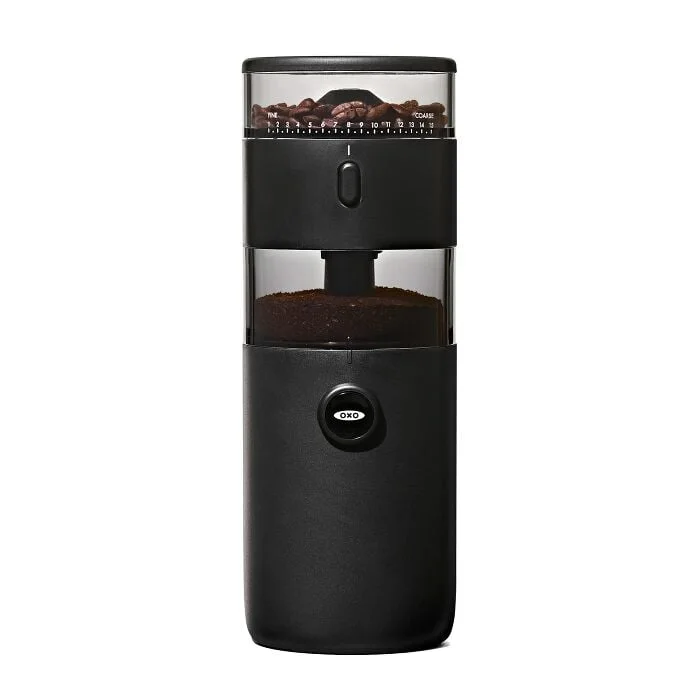
OXO Compact Conical Burr Coffee Grinder
A useful filter grinder with a cleanup compromise. $79.99
At $69.96 less than the Encore, this is a meaningful saving. The Compact’s 50 g bean capacity and 3.75-inch-square footprint suit a small counter and modest batches. This is the Compact model, not OXO’s larger grinder with a timer and hopper.
The encouraging part is the coffee. Bon Appétit’s Noah Kaufman found an even grind across brewing methods and liked the value. Wirecutter’s testers also found its grinding impressive for the price, but were much less happy with the static and grounds that escaped while separating the stacked components. We would take that disagreement seriously: a cheap grinder you resent emptying is an expensive cupboard ornament.
There is no dosing timer or automatic stop. Weigh a batch, grind it, switch off, then empty the container carefully. A large cold-brew batch takes refills. Although Bon Appétit obtained espresso from it, we would spend on the ESP or Opus 2 for regular espresso adjustment and easier grounds transfer.
04 / A first espresso setup
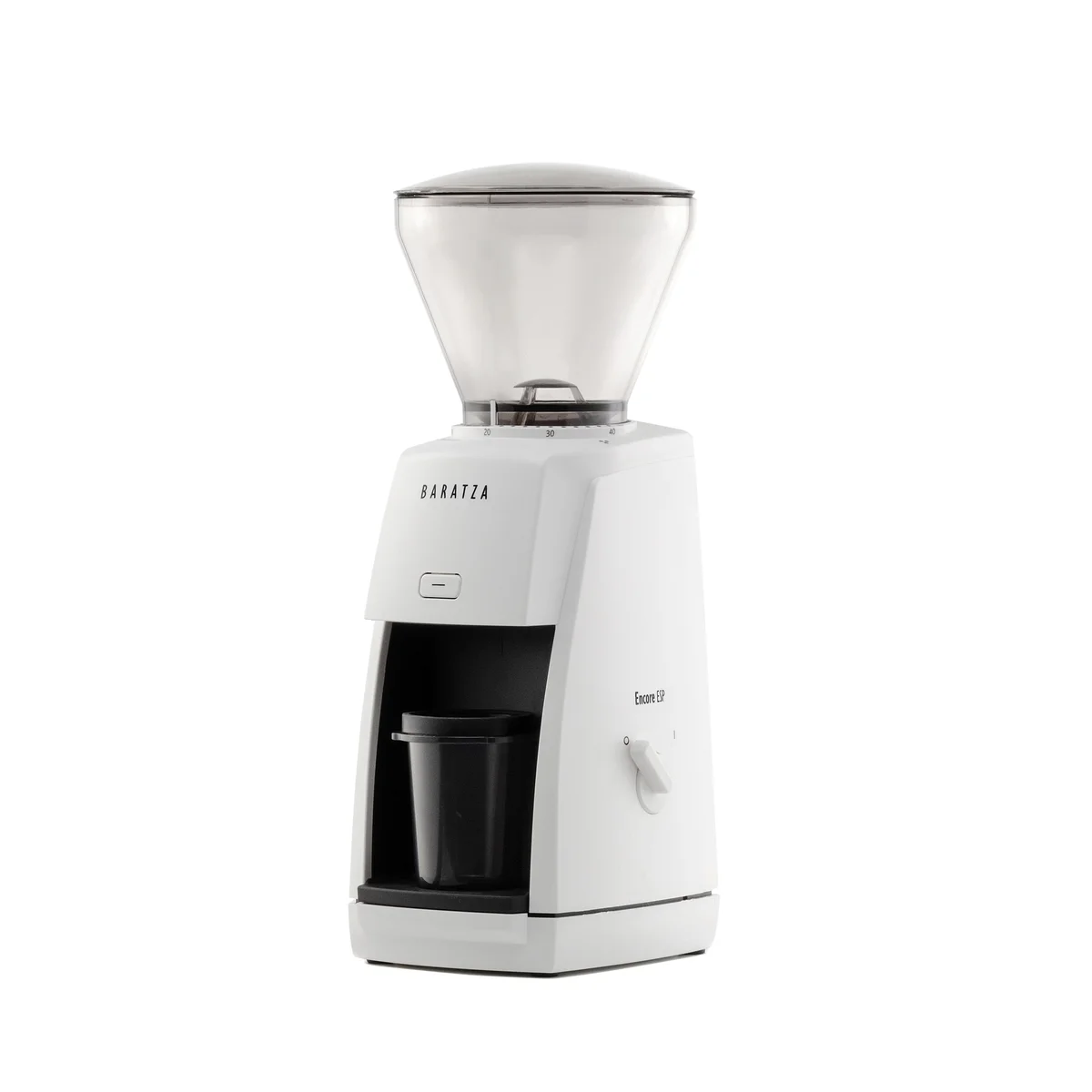
Baratza Encore ESP
For espresso without a complicated control scheme. $199.95
The ESP earns its extra $50 through adjustment. Its first 20 settings make smaller changes for espresso; settings 21–40 cover coarser brewing. The included dosing cup helps move grounds into a portafilter. You can use a hopper or weigh each dose, and the control remains an on/off knob or pulse button.
Choose it for a straightforward, particularly medium-to-dark-roast espresso routine and the same documented support route as the Encore. Don’t confuse it with the more expensive ESP Pro. The plain ESP does not acquire the Pro’s automatic-stop features because their names share three letters.
The Coffee Chronicler’s Asser Christensen found good results with darker espresso roasts, but needed a finer range for some lighter and medium coffees. Adding shims on his unit brought other compromises, including more retention and clumping. Fixed clicks can also leave a desired setting between steps. For frequent brew-method changes, consider the Opus 2; for ambitious light-roast espresso, read our wider espresso-grinder guide before treating this price ceiling as sacred.
Check the Encore ESP at Baratza · Compare the ESP and Opus 2 in detail
05 / A different bag, a different brew
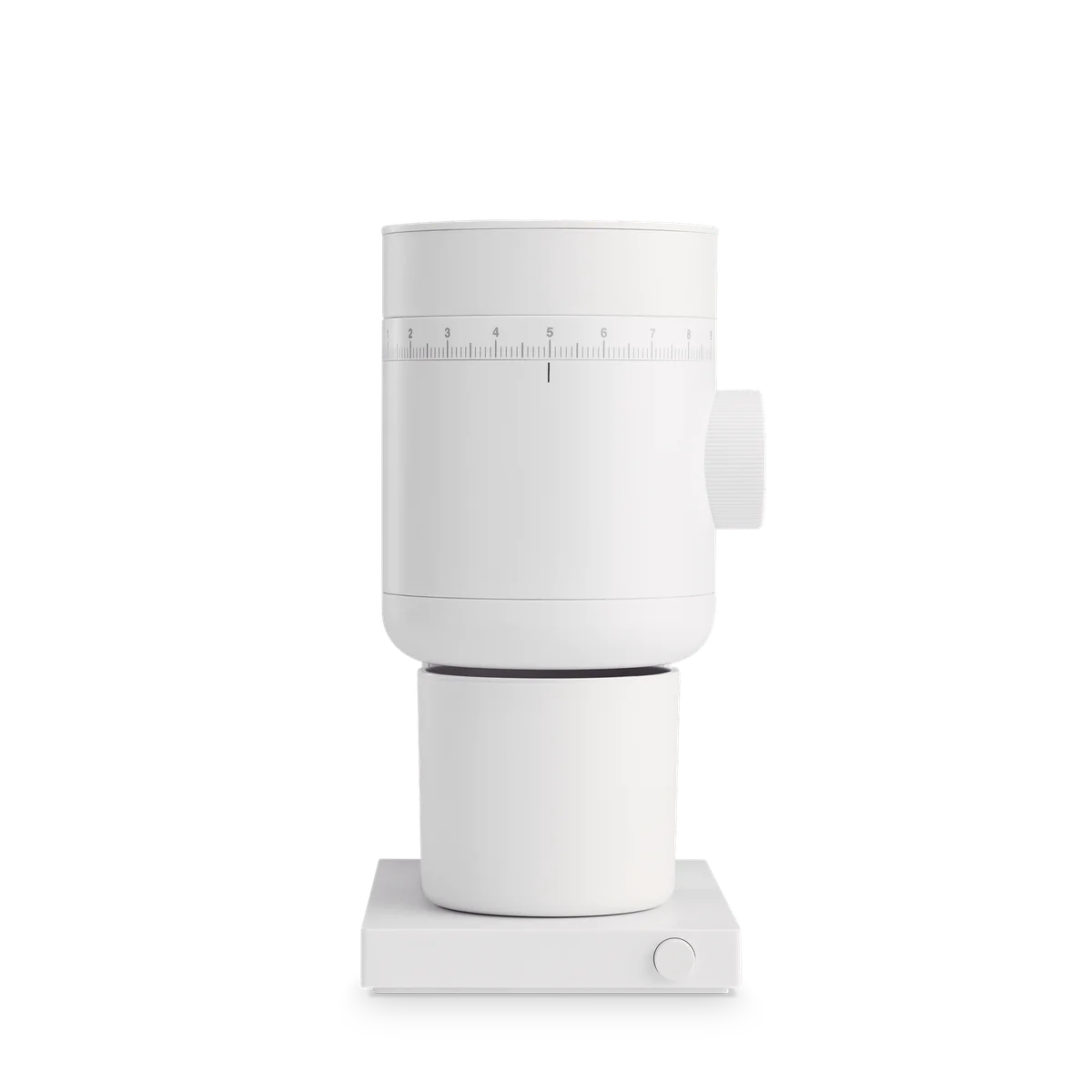
Fellow Opus 2
For people who weigh each dose and enjoy switching. $199.95
Morning espresso, lunchtime filter, evening decaf: this is the household where we would choose the Opus 2 over either Encore. Fellow specifies a stepless side dial, 48 mm conical burrs and a 100 g single-dose load bin. Stepless means the dial can settle between numbered positions. Automatic empty detection stops the grind once the dose has passed through.
There is now evidence specific to this generation. Lance Hedrick’s August 2026 review was positive about its cup quality while questioning the plastic mechanism and longer-term support. Kaufman’s Opus 2 testing also favored it, but his first unit’s adjustment dial moved during grinding. Fellow supplied a replacement that did not show the issue and told him the early problem had been corrected. That is one reviewer’s replacement experience, not proof of a universal fix.
The mostly plastic build and short ownership history temper our enthusiasm. Check that the dial holds its setting during your seller’s return window, and contact support if it does not. Buy the standard black or white version to stay within this guide’s price limit. The original Opus has a different adjustment system; its reviews do not establish the Opus 2’s performance.
Check the standard Opus 2 at Fellow. Color-specific preorder messages and stock labels can differ, so confirm dispatch for your selected finish.
06 / One cup, no motor
Timemore Chestnut C5 Pro
For filter coffee at a desk, campsite or small kitchen. $110
The C5 Pro is our hand-grinder choice for someone brewing one cup at a time. Timemore lists 42 mm conical burrs, a folding handle and a 25 g catch cup. The compact form can earn its place even when saving counter space matters more than saving money.
In Wirecutter’s C5 Pro testing, 20 g took about a minute at a medium setting. Their pour-over tasting produced a balanced cup, and testers found the grinder comfortable to hold. Those observations give a useful picture of the work involved; bean hardness, grind size and your hands will change the experience.
A 60 g batch exceeds the catch cup twice over. If grip strength, wrist pain or several coffees in quick succession make hand grinding unappealing, choose an electric model. The C5 Pro can grind fine, but espresso takes more effort and has less adjustment room than a dedicated espresso hand grinder. This recommendation is for the standard C5 Pro, not the separate C5 ESP Pro.
Check the C5 Pro at Timemore. Our hand-grinder guide compares the finer-adjustment ESP Pro with options for espresso, travel and specialist filter coffee.
07 / The cost after checkout
Keep some budget for the routine
A scale, if you do not already own one, may be more useful than a decorative upgrade. None of these picks weighs the grounds for you. Single dosing means weighing beans for each brew; a timer or automatic stop is a different job. Our pour-over setup guide helps separate essentials from nice-to-haves.
| Brand / Picks | Support | Before ordering |
|---|---|---|
| BaratzaEncore and Encore ESP | One-year US/Canada limited warranty, including ground transport for covered repairs; public parts and troubleshooting resources. | Direct purchases may qualify for return within 30 days of receipt. Obtain authorization and retain original packaging and accessories. |
| OXOCompact | Check the Compact’s own appliance warranty. OXO’s general Better Guarantee explicitly excludes Brew appliances. | We could not verify the exact Compact warranty or current return costs from an accessible primary document. Confirm both with the seller before buying; a brand-wide guarantee is not a substitute. |
| FellowOpus 2 | Two-year standard warranty; eligibility and any extension depend on the purchase. | Direct returns within 30 days of purchase, in original condition. A separately purchased electric product has a $15 US return-shipping charge for a refund. |
| TimemoreC5 Pro | One-year advertised warranty; terms limit coverage to the original purchaser and US/Canada use. | The direct-store policy allows seven days from purchase for new, unused returns. You pay non-defect return shipping; it is not a week-long home tasting trial. |
Retained grounds also cost coffee. If your routine requires discarding 1 g per brew to clear old grounds, twice daily would use about 60 g in a 30-day month. That is an illustrative calculation, not a measured loss for any pick. Check output when changing beans or settings, and follow the exact model’s cleaning instructions rather than assuming every burr can be washed.
08 / Outside the five
Good alternatives, and where our evidence stops
OXO’s larger Conical Burr Grinder deserves a look if you prefer a hopper and timed grinding. Wirecutter favors it over the Compact as its budget pick. We give the Compact a place specifically for the lower entry cost and small footprint; choose the larger model if emptying the Compact’s stacked container sounds tedious.
1Zpresso J-Ultra and Q: the $199 J-Ultra is an espresso-focused manual alternative with much finer adjustment; the $99 Q suits small travel doses. They are credible options, not failed contenders. Manufacturer-direct orders can add shipping or import charges, which particularly matter to a J-Ultra sitting $1 below the ceiling. Older Q2 burr tests should not be applied indiscriminately to every current Q variant.
KINGrinder K6, K7 and P2: these remain worth investigating for manual value. We did not establish a dependable current US seller price and purchase terms for an exact configuration through the official storefront links during this review, so they receive no ranked price-based recommendation here. That is a reporting limit, not a finding that they make worse coffee.
Timemore C5 ESP Pro has a separate, finer adjustment system. It is not the C5 Pro tested by Wirecutter; CoffeeGeek’s own testing is encouraging, but we have kept the manual pick focused on filter use. The DF54 and ESP Pro belong in our larger-budget espresso guide. We have not squeezed them under $200 by assuming a future sale.
09 / Before you buy
A few questions worth asking
Which grinder should I buy for both espresso and pour-over?
Within this shortlist, the Opus 2 is our choice for weighed doses and frequent switching. The Encore ESP is the alternative if you prefer its controls and support route. Neither can promise that yesterday’s espresso setting will be perfect after changing beans; keep a short note of the dose, setting and result.
Do I need an espresso grinder for a pressurized basket?
A pressurized, or dual-wall, basket creates additional resistance and is more forgiving of grind size. A conventional unpressurized basket depends more heavily on the coffee bed. If you intend to move to one, buy for that plan: the Encore ESP or Opus 2 gives you more useful espresso adjustment than the original Encore.
Should I spend the full $200?
Only when the extra money solves a problem. Regular filter coffee does not require espresso adjustment. The Encore is our sensible default; the OXO saves more if you accept its handling. For espresso, the near-$200 choices make a clearer case. For a hard all-in ceiling, leave room for tax and any delivery cost.
Is a hand grinder the better value?
It can be, when one small dose is your normal routine and you enjoy the effort. It can also be a poor purchase for a household brewing large pots or pulling several shots. A minute at the handle is still a minute, even when the grinder is beautifully made.
10 / The reporting behind the recommendations
How we chose
Supply Coffee has not tested these grinders. We compared current US manufacturer listings, operating manuals and ownership policies with original testing by Wirecutter, Bon Appétit, The Coffee Chronicler, CoffeeGeek and Lance Hedrick. We looked for evidence that a grinder fits a specific routine, then weighed price, adjustment, effort, cleanup and service access. A burr diameter alone did not decide a winner.
The sources do not constitute one controlled group test. Their coffees, recipes, equipment and measurement methods differ, so we have not built a numerical noise, retention or taste ranking from their results. Several sources use affiliate links; CoffeeGeek also discloses industry advertisers. Bon Appétit’s Opus 2 account explicitly includes a manufacturer replacement. Where acquisition or funding was not established, we make no claim that a review was independently purchased or unsponsored.
We sought contrary findings as well as praise: the OXO’s cleanup divided reviewers, the ESP has adjustment limits, and early Opus 2 observations do not establish years of reliability. The shortlist should change if stronger comparative testing, revised hardware, delivered prices or service evidence changes the buying decision.
Autumn 2026 edition. Prices and source material checked September 22, 2026. Product photographs are credited to their manufacturers and show the named models; they are not photographs of a Supply Coffee test. Stock and shipping estimates can change independently of this article.