The Supply edit Comparison / Autumn 2026
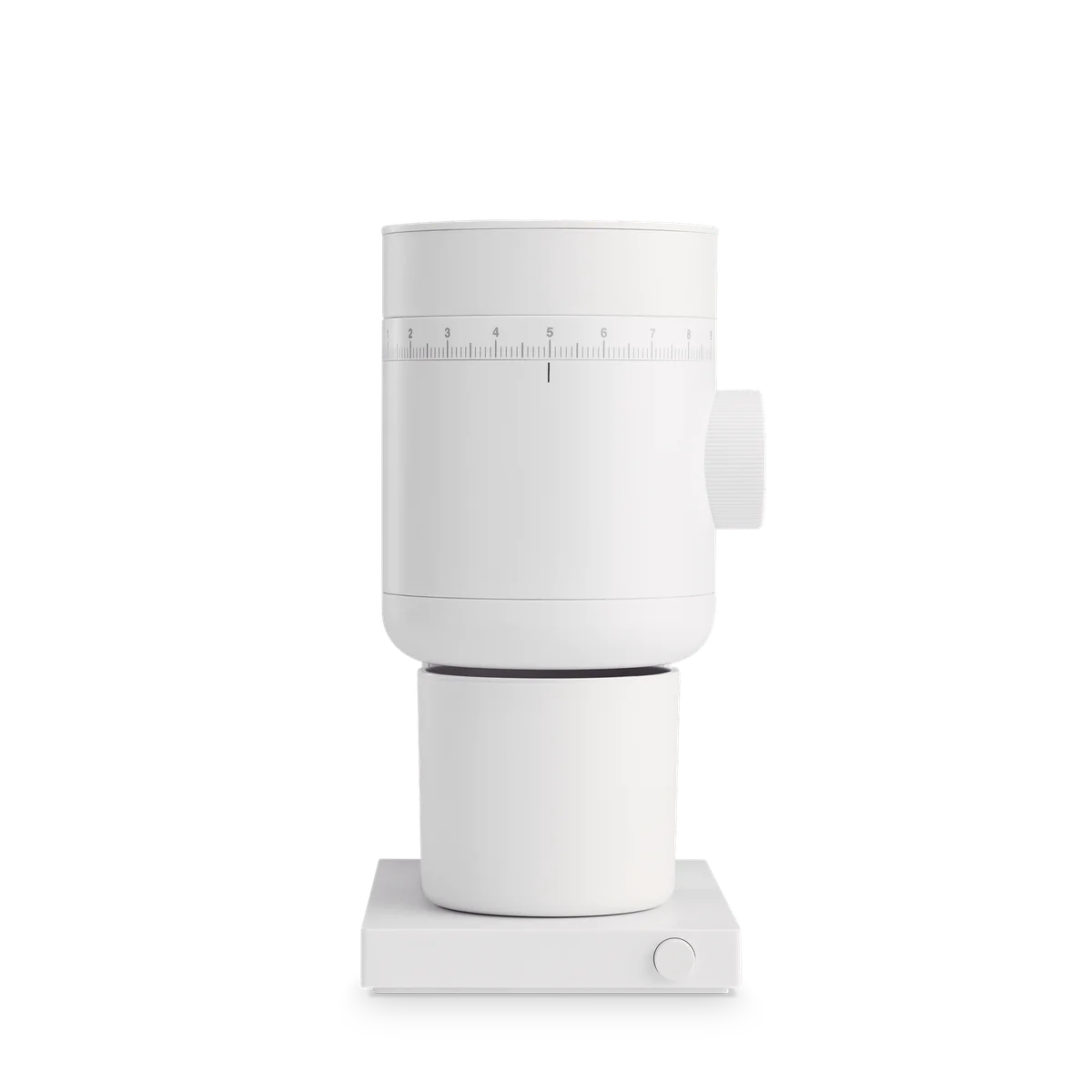
Baratza Encore ESP vs Fellow Opus 2
Clicks or a stepless dial? Two $200 grinders make different cases for a better morning.
A research-based buying guide. We have not hands-on tested these grinders. How we chose
Read the verdict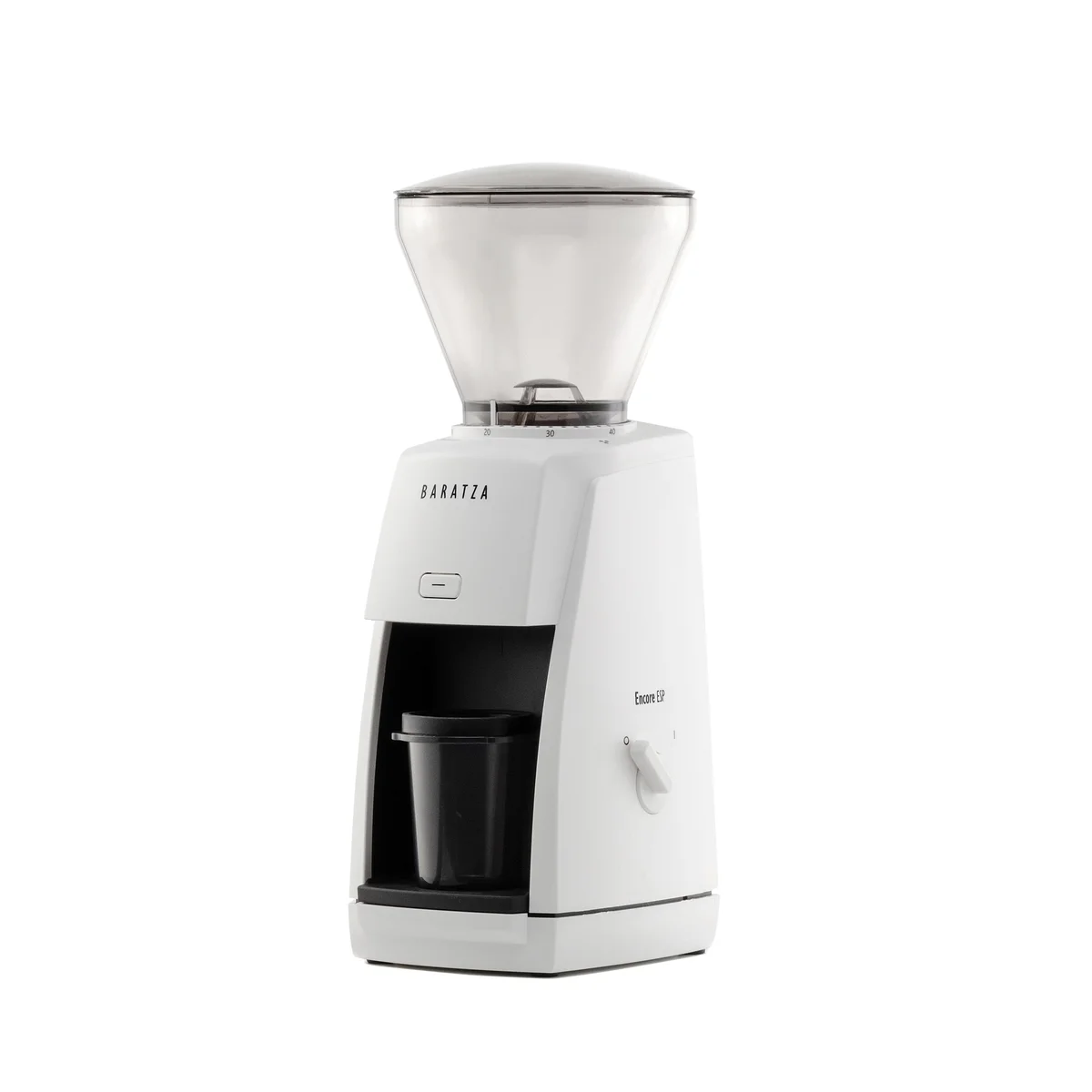
A grinder earns its place in the kitchen one ordinary morning at a time. The coffee should be good. The controls should make sense before the coffee. And if the thing is going to live beside the fruit bowl for years, you are allowed to care how it looks.
The Baratza Encore ESP and Fellow Opus 2 both promise a route from whole beans to espresso without an extravagant outlay. One has a familiar hopper and reassuring clicks. The other brings a stepless side dial, automatic stopping and a rather considered silhouette. At the same base list price, the interesting question is which routine you want to wake up to.
01 / The short answer
For the single-dose kitchen, we’d choose Opus 2.
At their matching $199.95 US base prices, Fellow Opus 2 is our pick for someone who weighs individual doses and moves between espresso and filter coffee. Its stepless side dial allows small adjustments without lifting off the bean bin, and it stops automatically when the beans have passed through. Published firsthand reviews make a persuasive case for its versatility and improved daily use.
Choose the Baratza Encore ESP if you prefer numbered clicks, a larger hopper and a documented route to parts and servicing. It remains an appealing first espresso grinder. Its main compromise is the space between settings; Opus 2’s is a less reassuring feel at the dial and a much shorter ownership history.
This is a researched recommendation, not the result of a Supply Coffee tasting test. Neither grinder wins every category, and the evidence does not establish a universal espresso champion. The details below explain why we lean toward the Fellow for one routine and the Baratza for the other.
We compare the original Encore ESP (ZCG495) with Opus 2. The standard Encore, Encore ESP Pro and original Opus are different grinders. Opus 2 replaces the original Opus’s two-ring adjustment system; advice about that blue inner ring does not apply here.
02 / The useful particulars
Encore ESP vs Fellow Opus 2, at a glance
US prices checked September 21, 2026, before tax and shipping: Baratza lists the Encore ESP at $199.95; Fellow lists the base Opus 2 at $199.95. Opus 2 finishes with upgraded accents cost more. Fellow’s page also carries variant-specific shipping notices, so confirm your chosen color and delivery estimate before ordering.
| What matters | Baratza Encore ESP | Fellow Opus 2 |
|---|---|---|
| Base list price | $199.95 | $199.95 |
| Burrs | 40 mm M2 steel conical | 48 mm steel conical |
| Adjustment | 40 steps on one collar; 1–20 for espresso, 21–40 for filter and coarser brewing | Stepless side dial, spanning espresso to coarse brewing |
| Bean capacity | 300 g hopper | 100 g single-dose bin |
| Controls | Front pulse button and side on/off switch | Single press for automatic stop; long press for a 45-second cycle |
| Standard warranty | 1 year in the US and Canada | 2 years, subject to purchase and territory terms |
| Our reason to choose it | Click settings, hopper routine and repair support | Single-dose convenience and continuous adjustment |
Sources: Baratza specifications, Fellow specifications, Opus 2 operating guide, Baratza warranty and Opus 2 safety and warranty manual. The final row is Supply Coffee’s judgment. Burr diameter alone does not tell you which makes better coffee.
03 / Before the first sip
Clicks, or room between the clicks?
Dialing in espresso means adjusting the grind to change how water travels through the coffee. Hold the dose and the amount in the cup steady while you make changes, and the grinder becomes easier to understand. A clear control is a small luxury.
The Encore ESP gives you a setting to come back to.
Turn the hopper to move through Baratza’s 40 positions. The espresso half of the range uses finer increments than the filter half. It is an approachable arrangement: write down a number, make a change, compare the shot. If another person uses the grinder, “put it back on 12” is a complete instruction.
The limitation is equally straightforward. A shot can run too quickly at one setting and too slowly at the next. You can adjust the recipe, but the dial cannot land between its clicks. Asser Christensen’s Encore ESP review also reports needing a finer range for some lighter and medium-roast espresso, with further compromises after fitting shims. That is a useful limit to know if demanding light-roast espresso is your principal hobby.
Opus 2 makes the fine adjustment easier to reach.
The stepless side dial lets you make a small movement without committing to the next fixed setting. You can leave the bin in place. This is a substantial improvement over the original Opus’s two-ring arrangement, and it removes the strongest workflow objection in older Encore-versus-Opus comparisons.
The caveat is how the control feels. In his August 2026 Opus 2 review, Lance Hedrick demonstrates flex around the adjustment dial. He also found that his unit needed calibration to reach the fine range he wanted for some light-roast espresso. Neither observation proves every unit has the same problem. Both temper the idea that a smooth dial automatically delivers effortless espresso.
If the finest setting cannot produce the resistance you need, consult Fellow’s current gear guidance or support. A number on the dial is a starting point, not a recipe guarantee. For either grinder, the coffee, basket and dose still have a say.
04 / The coffee, of course
A stronger all-round case, with room for disagreement.
Hedrick’s assessment is enthusiastic about Opus 2’s espresso and filter performance for the money. Riley Westbrook’s August 2026 review also favors it overall against the Encore ESP, particularly for range and daily use. Yet Westbrook allows that the ESP might have an edge specifically for espresso. That distinction is more useful than declaring a landslide.
Our reading is that Opus 2 makes the stronger package for a kitchen brewing a V60 on weekdays and espresso at the weekend. The ESP still has a credible espresso case, especially if you like its controls. These reviewers used their own coffees, recipes and equipment; their findings are opinions informed by use, not a shared testing protocol.
We would not buy either on a promise of dramatically better flavor than the other. Spend some of that attention on fresh coffee and a repeatable recipe. Our coffee ratio calculator can handle the arithmetic that actually belongs at breakfast.
05 / An object you live with
The counter has a vote.
Our aesthetic preference is the Opus 2. Its compact geometric form and side dial look considered, and the choice of finishes gives it a little personality. Its body is still substantially plastic. Hedrick’s comments on dial flex are a reminder to distinguish a pleasing silhouette from a weighty piece of machinery.
The more consequential design work is in the routine. Weigh beans, load the bin, press the button: Opus 2 detects when grinding is finished and stops. It comes with magnetic catch cups for filter coffee and espresso, plus a brush that stores behind the tower. The espresso cup works with 54 mm and 58 mm portafilters. These are small conveniences, but you encounter them far more often than the underside of a specifications sheet.
Automatic stopping does not mean automatic weighing. You still measure the beans. Fellow tells owners to load the bin immediately before use rather than store coffee in it. The ESP’s 300 g hopper and manual switch offer a different rhythm; it can also grind pre-weighed single doses. Choose according to what you actually do at the counter.
We would not choose on a promise of silence. Recent Opus 2 coverage does not support simply carrying over the original Opus’s reputation for quieter operation, and we have no matched acoustic test. Both belong to the category of appliances whose arrival at breakfast is audible.
06 / After the unboxing
Leave a little room for the cleaning brush.
Fellow advertises near-zero retention from Opus 2’s redesigned grind path and anti-static system. Treat that as a manufacturer claim, not a guarantee that every gram always reaches the cup. In 9 Bar Benchmark’s firsthand review, a dry 18 g medium-roast dose left the output about 0.3–0.4 g short. Hedrick reported very low retention in his own use, while acknowledging other owners had different experiences. Coffee, cleaning and technique matter.
The ESP is not exempt from retained grounds: Christensen found retention in his test. His measurement and the Opus 2 results used different methods, so we have not turned them into a numerical league table. When switching from espresso to filter, remember that a dial movement does not remove the previous grounds from inside the machine.
Opus 2’s manual calls for regular cleaning, including the grind chute and anti-static pins. Unplug it before cleaning and follow the model-specific instructions; do not wash the burrs in water. The removable outer burr makes access practical. The original Opus’s cleaning interval is not a substitute for this manual.
Baratza’s strongest ownership argument is its model-specific support hub, cleaning guidance and parts access. That documented route to repair weighs in the ESP’s favor. It does not establish a guaranteed lifespan or permanent stock of every part. Opus 2 is too new for its encouraging early reviews to tell us much about years of service.
Fellow has the longer standard warranty: two years, against Baratza’s one year in the US and Canada. Check the purchase and territory terms. Opus 2’s guide describes extended coverage available to buy; we have not assumed the free registration extension mentioned in older Opus reviews still applies.
07 / The reporting
What informs our recommendation
Supply Coffee has not tested these grinders side by side. This is a researched comparison for Autumn 2026, drawing on manufacturer documents and published firsthand reviews. We have no original tasting panel, noise test or long-term reliability dataset. All links in this article are direct, non-affiliate links.
We checked exact models, US prices and operating details against the manufacturers. Opus 2 opinions come from reviews of Opus 2; original Opus reviews do not establish this model’s performance. Our recommendation weighs adjustment, dosing, maintenance and the reported experience of using each grinder.
Westbrook discloses affiliate compensation. 9 Bar Benchmark says it bought its review unit and was not sponsored, and also uses affiliate links. The Coffee Chronicler discloses affiliate links. We did not establish how Hedrick’s review unit was funded. These interests are context for reading the findings, not a reason to present someone else’s testing as our own.
08 / Before you choose
A few good questions
Is the Encore ESP better than Fellow Opus 2 for espresso?
There is no clear universal cup winner in the evidence we reviewed. Opus 2 offers stepless adjustment; the ESP offers easily recorded clicks and established repair support. We lean toward Opus 2 for single-dose convenience, while the ESP remains a reasonable espresso-first choice.
Which would we choose for espresso and pour-over?
Opus 2, at matching base prices. Its accessible dial, automatic stop and two catch cups suit a mixed brewing routine. Remember to record settings and account for grounds remaining inside when switching methods.
Is Opus 2 the same grinder as the original Opus?
No. Opus 2 has 48 mm burrs, a stepless side dial, a 100 g bin and automatic stopping. The original model’s inner adjustment ring, preset timers and 40 mm burr specifications do not describe it. Check the model name when reading a review or buying discounted stock.
Should I replace an original Opus I already own?
Only if it fails to do something you need. Easier adjustment may be a worthwhile improvement if the old routine frustrates you. If your coffee is good and the grinder suits you, keep it. A good morning needn’t require a new delivery.
What if I can spend more?
Our espresso grinders under $500 guide places alternatives, including the separate Encore ESP Pro, in context. Start with the problem you want a larger budget to solve: finer control, a different dosing routine or a different style of coffee.