The Supply edit Setup guide / The home setup
Espresso bar supplies
Give every tool a job. A practical home espresso station starts with compatible equipment, a scale, and a little care.
Practical advice based on manufacturer instructions. Equipment photographs illustrate the setup; this is not a hands-on product test. About this guide
Start with the essentials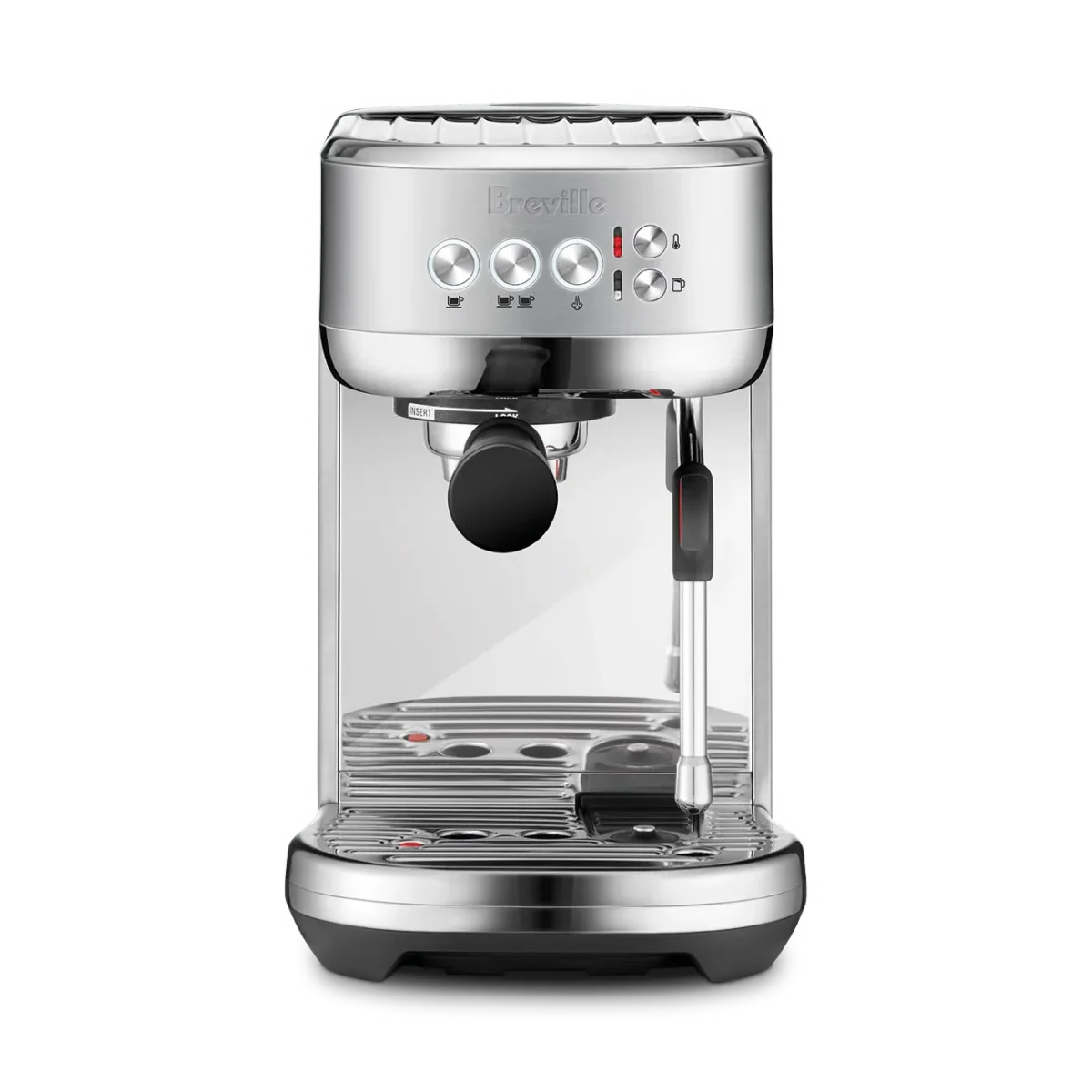
Breville Bambino Plus · a home station exampleProduct photograph · Breville
A practical home espresso bar starts with a machine, an espresso-capable grinder, a compatible basket and tamper, a scale, cups, and machine-approved cleaning supplies. Add a steaming pitcher if you make milk drinks. Budget for water care and routine cleaning at the same time as the machine, rather than after the first problem.
Build a station you can use every morning
This checklist is for a home espresso station. Before buying accessories, unpack the machine and check what it includes. You may already have a suitable tamper, baskets, milk pitcher, and a starter supply of cleaning products.
- An espresso machine and a grinder designed to make fine adjustments for espresso, or a machine with a suitable integrated grinder.
- A basket and tamper that fit your machine, plus a stable surface or mat for tamping.
- A gram scale that fits under the group head with your cup in place; 0.1 g resolution is useful for tracking dose and yield.
- Cups with enough clearance, a container for spent grounds, and separate cloths for the steam wand and counter.
- A steaming pitcher if needed, and the cleaning tools and products specified in the machine manual.
Check compatibility before buying puck-prep tools
Match the tamper to the basket's specified internal diameter, and check accessories against your exact machine and basket. A portafilter's nominal diameter alone does not establish that its locking tabs will fit another machine. Basket depth also determines how much coffee it is intended to hold. A dosing funnel can reduce spills, but a new basket, distributor, puck screen, and bottomless portafilter are optional additions. Start with the supplied parts and make changes to solve a specific difficulty.
Use a scale to separate dose from yield
Dose is the dry coffee in the basket; yield is the espresso collected in the cup. A 1:2 starting ratio means an 18 g dose produces a 36 g beverage, provided 18 g is appropriate for your basket. It does not mean putting 36 g of water in the machine's tank. Breville's dialing-in guide uses this ratio as a starting point, not a rule for every coffee. Keep dose and target yield steady while adjusting the grind, and record time and taste before changing another variable.
Buy milk tools for your usual drink
Choose a pitcher with a working fill range that suits the amount of milk you normally steam, leaving room for expansion. Check the machine's steam-wand reach before buying a particularly small or tall pitcher. Give the wand its own clean cloth and follow the manual's wiping and purging procedure after use. If you mostly drink straight espresso or americanos, you can leave milk accessories off the first shopping list.
Choose water care for the machine
Read the machine's water specification before choosing a filter or mineral product. Water that tastes fine is not automatically within its recommended range. La Marzocco notes that both excessive minerals and very low mineral content can cause problems in its machines, so distilled water is not a universal answer. Check your water against your manufacturer's requirements, use the recommended treatment, and keep track of replacement cartridges if your setup uses them.
Keep the correct cleaning supplies within reach
Buy the detergent or tablets specified for your machine, a suitable brush, and washable cloths. Backflushing cleans the brew path on machines designed for that procedure; descaling deals with mineral deposits. They are different jobs with different products. Only backflush if the manual permits it, and follow its directions for detergent, rinsing, and frequency. Follow model-specific descaling or servicing instructions too. A generic cleaning schedule is a poor substitute for the instructions supplied with your machine.
Common questions
Can I use my filter-coffee grinder for espresso?
Check its intended uses. Reaching a fine grind is only part of the requirement; you also need useful adjustments between settings to control the shot. Do not assume every burr grinder is designed for espresso. Follow your machine's guidance if it uses a pressurized basket intended for pre-ground coffee.
Do I need a bottomless portafilter to begin?
No. The supplied portafilter is enough to learn dosing, tamping, and measuring yield. Buy a replacement only after checking the exact fit and deciding what you want it to help you observe or change.
Does this checklist cover a commercial espresso bar?
No. A cafe or mobile service also needs planning for peak demand, utilities, refrigeration, washing facilities, and local operating requirements. Use this guide for a home station; plan a service operation with the equipment supplier and relevant local authorities.
Related coffee tools
Extraction Yield & TDS Calculator
Check espresso TDS and extraction yield against a mode-specific target zone.
About this guide
This is a home setup checklist, based on the manufacturer instructions linked beside the relevant advice. It is not a ranking of tested products. Use the instructions for your exact brewer or machine when choosing compatible parts, recipes, water treatment, and cleaning products.
Product photographs show examples of the equipment discussed. The pictured model is not a required purchase. Links are direct, non-affiliate links.
Find your next coffee
Compare tasting notes, origins, and processing details, then choose a bag size and grind for your setup.
Browse specialty coffees · Search by flavor, roast, and budget
Explore another brewing setup
View all guides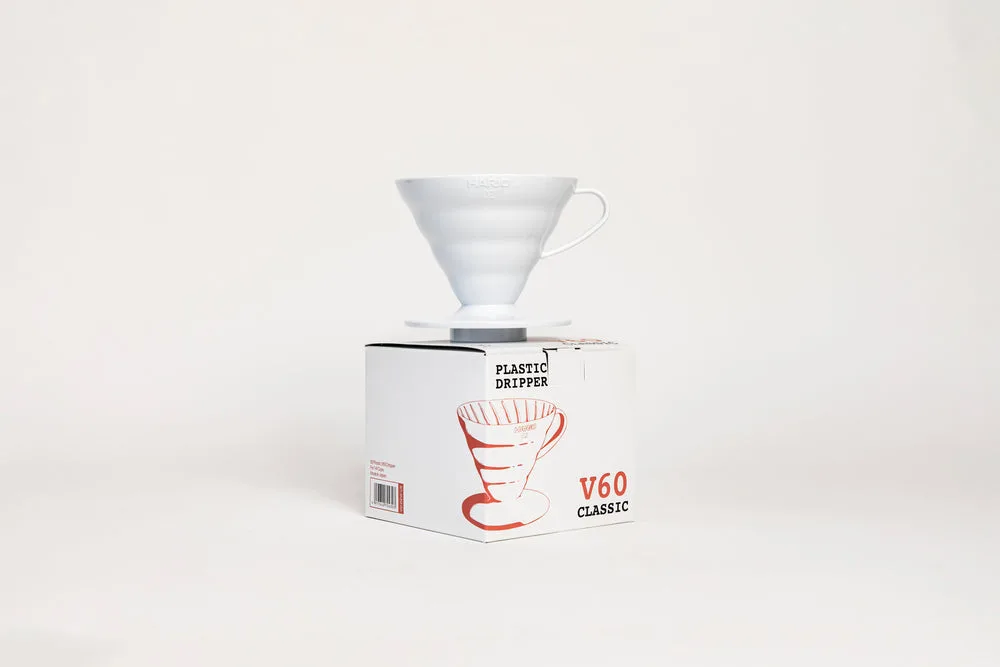
Setup guide
Pour over coffee supplies
One brewer, the right papers, and a repeatable routine. Build a pour-over setup around the cup you actually make.
Read the guide
Setup guide
Cold brew coffee supplies
A little planning, a slower brew. Choose a vessel, get the filtration right, and make a batch that fits your week.
Read the guide