The Supply edit Buying guide / Autumn 2026
Best Espresso Machines Under $1,000
A small café of your own. Four thoughtful buys, a little morning ritual, and enough change left for the coffee.
A research-based buying guide. We have not hands-on tested these espresso machines. How we chose
Find your morning machine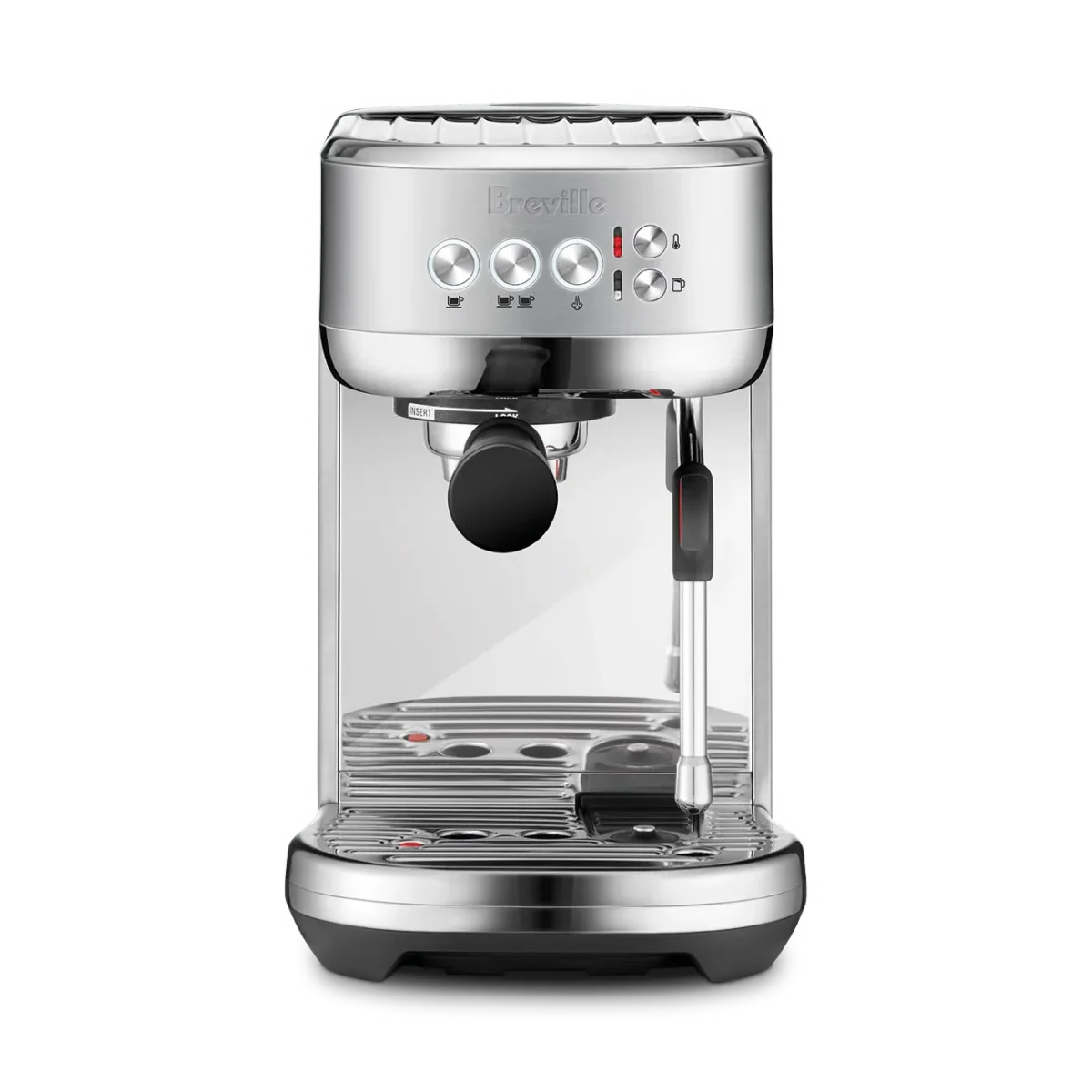
Breville Bambino PlusProduct image · Courtesy of Breville
A home espresso machine makes an appealing promise: a small, civilized pause before the day starts making demands. Ideally, the coffee is excellent. Ideally, you also get out of the kitchen on time.
For most people, our pick is the Breville Bambino Plus at $499.95, paired with a separate espresso grinder. Its quick heating and automatic milk texturing make a persuasive case for the ordinary Tuesday. If you want the grinder and more guidance included, choose the $599.99 Ninja Luxe Café Premier. Prefer to take charge of the milk and preparation yourself? The $849.95 Breville Barista Pro brings that routine together in one machine.
This is our Autumn 2026 guide for US buyers, researched on September 21. The ceiling is $1,000 for a new machine before tax; the more useful question is what the entire coffee corner costs. We cover that too. All shopping links are direct, non-affiliate links.
01 / The morning lineup
The best espresso machines under $1,000, by routine
Listed US-dollar prices checked September 21, 2026, before tax and any shipping. Standard new machines; no coupon, trade-in or open-box purchase required. These are dated reference prices, not live offers or stock guarantees. Confirm the US model, chosen finish, availability and checkout total.
| Machine / Best for | Listed price | Grinder & milk | The compromise |
|---|---|---|---|
| Breville Bambino PlusBest for most people | $499.95 | Grinder: SeparateMilk: Automatic or manual | No user-adjustable brew temperature; allow for a grinder |
| Ninja Luxe Café Premier ES601Best guided all-in-one | $599.99 | Grinder: IncludedMilk: Automatic steam and whisk | No dedicated hot-water function on this US model |
| Breville Barista ProBest hands-on all-in-one | $849.95 | Grinder: IncludedMilk: Manual | You learn tamping and steaming; grinder upgrades mean another appliance |
| Breville BambinoBest lower-cost choice | $299.95 | Grinder: SeparateMilk: Manual | No automatic milk texturing |
These picks suit people making one or two coffees at home, with milk drinks an important part of the brief. They are portafilter machines: you still move the coffee into place and clean up afterward. If your priority is experimental light-roast espresso, look at the adjustable-temperature alternatives before choosing on convenience alone.
02 / Best for most people
Breville Bambino Plus
A very manageable morning ritual. $499.95 · Grinder extra
The Bambino Plus is our starting point because it asks relatively little of its owner while leaving the interesting decisions intact. Choose your beans, adjust the grind, learn what a good shot tastes like. You can let the machine take the milk shift.
Breville specifies a 54 mm portafilter, low-pressure pre-infusion and automatic milk texturing with three temperature and three texture settings. Manual steaming is available when you want to practice. That combination matters more to us than a screen full of drink illustrations: it supports both the hurried cup and the Saturday experiment.
The three-second ThermoJet claim describes the heating system getting ready. It does not mean the cup and portafilter have magically warmed themselves. Follow the preparation instructions, including warming the parts that touch your espresso. Speed is useful; cold crockery remains cold crockery.
The Coffee Chronicler’s hands-on review supports the convenience case, while flagging a small drip tray and limited control for very light roasts. Those are useful boundaries. We would choose the Plus for a household enjoying medium-roast espresso and milk drinks, rather than someone buying a machine primarily to explore temperature adjustments.
The brew temperature is regulated but not user-adjustable. You also need an espresso-capable grinder to make the most of a single-wall basket. Separate appliances let you change that grinder later; they also need separate places on the counter. Measure the whole arrangement.
Choose this over the Ninja if you want to pick your own grinder and develop your preparation gradually. Choose the cheaper Bambino below if automatic milk is something you would rarely use.
03 / Best guided all-in-one
Ninja Luxe Café Premier ES601
For a household, not just its coffee enthusiast. $599.99 · Grinder included
A coffee setup should be usable by the other person who lives with it. The Ninja makes that a central part of the proposition: guided grind recommendations, weight-based dosing and automatic milk preparation reduce the number of decisions between waking up and having a drink.
The US Premier ES601 includes a conical-burr grinder and makes espresso, drip-style coffee and rapid cold brew. It also offers cold foam. We recommend it chiefly for the guided espresso-and-milk routine; a long menu is useful only if someone in your kitchen will order from it.
CoffeeGeek’s full review, conducted with a supplied machine, found the espresso convincing and the sequence of brewing followed by queued milk preparation particularly useful. It also criticized noisy frothing and the fragile feel of the dosing collar. That is a more helpful picture than either dismissing Ninja as a kitchen-gadget brand or treating automation as infallible.
The US ES601 lacks a dedicated hot-water function, so an Americano calls for a separate kettle. Its grinder and guided preparation are part of one system. If you expect to change grinders or experiment freely with every brewing variable, the Bambino-plus-grinder approach gives you more room.
The Luxe Café Pro ES701 adds hot-water functionality and an integrated tamping lever; Ninja lists the range from about $749. For a daily Americano drinker, that is a meaningful reason to move up. For someone mainly making cappuccinos, our preference is to save the difference. We have not established that the Pro makes better-tasting espresso.
04 / Best hands-on all-in-one
Breville Barista Pro
A compact apprenticeship. $849.95 · Grinder included
Some of the pleasure of espresso is doing it yourself: settling the grounds, leveling the tamp, finding the angle that makes milk turn in the pitcher. The Barista Pro suits someone who wants that small daily craft without researching two separate appliances first.
The current US listing specifies Baratza precision burrs with 30 grind settings, ThermoJet heating, volumetric shot control and a manual steam wand. A dosing funnel is included. The useful distinction from the Ninja is the job description: this machine leaves more of the preparation, and all of the milk technique, to you.
Coffeeness’s hands-on review reported enjoyable espresso after dialing in, but wanted finer adjustment between grinder steps. Its complaint about a missing dosing funnel no longer matches Breville’s current accessory list. That is why we check the model being sold now instead of carrying every old review verdict forward.
There is no automatic milk texturing. You pay more than for the Ninja and still need to learn steaming. The built-in grinder also ties your starting setup together: buying a separate grinder later leaves part of the Pro sitting idle. If you already own a good espresso grinder, this is difficult to justify.
Buy it because you like its integrated, manual routine. The extra spend is not proof of a better cup than a well-chosen Bambino setup, and “Pro” on the front does not shorten the practice.
05 / Best lower-cost choice
Breville Bambino
Keep the coffee. Keep some change. $299.95 · Grinder extra
The most useful alternative to a $900 espresso machine may be a $300 one. The ordinary Bambino keeps ThermoJet heating, a 54 mm portafilter and manual milk steaming. The obvious thing you give up compared with the Plus is automatic milk texturing; the useful thing you gain is $200 for the rest of the setup.
For someone who mostly drinks straight espresso, or wants to learn steaming anyway, we would start here. The case is about allocation: buy a capable machine, leave room for an espresso grinder, and avoid turning a modest purchase into a collection of accessories before the first bag is finished.
The milk is your responsibility. If two people want reliable weekday lattes but only one wants to practice, the Plus earns its extra cost. We have not tested the two side by side and are not claiming identical results or construction.
If your machine budget is firmly below $500, our espresso machines under $500 guide looks more closely at that part of the market.
06 / The honest bill
What if $1,000 is the entire budget?
Then the grinder belongs in the first calculation. A machine without one is a partial setup, however handsome it looks on its own. Our espresso grinder buying guide explains the choices; the examples here use a $200–$300 planning allowance, not a live bundle offer.
| Starting point | Subtotal | Still to allow for |
|---|---|---|
| Bambino + separate grinder | $499.95–$599.95 | Scale, beans, cleaning supplies and water needs |
| Bambino Plus + separate grinder | $699.95–$799.95 | Scale, beans, cleaning supplies and water needs |
| Ninja Premier, grinder included | $599.99 | Beans, cleaning supplies and water needs; optional separate shot scale |
| Barista Pro, grinder included | $849.95 | Scale, beans, cleaning supplies and water needs; less room for tax |
The Bambino Plus with a separate grinder is our preferred balance of convenience and flexibility. The plain Bambino leaves more room. The Ninja is the simplest complete shopping decision. With the Barista Pro, calculate tax before adding anything decorative to the cart.
Start with the supplied baskets, tamper and milk pitcher where included. A scale helps you repeat dose and beverage weight; our espresso setup guide covers the supporting equipment. Walnut handles can wait. The beans cannot.
07 / Beyond the shortlist
The machines that deserve a closer look
Gaggia Classic E24 and Classic Up: check the exact Classic
Whole Latte Love lists the Classic Pro E24 at $499, with a brass boiler and 58 mm portafilter. It is a credible choice for someone who enjoys a traditional single-boiler routine. Our objection for a first-time latte buyer is the extra temperature management and manual milk preparation, rather than any belief that older-looking machines cannot make good coffee.
The newer Classic Up is listed at $849 and adds factory PID temperature adjustment and pre-infusion settings. Do not confuse it with an ordinary E24 or assume every Classic needs an aftermarket temperature controller. The Up merits attention if you already own a grinder. The seller’s pages showed availability-notification prompts during research, so confirm the specific machine is orderable. We are not making a long-term recommendation for the Up from a seller demonstration alone.
Turin Legato V2: intriguing controls, unresolved buying details
Espresso Outlet’s US V2 listing specifies a 550 ml brew boiler, separate steam thermoblock, adjustable temperature and an external pressure adjustment. It is a compelling specification for someone who wants to experiment. A separate steam heater does not make it a conventional dual-boiler machine.
Coffee Kev’s review of the related MiiCoffee Apex V2 praised the control and performance while questioning materials and the support proposition. It is useful platform context, not a test of the exact US Turin package: the importer, specification and warranty need their own checks. Our research returned inconsistent regional pricing and did not resolve a dependable current US-dollar checkout price, so we have kept it outside the priced shortlist. Espresso Outlet lists its own one-year warranty.
Lelit Victoria: a machine-only budget taken literally
Lelit’s US Victoria listing is $999.95. That technically clears the title’s ceiling by five cents. It leaves no practical room for a grinder, supplies or tax if $1,000 is your total. An existing grinder and a preference for a traditional machine change that calculation; a brand-new setup does not get the same recommendation.
The $599.95 Lelit Anna with PID is worth investigating if adjustable temperature is your priority. The standard Rancilio Silvia, listed at $995 by Seattle Coffee Gear, has a single boiler serving both brewing and steaming; that retailer lists its separate PID-equipped version at $1,199. We would not spend almost the entire first-setup budget on the standard Silvia without a specific reason to want its manual routine.
More assistance: Express Impress and La Specialista Touch
The $799.95 Breville Barista Express Impress helps with dosing and tamping, but still uses a manual steam wand. Choose it over the Pro if assisted tamping matters more to you than the Pro’s faster heating system. Do not mistake “Impress” for automatic milk.
De’Longhi’s La Specialista Touch EC9455M is listed at $799.95, with guided setup, automatic milk and saved user and bean profiles. It is a credible alternative for a household that values those presets. The Premier costs about $200 less at our reference prices; we would pay the difference only if the Touch’s controls solve a particular daily need. We have not established a taste advantage between them.
Ninja’s newer models: buy the feature you will use
Ninja’s current comparison lists the Mini Plus AutoFroth ES351 at $499.99, while the Pro adds hot water and integrated tamping. The Premier earns its place here through its mix of price, functions and the independent review evidence we could examine. Smaller dimensions or daily Americanos may point you to a sibling. A review of the Premier should not be treated as a test of all three.
Why no lever or fully automatic winner?
Lever espresso and one-touch bean-to-cup machines answer different briefs. The first makes hand-powered preparation part of the pleasure; the second aims to remove more of it. This edition concentrates on portafilter machines with milk capability, rather than awarding a token winner in every category. “Best” is useful only when we say who is doing the buying.
08 / After the unboxing
Choose the routine you will keep
Let the milk decide some of this. Automatic steaming is valuable when you want fewer steps. Manual steaming is valuable when you want to learn. Neither preference requires defending to anyone in an apron.
Leave space around the specification. Measure room for the grinder, a raised hopper lid, the water tank and a pitcher at the wand. A machine that fits under a cabinet may still be awkward to refill there.
Read the cleaning instructions before buying. Emptying a tray, wiping the wand and running the required cleaning cycles are part of ownership. Follow the particular machine’s instructions for water and descaling; a generic internet routine is not a substitute for its manual. Check who handles repairs and what the return and warranty terms actually cover.
Keep the first bag straightforward. A familiar espresso roast makes it easier to recognize progress. Change one variable at a time, note what you did, and make coffee you want to drink. The machine is allowed to be a pleasure before it becomes a project.
09 / The reporting
How we chose these machines
We researched manufacturer pages, US sellers and original reviews, then checked exact models, listed prices, included grinders, milk routines and important changes. Selection favors a useful first setup, clear daily trade-offs and enough money left to make the machine work well. It does not aim to spend every dollar.
Supply Coffee has not tested these espresso machines side by side. We have no original taste panels, temperature measurements or long-term failure data. These are editorial recommendations from published evidence, not a laboratory ranking. Three picks come from Breville because they meet three different versions of this brief; that is our judgment, not a claim that no other brand can compete.
The Coffee Chronicler informed the Bambino Plus’s everyday appeal and temperature-control limitations. CoffeeGeek supplied detailed original experience of the Premier’s espresso, milk routine and annoyances; Ninja supplied its review unit. Coffeeness informed our questions about the Pro’s grinder, with current accessories checked against Breville. Coffee Kev helped distinguish the Apex/Legato platform’s feature appeal from its support considerations. These publications use commercial links; their experiences remain theirs.
Manufacturer and retailer sources are linked beside specifications and prices. Owner comments were treated as leads for further checking, never as failure-rate data. We excluded unsupported lifespan promises and did not transfer criticism of old revisions onto new ones. Price or availability conflicts are disclosed where they affect the recommendation.
10 / Before the first shot
A few good questions
What is the best espresso machine under $1,000 for a beginner?
Our Autumn 2026 pick is the Breville Bambino Plus with a separate espresso grinder. For someone who wants a guided system with the grinder included, we would choose the Ninja Luxe Café Premier ES601 instead.
Can I get a machine and grinder for under $1,000?
Yes. At the prices researched, a Bambino Plus with a $200–$300 grinder comes to $699.95–$799.95 before tax, shipping and extras. The Ninja Premier includes its grinder at $599.99. Neither figure is an all-inclusive delivered quote.
Is the Bambino Plus worth $200 more than the Bambino?
For frequent milk drinks, automatic texturing is the strongest reason to pay more. If you mostly drink espresso or want to steam manually, the $299.95 Bambino is our lower-cost recommendation. We do not claim the Plus makes every shot taste $200 better.
Should I buy a machine with a built-in grinder?
Choose one when the integrated routine appeals to you. Choose separate appliances when you already have an espresso grinder, switch equipment deliberately, or want to upgrade one part later. A built-in grinder saves a buying decision; it does not necessarily save counter space.
Does a three-second heat-up mean coffee in three seconds?
No. Breville’s figure concerns its heater. Grinding, preparing the basket, warming the cup and brewing still take time. Judge the complete morning routine, rather than treating the fastest number on the box as the whole experience.