The Supply edit Buying guide / Autumn 2026
Best Espresso Machines Under $2,000
The Dual Boiler for the keen home barista. The GO for straight espresso. The Touch Impress for an easier morning. Here’s where the money earns its keep.
A research-based buying guide. We have not hands-on tested these espresso machines. How we chose
Choose your machine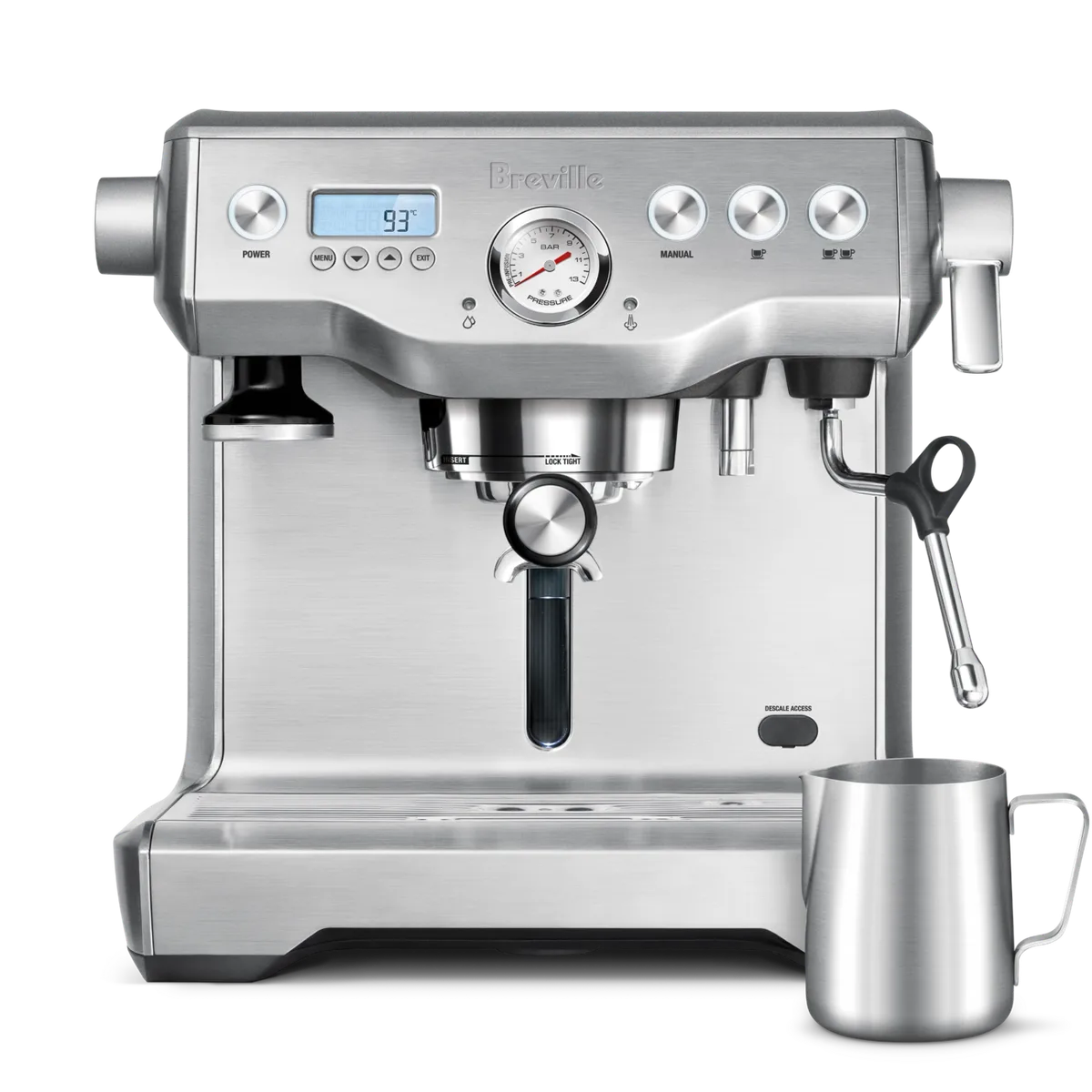
At $2,000, a home espresso machine begins to look like a small declaration of intent. There will be good beans. There may be a dedicated corner of the kitchen. Ideally, there will still be enough room to make toast.
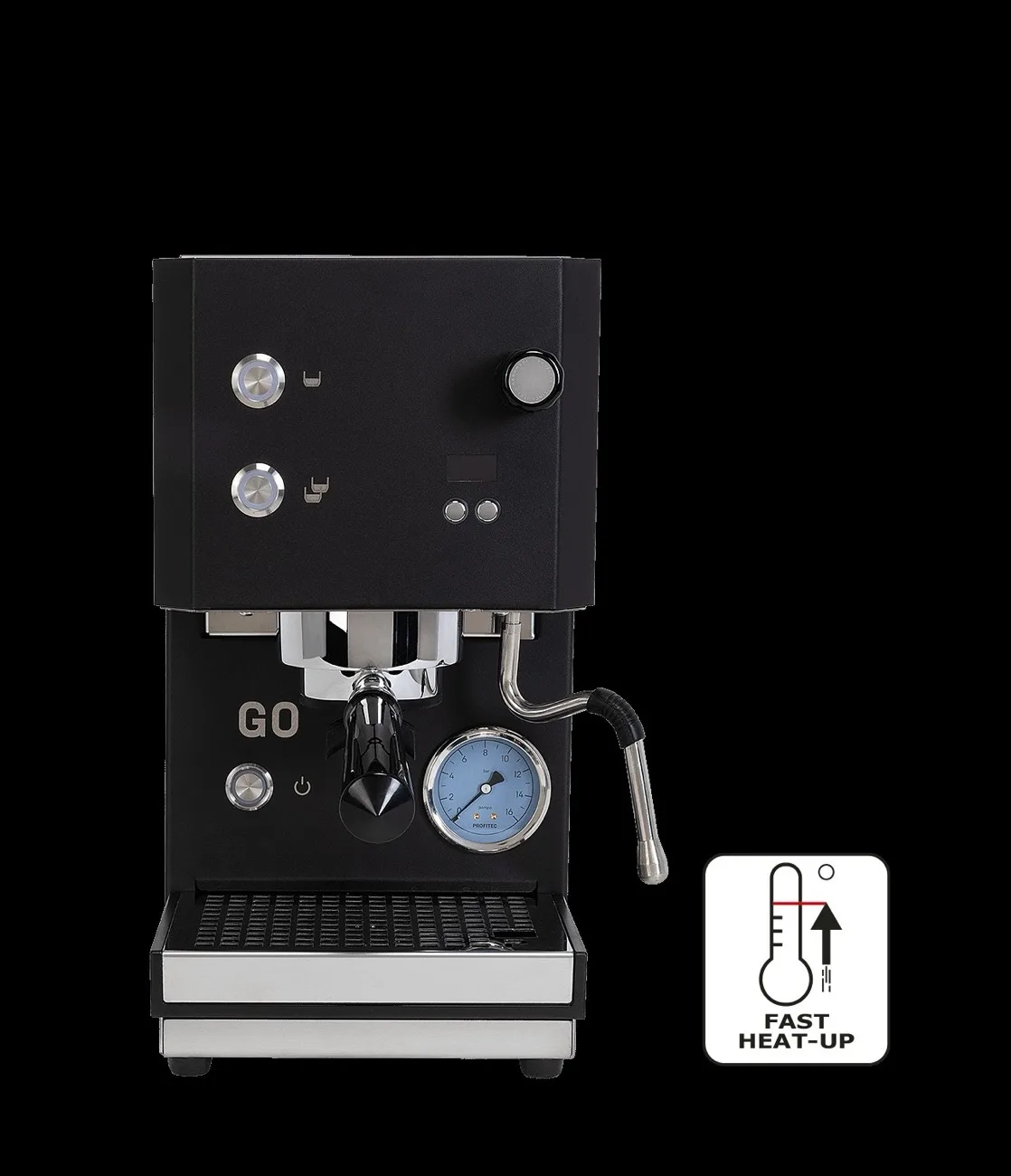
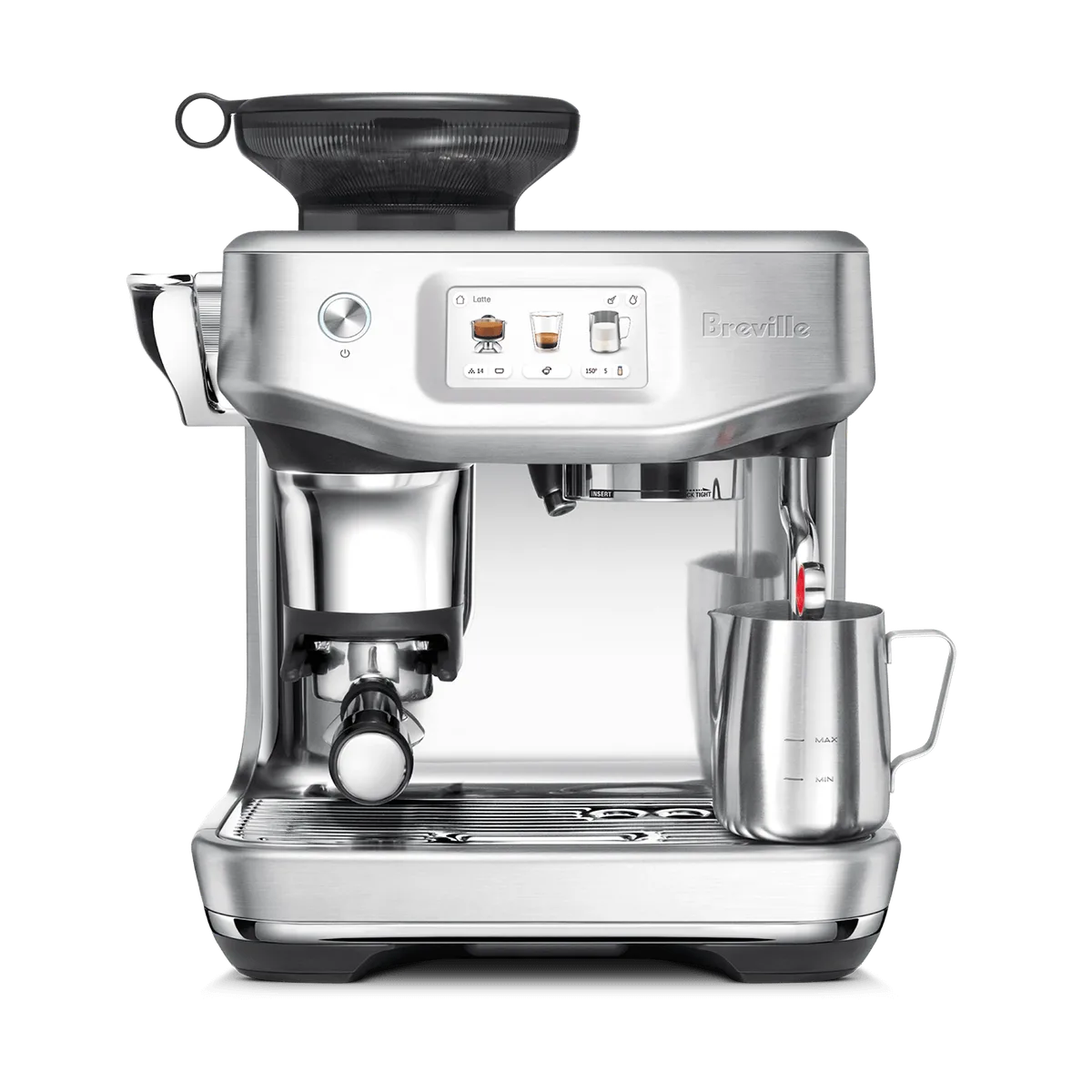
Our pick for someone who wants to make espresso and steam milk themselves is the Breville Dual Boiler, at $1,599.95. It gives you adjustable brewing controls and separate boilers for coffee and steam, without spending the entire machine budget. Mostly drinking straight espresso? The $1,199 Profitec GO makes a stronger case for restraint. Want help with grinding, tamping and milk? Choose the $1,499.95 Barista Touch Impress.
This Autumn 2026 edition is for US buyers choosing a new portafilter machine below $2,000 before tax and shipping. Prices and evidence were checked on October 5, 2026. Two picks need a separate espresso grinder; our complete-setup budget accounts for that. Research source links are non-affiliate; shopping links are disclosed above.
01 / Choose the morning you want
The best espresso machines under $2,000, by routine
Observed US reference prices for standard new machines, before tax, shipping and accessories. No coupon or refurbished purchase required. Listings and finishes can differ; these are not live offers or guarantees of stock. Confirm the exact US configuration and delivery date before paying.
| Machine / Who it suits | US price | The daily routine | The catch |
|---|---|---|---|
| Breville Dual Boiler BES920Our pick for manual espresso and milk | $1,599.95 (external site, opens in a new tab) | Separate grinder; brew and steam together; manual milk | A broad footprint and a hands-on routine |
| Profitec GOOur pick for mostly straight espresso | $1,199 (external site, opens in a new tab) | Separate grinder; single boiler; manual milk | Heating/cooling transitions for milk; verify the revision |
| Breville Barista Touch Impress BES881Our pick for an assisted household setup | $1,499.95 (external site, opens in a new tab) | Grinder included; assisted tamping; automatic milk | Less freedom to choose your dose and grinder |
These are three distinct buying decisions, not a podium for flavor. We have not tasted them side by side. If your current machine already makes coffee you love, an upgrade needs to solve an actual irritation: waiting for steam, limited temperature adjustment, or being the only person who knows how breakfast works.
02 / A little engineering, usefully applied
What does spending more on an espresso machine buy?
At this price, the useful luxuries are control and a smoother sequence of jobs. A PID controller regulates temperature; an adjustable one lets you change a recipe deliberately. Pre-infusion wets the coffee before full-pressure brewing. Neither removes the need to get the grind and dose right.
A single boiler, as in the GO, heats water for espresso, then heats further for steam. It must return to brewing temperature before the next shot. A dual boiler keeps separate supplies for those jobs. On the Breville, that means you can brew and steam together—or simply move between them without changing the boiler’s assignment.
A heat exchanger, such as the MaraX, heats brew water as it passes through a separate circuit inside a steam boiler. It can also support brewing and steaming, but managing brew temperature is a different engineering problem. A second heater is not automatically a second boiler, either: the number on a specification sheet needs context.
For two cappuccinos every morning, fewer transitions can be a pleasure worth buying. For one espresso after lunch, a second boiler may spend most of its life waiting for an invitation. And if you mainly want an easy latte, our machines under $1,000 guide is still a sensible place to start.
03 / Our all-round manual pick
Breville Dual Boiler BES920
Spend on the coffee-making parts. $1,599.95 · Separate grinder required
The Dual Boiler is our recommendation for the home barista who enjoys making the drink and would like the machine to make that job easier. Its slightly businesslike appearance undersells a useful collection of controls. You can learn a great deal here without replacing the machine the moment you learn it.
Breville’s US BES920 has separate stainless-steel boilers, PID temperature control, a heated group head, low-pressure pre-infusion and a 58 mm portafilter. It supports simultaneous extraction and steaming, plus volumetric, timed or manual shot control. Those features give you room to repeat a familiar recipe and investigate a different one. They do not promise to rescue badly ground coffee.
The independent evidence is unusually helpful. In The Coffee Chronicler’s review, Asser Christensen describes more than six months with a secondhand machine, praising its brewing controls and manageable steam while finding the construction and styling less appealing than traditional metal-heavy machines. That balance informs our choice: we favor the controls over the counter presence.
James Hoffmann’s 2021 comparison also favored the Sage-branded Dual Boiler overall, using the same VST basket across the contenders. That is older UK testing, not a fresh comparison of today’s US stock, and its sterling prices do not belong in this buying table. It provides useful corroboration for the platform, not a substitute for current model checks.
You still grind, distribute, tamp and steam manually. Breville lists the body at 37.9 cm wide—about 14.9 inches—before you add a grinder and working space. It is a substantial appliance, and ownership includes cleaning and possible service. Buy the Touch Impress if the point of spending more is doing less.
We would choose this over the GO for regular pairs of milk drinks, or when programmable pre-infusion is part of the appeal. We would choose the GO for a simpler espresso-first setup and put the difference toward a grinder. If you already own a capable one, the Dual Boiler becomes an especially straightforward upgrade.
Check the US Dual Boiler (external site, opens in a new tab)
04 / For mostly straight espresso
Profitec GO
A small machine with sensible priorities. $1,199 · Separate grinder required
For the person who usually orders espresso and occasionally makes a cappuccino, the GO is the pick that leaves useful money unspent. Its compact, upright body, physical controls and prominent pressure gauge give the coffee corner a pleasing sense of purpose. There is no touchscreen drink menu to browse before you have had a drink.
Clive’s US listing specifies a 58 mm portafilter, adjustable PID temperature, shot timer and externally adjustable brew pressure. It lists a width of 8.27 inches. Those are practical advantages for an owner who wants to control a shot while keeping the setup reasonably compact. The grinder still needs its own piece of countertop.
CoffeeGeek’s hands-on First Look liked the steam capability and brewing controls, but criticized pump vibration, cup clearance and the lack of a dedicated hot-water function. Its test unit predates the fast-heat programming described by current US sellers. We are using those observations as model-specific context, not presenting its warm-up measurements as a test of a machine you order today.
A single boiler makes milk drinks a sequence: brew, heat for steam, steam, then return to brew temperature. That is manageable for an occasional cappuccino; it is less attractive for a queue. For Americanos, plan on a kettle rather than buying this for convenient hot-water dispensing.
Check the exact GO. Kaffeemacher’s 2026 European review reports a GO 2.0 with revised controls and software. The US listings checked here do not establish that this is the configuration being supplied for $1,199. Our recommendation is for the conventional US-listed GO described above; do not assume the newer review’s programmed features or accessories are included. Ask the seller to identify the revision, heating routine and included portafilter before ordering.
Heat-up claims also differ between US sellers, so we would not choose between them over a minute in an advertisement. Follow the supplied machine’s warming and flush instructions. Whole Latte Love lists the same $1,199 reference price but showed an availability-notification prompt during research; confirm the finish and dispatch date with either seller.
Check the GO configuration (external site, opens in a new tab)
05 / For a more assisted household
Breville Barista Touch Impress BES881
Less explaining before breakfast. $1,499.95 · Grinder included
The Touch Impress makes the strongest case when people in the same kitchen have different levels of interest in espresso. One wants to learn. Another wants an oat-milk cappuccino and has a train to catch. A setup that accommodates both is worth more than an impressive feature that only one person uses.
The current US BES881 page lists an integrated grinder with 30 settings, assisted dosing and lever tamping, touchscreen guidance and automatic milk texturing with dairy, oat, soy and almond settings. You still move and lock in the portafilter, adjust the grind when needed, and empty the basket afterward. It is assisted espresso, not a cup-under-the-spout bean-to-cup machine.
CoffeeGeek found consistent shots after dialing in and praised the automatic milk, while objecting to the extra menu work needed to preheat the brewing parts. Its review used a Breville-supplied replacement unit. The three-second ThermoJet claim concerns the heating system; the cup, portafilter and coffee preparation do not acquire a three-second morning by association.
That review also explains an important limit: the dosing system works toward a puck height rather than a user-selected coffee weight. It suits someone happy to follow guidance better than someone who wants to specify every part of a recipe. Brewing and milk preparation happen in sequence; this is not the Dual Boiler’s simultaneous routine.
The grinder is part of the purchase. If you later want a different grinder, you will be paying for an integrated one you no longer use. Choose the Dual Boiler if independent control is the attraction; choose this because the assistance will be used, not because a screen makes it inherently better at espresso.
The US page now advertises cold extraction. CoffeeGeek’s October 2025 review supports our judgment of the established hot-drink workflow, not the quality of those newer cold drinks. Verify the exact cold-enabled version if that feature matters to you. We are not counting it as a reason to pay more.
Check the current Touch Impress (external site, opens in a new tab)
06 / Keep the whole receipt
What if $2,000 must buy the machine and grinder?
Then the GO is our preferred starting point for a manual setup. A $300–$500 grinder planning allowance leaves a more comfortable balance than spending $1,600 on the machine first. Our espresso grinders under $500 guide explains the choices; these figures are arithmetic, not bundle offers.
| Starting point | Machine + grinder | Room left from $2,000 |
|---|---|---|
| GO + $300–$500 grinder | $1,499–$1,699 | $301–$501 |
| Dual Boiler + $300 grinder | $1,899.95 | $100.05 |
| Dual Boiler + $500 grinder | $2,099.95 | Already $99.95 over |
| Touch Impress, grinder included | $1,499.95 | $500.05 |
A hypothetical 8% sales tax takes the $1,899.95 Dual Boiler combination to $2,051.95 before any other supplies. Your actual tax depends on the purchase. The useful lesson is that “under $2,000” on the machine page is not the same as a $2,000 kitchen setup.
Start with the included baskets and tamper, add a scale for repeatable dose and yield, and check whether a pitcher is supplied: the standard GO package listed by Clive does not include one. Our espresso setup guide covers the supporting kit. Fancy handles can wait until the coffee has stopped being a moving target.
07 / Good reasons to choose differently
The alternatives—and the machines outside the budget
Lelit Elizabeth: a credible compact dual-boiler alternative
Seattle Coffee Gear lists the Elizabeth at $1,799, with separate brew and steam boilers, programmable pre-infusion and timed shots. We would investigate it if the Breville’s size or appearance puts you off and you already own a grinder. We favor the cheaper Dual Boiler as our default; the Elizabeth remains a serious alternative, not a token mention.
Version names need care here too. Kaffeemacher’s PL92T test includes a notice about an Elizabeth 3 with Pagaia flow control shown in 2026, explicitly saying that newer version was not tested. We have not established US price or delivery for it. Do not read the $1,799 listing as a promise of the announced model’s features.
Lelit MaraX: the appeal of a more traditional machine
Lelit’s US MaraX is $1,699.95, with a published 24-minute readiness claim. Its exposed group and lever offer a very different visual and physical experience. But The Coffee Chronicler’s year-long account reports temperature-management frustrations alongside praise for milk texture. That is one reviewer’s experience of his machine, not a failure rate or a verdict on every revision. For a buyer prioritizing straightforward repeatability, it keeps us with the Dual Boiler. Buy the MaraX because you want its particular routine and have checked the exact version.
The newer Mara X3 is listed by Seattle Coffee Gear at $1,999.95, adding a Pagaia paddle that controls pump power to vary flow. It is a different proposition for an enthusiast who wants that control and already has a grinder. The older MaraX review does not establish the X3’s temperature performance; we would want testing of that exact revision before making it our default recommendation.
Lelit Victoria: worth cross-shopping against the GO
Lelit’s $999.95 Victoria undercuts the GO. It deserves attention if the price difference matters more than the GO’s controls, dimensions or seller support package. We are not claiming the GO produces a better-tasting espresso; our preference is for its particular combination of operation and US support. Both leave the milk-drink buyer with a single-boiler routine.
Breville Oracle Jet: five cents inside the line
The $1,999.95 Oracle Jet technically qualifies. Its automatic grinding, dosing and tamping, heated group head and connected features make it worth considering if you want more automation than the Touch Impress and have a separate allowance for tax. We do not think every assisted-espresso buyer needs the extra $500. The Touch Impress earns our recommendation at a substantially lower complete-system price.
Fellow Espresso Series 1: watch the actual buying conditions
Fellow’s Series 1 listing showed $1,499.95 for the base configuration, alongside sold-out messaging and older preorder language. That combination does not establish a dependable delivery date. It is an important contender to revisit when availability and broader owner experience are clearer; we would not advise postponing a needed purchase on the strength of a product promise alone.
Rancilio Silvia Pro X: an old recommendation at a new price
The US Seattle Coffee Gear listing is $2,195. That puts a new machine outside this article’s ceiling, even though older comparisons place it below $2,000. An independently verified sale could change the decision; an old search snippet cannot.
We have concentrated on portafilter machines with milk capability. Lever machines and fully automatic bean-to-cup systems answer different briefs. Buyers who mainly want convenient weekday lattes should also read our beginner espresso guide; spending the full allowance is optional.
08 / The part after the unboxing
Measure the counter. Read the service terms.
Make room for using it. Machine dimensions describe a body, not a workstation. Allow space for the grinder, the portafilter handle, a pitcher moving around the wand, and access to the reservoir. Check clearance under cabinets and where a wet tray will go when you remove it. The GO’s narrowness helps; it does not make the rest of the equipment disappear.
Buy the US electrical configuration. Confirm voltage and plug type on the actual listing and manual. An attractive overseas price is not directly comparable once electrical compatibility, shipping and local service are involved. We have not priced imports into this shortlist.
Water and cleaning are recurring costs. Follow the supplied manual for water suitability, filter replacement, backflushing and descaling; requirements vary. Empty and rinse the tray, clean the basket, and wipe and purge the steam wand as directed. A water filter is not permission to ignore your water supply or the machine’s instructions.
Choose a seller as deliberately as a finish. Breville’s US product specifications list a two-year warranty for the Dual Boiler and a two-year limited warranty for the Touch Impress; the full terms govern eligible purchases and service. Clive and Whole Latte Love each advertise three years of parts-and-labor coverage for their GO sales. That is a retailer package, not a promise that follows every GO sold anywhere.
Clive’s GO page describes a 30-day return window with return shipping and a restocking fee for change-of-mind returns. Check the actual charge before ordering. Breville’s direct-purchase policy requires authorization and brand-new condition with original packaging for eligible returns within 30 days; do not assume a month-long home trial. Ask who receives the machine for repair and who pays freight. A written service route is more useful than an unsupported claim that a machine lasts forever.
Long-running Home-Barista owner discussions about the Dual Boiler document both enthusiasm and maintenance work, including seals and steam-valve issues. They show that ownership involves upkeep and that knowledgeable owners share solutions. They cannot tell us how often a new machine will fail. Older revisions also differ internally; we are not turning forum repairs into instructions for a current, warrantied appliance.
09 / The reporting
How we chose these espresso machines
We compared current US manufacturer and specialist-retailer listings with original reviews and owner discussions. We prioritized useful temperature and shot controls, the sequence of brewing and steaming, the whole setup cost, and a clear service route. We then looked for evidence against the emerging choices, including the GO’s revision differences and the MaraX’s temperature-management complaints.
Supply Coffee has not hands-on tested these machines. We have no original taste panel, noise measurements, warm-up comparison or reliability dataset. Our recommendations are editorial judgments from published evidence. Manufacturer specifications establish features; reviewers describe their own tests; owners raise useful questions. Those are different kinds of evidence.
The principal original reviews are The Coffee Chronicler on the Dual Boiler, CoffeeGeek on the GO and CoffeeGeek on the Touch Impress. CoffeeGeek disclosed supplied machines; the Chronicler describes buying his Dual Boiler secondhand. These publications carry commercial links. Their findings are attributed where used, and older tests are not presented as fresh evaluations of successors.
All prices belong to the October 5 research check, not to a live inventory feed. We have kept unresolved version and availability details visible, excluded unsupported lifespan promises, and checked new-model announcements without assuming they were shipping in the US. Product photographs identify the subjects; they do not imply that we photographed or tested them.
10 / Before the first shot
A few good questions
What is the best espresso machine under $2,000?
Our Autumn 2026 pick for someone who wants manual control over espresso and milk is the Breville Dual Boiler BES920 at $1,599.95 before tax. Choose the Profitec GO for mostly straight espresso, or the Touch Impress when assisted preparation matters more.
Do I need a dual boiler for lattes?
No. A single-boiler or assisted thermoblock machine can make milk drinks. Separate brew and steam boilers become attractive when you make several drinks and want to avoid changing between brewing and steaming temperatures. Automatic milk and dual boilers solve different problems.
Is the Profitec GO better than the Breville Dual Boiler?
It is our better-value choice for a compact setup focused on straight espresso. The Breville’s simultaneous brewing and steaming and broader shot controls make it our choice for the more varied manual routine. “Better” depends on the job, and the GO’s exact revision needs checking.
Can I buy the machine and grinder for less than $2,000?
Yes. At our reference prices, the GO with a $300–$500 grinder totals $1,499–$1,699 before tax and extras. The Touch Impress includes its grinder at $1,499.95. A Dual Boiler setup gets much closer to the limit, so calculate the delivered total first.
Will a $2,000 machine make better coffee than a $1,000 one?
Not automatically. It can give you useful controls, a more convenient milk routine or more assistance. Fresh coffee, a suitable grinder and consistent preparation still matter. Upgrade to solve a problem you can name, then spend some time enjoying the solution.