The Supply edit Buying guide / Autumn 2026
Best Espresso Machine for Beginners
Our pick is the Bambino Plus if you want to learn espresso and make easy milk drinks. Two alternatives help you spend less—or let the machine do more of the thinking.
A research-based buying guide. We have not hands-on tested these espresso machines. How we chose
Find your first machine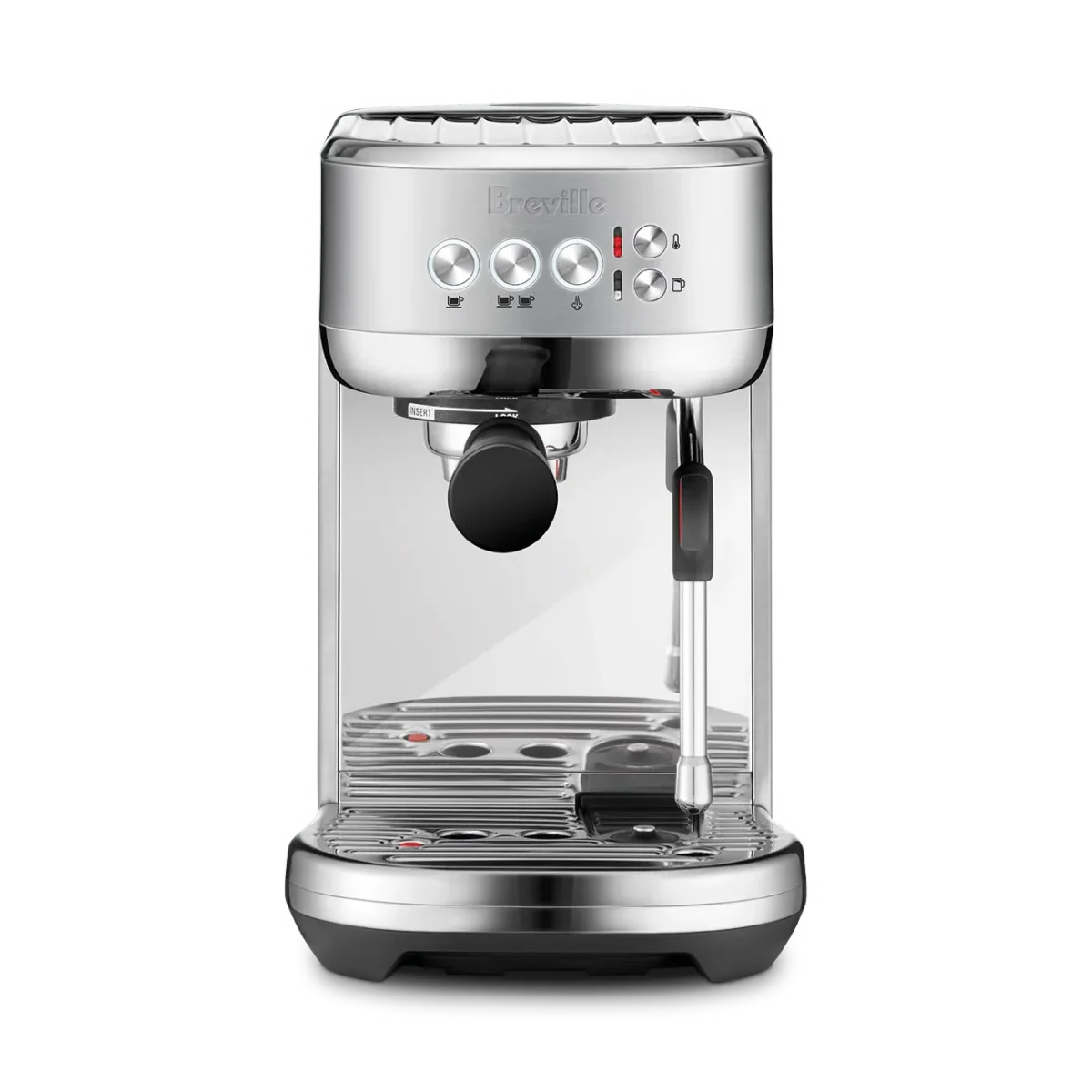
The best first espresso machine makes learning feel manageable. You should get to enjoy the coffee before acquiring strong opinions about filter baskets.
For a beginner who wants to learn espresso and regularly makes milk drinks, choose the Breville Bambino Plus. At $499.95, it handles milk steaming while you learn the coffee side. Allow roughly $740–$780 before tax for our example setup with a separate grinder and basic supplies. If that sounds expensive, it is: the grinder belongs in the budget from the beginning.
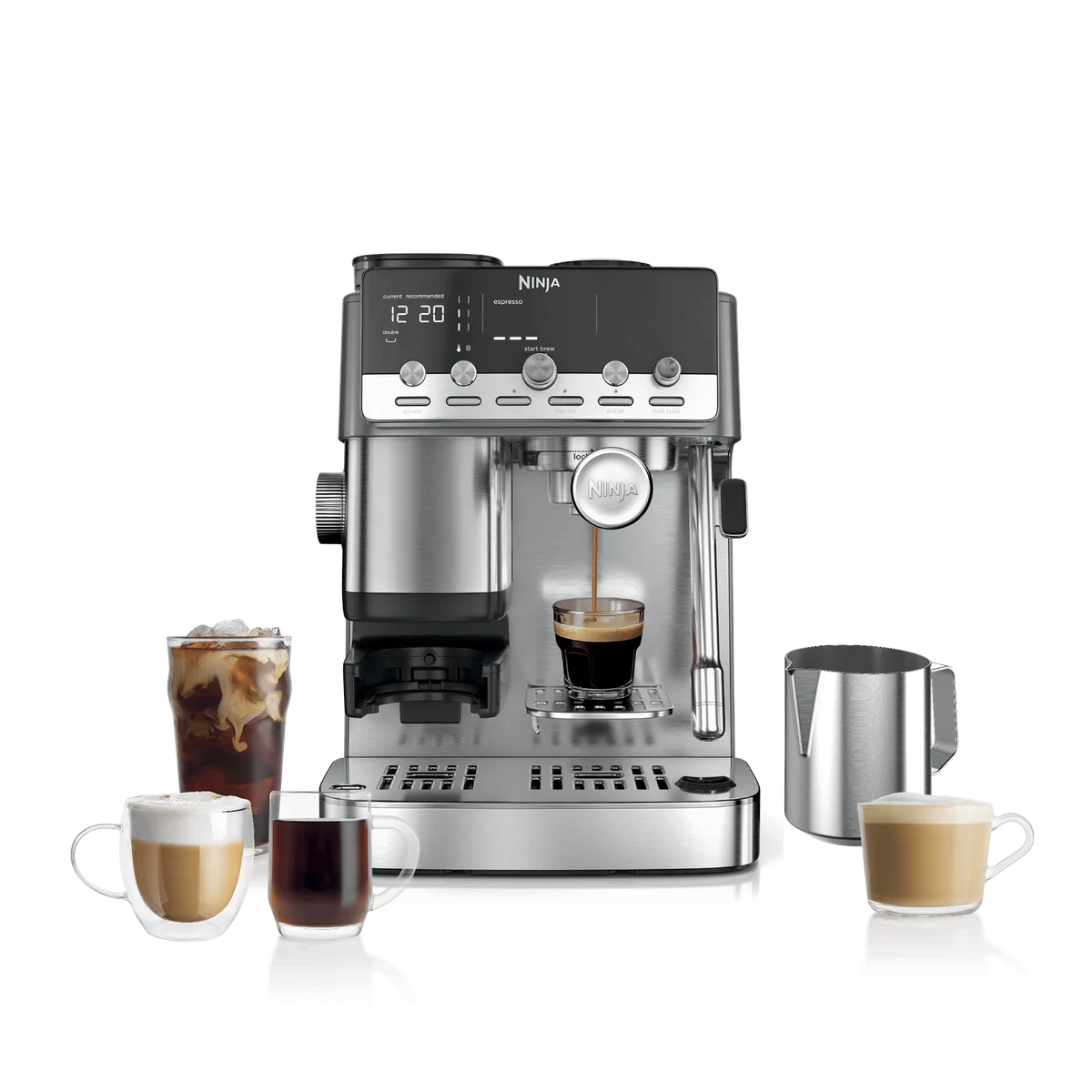
Want guidance with grinding too? The $499.99 Ninja Luxe Café Mini Plus ES351 includes a grinder, dosing scale and automatic milk, with less flexibility and shorter-term review evidence. Happy to learn manual steaming—or mostly drink straight espresso? The $299.95 Bambino leaves $200 for the grinder.
US buying advice for Autumn 2026, researched September 23. These are semi-automatic machines: you handle the coffee-filled handle, called a portafilter, and clean up afterward. If you want a drink at one touch with no tamping, start with the fully automatic distinction. Shopping links here are direct and non-affiliate.
The short answer
Choose the part you want to learn.
| Machine | Machine price | What it handles | What you still do |
|---|---|---|---|
| Bambino Plus | $499.95 | Shot-volume stopping; optional automatic milk | Choose a grinder, set grind and dose, tamp, clean |
| Ninja Mini Plus ES351 | $499.99 | Grind recommendations, dosing by weight, brew guidance and automatic milk | Follow prompts, tamp, move the portafilter, clean |
| Bambino | $299.95 | Shot-volume stopping | Choose a grinder, set grind and dose, tamp, steam milk, clean |
Prices are for new US models before sales tax and shipping. Colors, offers and availability can change. Ninja’s page includes stock-notification controls; confirm the selected model’s delivery status before paying. These are observed prices, not live offers.
Our default pick · $499.95
Breville Bambino Plus
For someone who wants the craft, with a little help at breakfast.
The Plus separates two learning curves. You adjust the grind, measure the coffee and tamp it level; the steam wand can take care of milk temperature and texture. Breville provides three settings for each, plus manual steaming when you want to take over. Its compact form also leaves room for a separate grinder, which you can replace independently later. Breville’s current US specification lists the milk jug, tamper and both single-wall and dual-wall baskets in the box.
Our recommendation rests on that balance of assistance and control, supported by Asser Christensen’s hands-on Coffee Chronicler review. He found the Plus capable across a range of coffees and useful for beginners, but flagged the small drip tray and lack of user-adjustable brew temperature. His more ambitious light-roast advice uses upgraded equipment; we would start with the supplied basket and a familiar medium-roast coffee.
The three-second ThermoJet claim describes the heater reaching temperature. It does not mean the portafilter and cup are already hot—or that you have made a latte in three seconds. Follow the manual’s pre-brew flush and warm your cup. A quick rinse is a small price for avoiding a dispiriting first sip.
The compromise: automatic milk is not automatic espresso. You still need an espresso-capable grinder and some trial shots. The milk temperature buttons do not change brewing temperature. For a strict budget or mostly black coffee, choose the basic Bambino; for grind guidance as well, consider the Ninja.
The guided option · $499.99
Ninja Luxe Café Mini Plus ES351
For the person who would rather follow a prompt than diagnose a puck.
The US Mini Plus puts the grinder and a dosing scale inside the machine. It recommends grind settings, portions grounds by weight and offers three automatic froth presets. That removes several early decisions and keeps the equipment bill close to the sticker price. It still asks you to tamp and move the portafilter between grinding and brewing; this is a guided routine, not a one-button latte.
The early reviews make a useful argument with each other. Tom’s Coffee Corner reported balanced espresso over several weeks, but inconsistent automatic milk texture and a cramped work area. Erin Bashford at Tom’s Guide appreciated the easy setup yet found the espresso short on complexity and the automatic milk less polished than manually steamed milk. We read that as a reason to recommend it for convenience-minded beginners, particularly milk-drink makers, rather than promise the most expressive straight espresso.
Get the model number right. ES351 is Mini Plus with automatic milk; ES301 is Mini with manual milk. The US ES351 offers espresso and drip-style coffee, but no dedicated hot-water outlet or cold-froth program. Use a kettle for an Americano. European drink menus and equipment can differ.
The compromise: there is less experience to draw on for long-term ownership, and the grinder is part of the appliance. We have no comparative failure-rate data. If milk texture matters more than grind guidance, our default remains the Bambino Plus. Choose Ninja for fewer decisions and a lower starting bill.
The lower-cost route · $299.95
Breville Bambino
Spend the difference on the thing that turns beans into espresso.
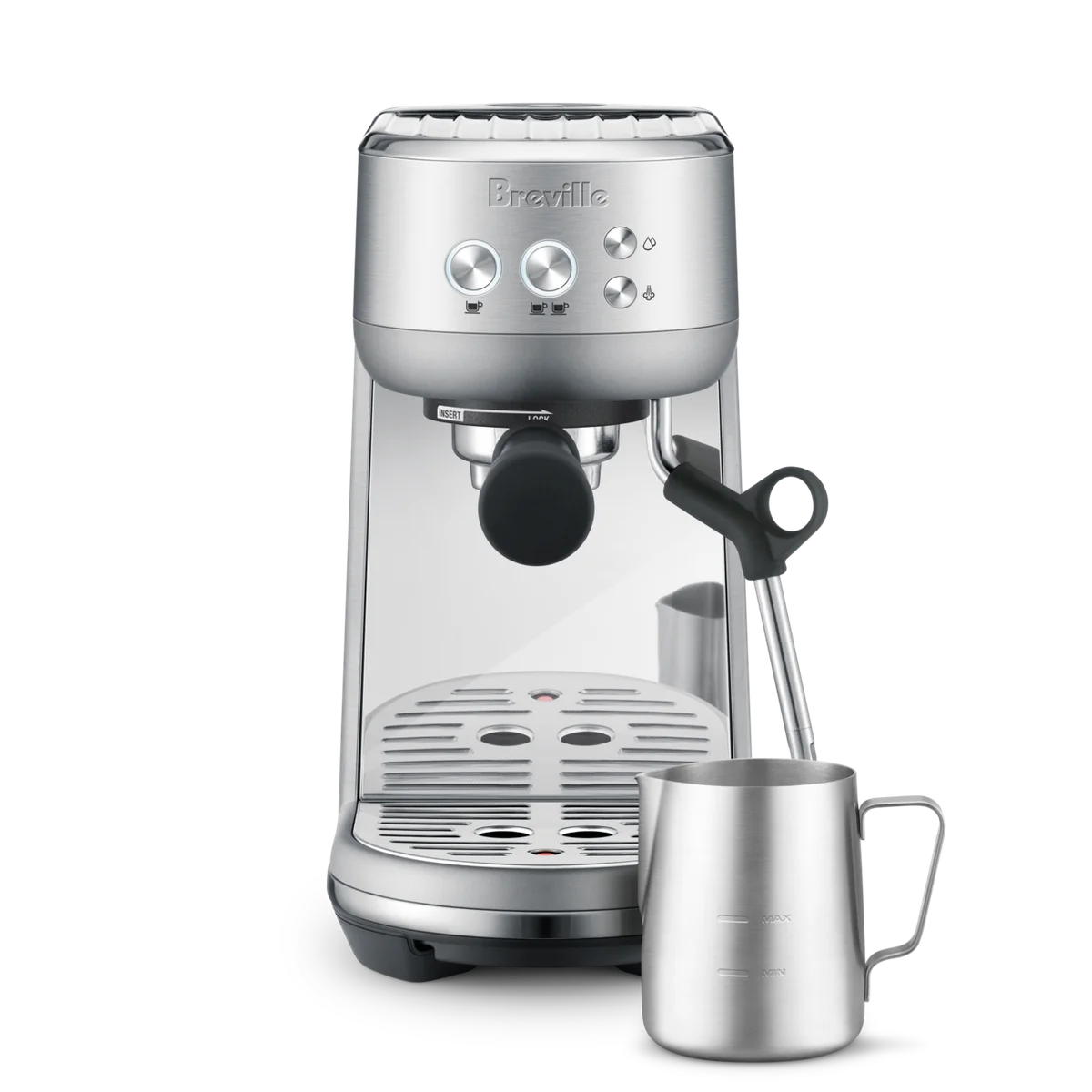
The basic Bambino BES450 retains quick heating, pre-infusion and programmable shot volumes. Its main everyday concession is manual milk steaming: you position the jug and stop when the milk is ready. The current US package includes a jug, tamper and both basket types, so you need not arrive with a drawer full of accessories.
Tom’s Coffee Corner’s budget setup advice recommends pairing it with the Baratza Encore ESP and describes the steam as capable with practice. That fits our reason for choosing it: an approachable way to learn without spending the grinder money on the machine. It is a value judgment, not a claim that the two Bambinos perform identically.
The compromise: you learn milk as well as espresso, and the US limited warranty is one year versus two for the Plus. For daily cappuccinos with minimal practice, the Plus earns its premium. For straight espresso, or someone who enjoys the learning, this is where we would save.
Before the checkout
Budget for the whole morning.
Our separate-grinder examples use the Baratza Encore ESP at $199.95, not the standard Encore or ESP Pro. It is an example starting point, not a required pairing. Our grinder guide under $200 explains alternatives and which models suit espresso.
| Setup | Machine + grinder | Suggested starting allowance |
|---|---|---|
| Bambino Plus + Encore ESP | $699.90 | About $740–$780 |
| Ninja Mini Plus, integrated grinder | $499.99 | About $520–$540 |
| Bambino + Encore ESP | $499.90 | About $540–$580 |
The extra $40–$80 for a Breville setup is our planning allowance for a small scale, an opening bag of beans and basic cleaning supplies; it is not a quoted bundle. With Ninja’s dosing scale and listed starter cleaning supplies, allow $20–$40 for beans and a cloth. A separate cup scale is optional there. Both Brevilles already include a jug and tamper. Skip the fancy distribution tools until you can say what problem they would solve.
Ongoing costs depend on your habits. As a transparent example, a 12-ounce bag costing $18 contains about 18 full 18-gram doses: roughly $1 of beans per double espresso, before dial-in waste, milk, water treatment, cleaning products or electricity. That is illustrative arithmetic, not a researched average bean price or a savings promise.
Start here
Make one coffee well before changing everything.
- Pick a forgiving coffee. Our starting suggestion is a fresh medium-roast espresso blend with flavors you already like. Stay with one bag while learning. Very light roasts add a challenge you can choose later.
- Set up for the basket you have. On the Brevilles, use the single-wall basket with freshly ground coffee; the dual-wall basket is the easier bridge for pre-ground coffee. Follow the supplied dose guidance. The Bambino Plus manual explains both, including first-use flushing and tamping.
- Keep a simple record. With a separate grinder, note coffee weight in and drink weight out. For the Breville double basket, 18g in and roughly 36g out is a starting experiment, not a universal recipe. Change one variable at a time. On Ninja, start with its guided routine rather than forcing another machine’s recipe onto it.
- Use taste and flow together. A very fast, thin, sour shot suggests trying a finer grind; a stalled shot suggests going coarser. Keep dose steady first. Sourness alone can also reflect temperature, coffee or uneven extraction, so do not keep grinding finer indefinitely. Recheck setup and the manual if results are erratic.
- Add milk, then clean. Learn one milk setting or one jug position. Wipe and purge the wand as the machine’s instructions direct after each use; rinse the basket and empty the tray. Automatic frothing does not wash the jug.
A beginner-friendly machine should make this repetition tolerable. The aim for week one is a drink you want again tomorrow. The swan in the foam can wait.
Life after unboxing
Cleaning and support count as features.
Leave room to fill the water tank, remove the hopper lid and put down a hot portafilter. A separate grinder needs its own counter space. Measure that working area, including clearance under cupboards, rather than relying on the word “compact.”
Use water and maintenance procedures appropriate to your exact machine. Descaling addresses mineral buildup; a coffee-cleaning cycle addresses coffee residue. They are not interchangeable. Follow the manual and alerts, and check local water hardness when planning treatment. In particular, do not copy the Plus’s cleaning-disc cycle onto a basic Bambino: use the BES450 instructions. Consumable costs vary with water and use; we have not invented a universal annual figure.
Bambino Plus lists a two-year limited warranty; Bambino lists one year. Breville’s US warranty terms describe prepaid shipping for qualifying service. Its direct-purchase return policy requires a return authorization and brand-new condition with packaging and accessories within 30 days of receipt. Do not mistake that for permission to trial a used machine for a month.
Ninja’s US ES351 listing specifies one year of limited warranty and directs buyers to the money-back period stated on their order; the page discusses 60- or 90-day terms for selected purchases. Check return shipping charges and exclusions with the seller before buying. Retailer returns may differ from manufacturer-direct terms. Keep the receipt and packaging until you know the machine suits you.
The wider field
A first machine need not be your forever machine.
The $799.95 Breville Barista Express Impress assists dosing and tamping but leaves milk steaming to you. We would choose it over our shortlist only if that particular preparation step is the problem you want solved. The $799.95 De’Longhi La Specialista Touch adds guided setup and automatic milk. Its profiles and settings may appeal to a household sharing different coffees, but our beginner brief favors a smaller starting bill; we have not established a cup-quality advantage that would justify making it the default.
Within Ninja’s range, the manufacturer’s comparison lists the Premier ES601 at $599.99 with cold brew and cold foam. Pay the extra $100 if those drinks matter; the Mini Plus covers our hot-espresso-and-milk brief. New fully automatic AutoBarista models also appear in that comparison, but they answer a different request: less handling of coffee altogether.
The Gaggia Classic Pro E24 and Profitec GO suit someone deliberately choosing a more hands-on single-boiler machine. The GO offers user-adjustable temperature; both make manual steaming part of the routine. They are credible paths into espresso as a hobby, but automatic milk and a simpler early routine matter more to our default reader. Our Bambino Plus vs Gaggia Classic Pro E24 comparison explains the warm-up, milk and ownership trade-offs of the current US models.
For a firmer price ceiling, read our guides to espresso machines under $500 and machines under $1,000. This page is organized around what a beginner wants to learn, rather than every machine that fits a budget.
Before you buy
The questions that change the choice.
Should I buy a fully automatic machine instead?
Yes, if handling grounds is the part you want to avoid. Fully automatic machines handle grinding, dosing and brewing internally; milk automation depends on the model. They still need cleaning. This guide’s picks retain a portafilter routine because they are for people who want some involvement in making espresso. Capsules are another convenience route, with a different coffee choice and per-drink cost.
Can I start with pre-ground coffee?
With a Breville dual-wall basket, yes. It is a reasonable temporary start if a grinder would stretch the budget, though you cannot adjust the grind as the beans change. Do not buy a basic blade grinder to complete a single-wall espresso setup. The Ninja recommendation assumes using its integrated grinder.
Is 20-bar pressure better than 15-bar pressure?
A pump’s maximum rating is not the pressure you want to chase in the cup. Breville specifies a 15-bar pump and nine-bar extraction on the Bambino. Ease of preparation, temperature behavior and a suitable grinder are more useful shopping criteria than the largest pump number.
Do I need to spend more if I use oat milk?
Not automatically. Milk formula, quantity and texture preference matter, and we have not run a dairy-versus-plant-milk comparison on these machines. Start with a barista-style milk and the maker’s fill and program instructions. If texture is decisive, buy with an explicitly suitable return policy rather than treating an “all milks” marketing claim as a guarantee.
Research & sources
How we chose—and what we have not tested.
Supply Coffee has not hands-on tested these espresso machines. We compared current US manufacturer listings, the Bambino Plus operating manual, ownership policies and original reviews, prioritizing an understandable daily routine, the complete setup cost and room to learn. This is a focused shortlist for home beginners making one or two drinks, not a laboratory ranking or an exhaustive test of the market.
Our principal outside experience comes from Coffee Chronicler’s Bambino Plus review, Tom’s Coffee Corner’s budget setups and Mini Plus review, and Tom’s Guide’s Mini Plus review, linked alongside the relevant claims. These publications use commercial or affiliate links. Their tests involve different coffees, settings and, sometimes, regional equipment; we do not present them as a controlled head-to-head comparison. Manufacturer specifications establish features, not flavor.
We resolved package and policy conflicts in favor of the current US manufacturer listings: both Brevilles now list single-wall baskets; Ninja lists starter cleaning products and a one-year ES351 warranty. We did not carry over a reviewer’s contrary two-year warranty or missing-cleaners claim. Stock widgets do not establish dispatch availability. Longer-term Mini Plus ownership evidence and a common-bean comparison of all three could change our recommendation.
First prepared September 23, 2026 for Autumn 2026. Product photographs are manufacturer imagery, not evidence of Supply Coffee testing. Recheck the selected configuration, price, delivery and seller terms at purchase.