The Supply edit Buying guide / Autumn 2026
Best Portable Espresso Machines: Self-Heating or Manual
Choose the Pixapresso when there’s no kettle, the Picopresso when there is. For capsule drinkers, the new Nano 2 earns a closer look—with a little patience for the evidence.
A research-based buying guide. We have not hands-on tested these espresso machines. The Nano 2 recommendation is provisional. How we chose
Find your travel companion Where to buy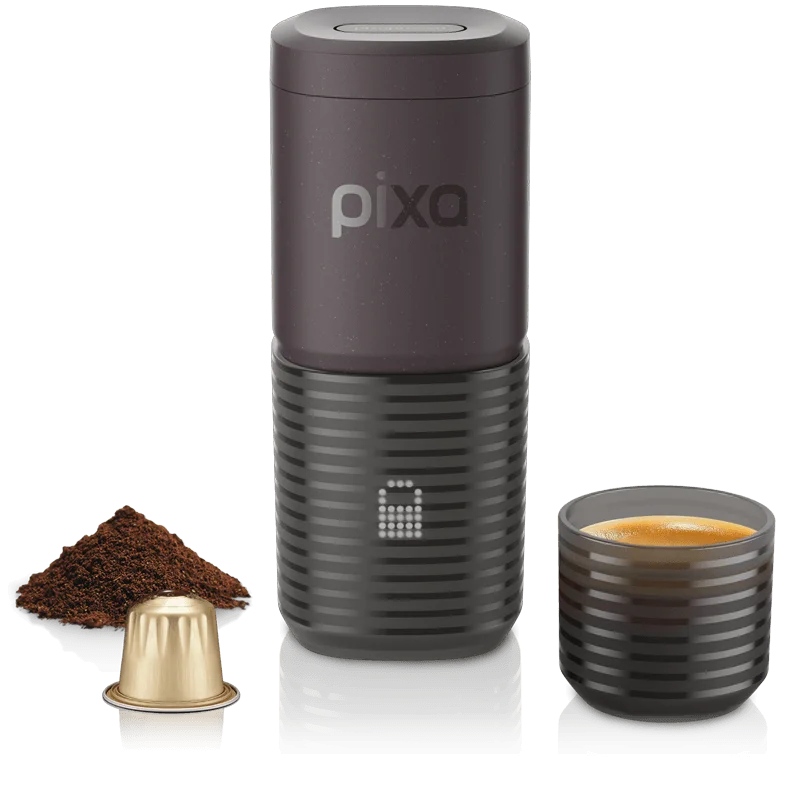
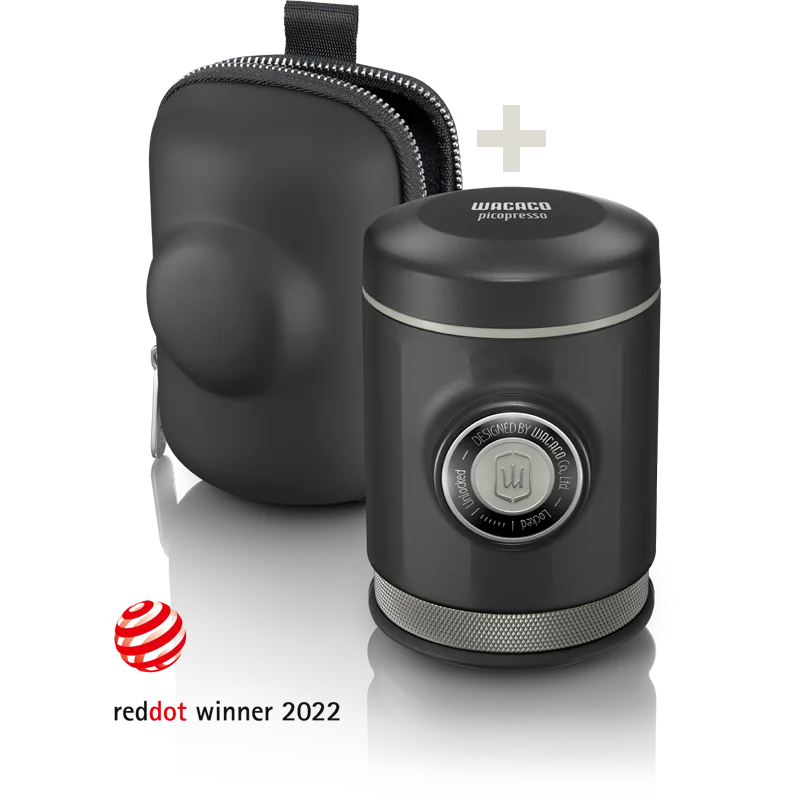
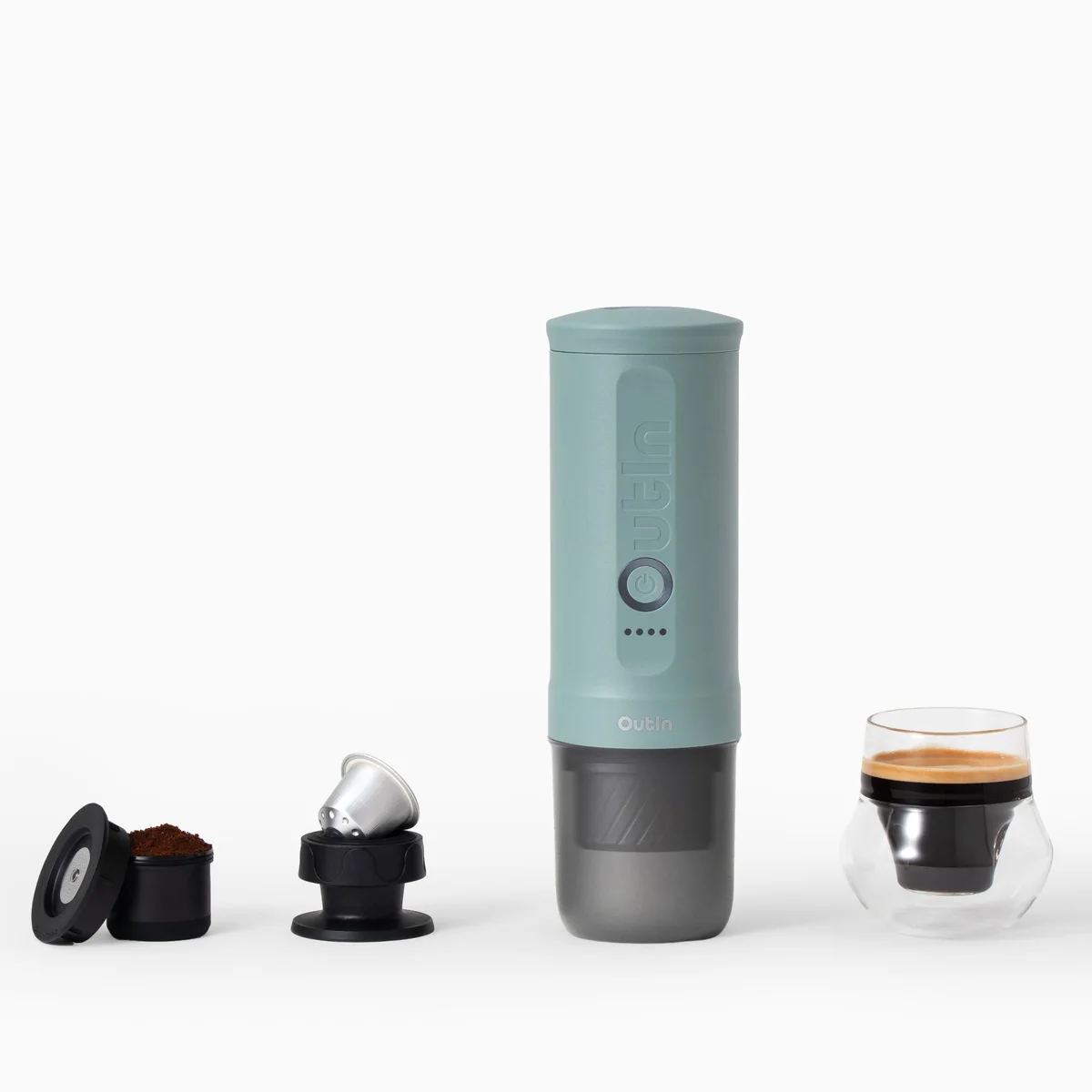
For most travelers who need a machine to heat its own water, we would buy the Wacaco Pixapresso (external site, opens in a new tab). If a kettle is already part of the plan, choose the Wacaco Picopresso (external site, opens in a new tab)—provided you have an espresso-capable grinder. The new OutIn Nano 2 (external site, opens in a new tab) is our provisional alternative for capsule drinkers who value a simpler interface and a larger claimed battery allowance.
Portable espresso is a pleasingly disproportionate pursuit: a small drink, a surprising amount of luggage. Get the choice right and you can have a familiar morning in an unfamiliar place. Get it wrong and you own an elaborate way to discover that the hotel room has no kettle. Start there, before admiring the colors.
Autumn 2026 · US buying context · Research and listed USD prices checked October 5, 2026, before tax and delivery. These are reference offers, not guaranteed checkout totals. We have not hands-on tested the machines. Manufacturer specifications, outside testing and our judgments are distinguished below. Research source links are non-affiliate; shopping links are disclosed above.
Three different mornings
The best portable espresso machine depends on your water supply
| Machine & reader | Reference price | Water & coffee | Main compromise |
|---|---|---|---|
| Wacaco PixapressoOur self-heating default | $159.90 (external site, opens in a new tab) | Self-heating; adjustable 8–16 g basket or Original-compatible capsules; 755 g | More settings, substantial weight and a limited heating budget |
| Wacaco PicopressoOur manual pick | $129.90 (external site, opens in a new tab) | Add hot water; 18 g unpressurized basket; 350 g | Needs a suitable grinder, practice and hand pumping |
| OutIn Nano 2Provisional capsule alternative | $179.99 (external site, opens in a new tab) | Self-heating; Original-compatible capsules or 8 g basket; 740 g | Early review evidence; larger-battery claim not independently verified here |
If your priority is a big mug of coffee with very little ceremony, pause before buying any of them. A portable espresso machine makes sense when the short, concentrated drink is the point. For a slower breakfast with more coffee, our pour-over setup guide may be the better traveling companion.
The real dividing line
Self-heating buys independence. Manual saves weight at the brewer.
The Pixapresso and Nano 2 heat water and create brewing pressure using a battery. You bring drinking water, coffee and a charged machine. The Picopresso does neither job electrically: you supply hot water and repeatedly press its pump.
For a hotel with a kettle or a campsite where you already boil water, the Picopresso avoids carrying another heater and battery. For a parked-car coffee stop or a desk without a kettle, self-heating is the useful luxury. Manual is not automatically the lighter system if it makes you pack a kettle, stove or flask you otherwise would have left at home.
Keep heating and pumping separate when reading a listing. An electric pump alone does not make a machine self-heating. Nor does a large advertised pressure figure tell you which espresso will taste better. We give more weight to the basket, workflow and documented brewing experience than to a contest between 18, 20 and 21 bar.
Our self-heating choice
Wacaco Pixapresso
The strongest case for carrying your own little coffee station.
At $159.90, the Pixapresso gives you useful room to change your mind. Its adjustable basket accommodates 8–16 g of grounds; the included capsule module takes Nespresso Original-compatible capsules. Wacaco provides three temperature settings—88, 92 and 96°C—and a pre-infusion option, which wets the grounds before the main extraction. The 120 ml tank offers flexibility, though filling it does not produce 120 ml in the cup: the coffee retains some water.
That range matters more to us than the display. You can take capsules on a brief work trip and spend a quieter weekend learning to brew with beans. A scoop/tamper, funnel, brush, cups, carrying pouch and USB-C cable are included. The optional hard case is a separate purchase; the base price does not buy every accessory in the catalogue.
Matt Woodburn-Simmonds at Home Coffee Expert reports successful medium-dark espresso after roughly ten attempts to settle the recipe. His best results used a good grinder and a basket converted to unpressurized operation. That qualification matters: the enthusiasm is not evidence that casually scooping pre-ground coffee into the standard setup produces the same result. Consult Wacaco before changing the basket; we are describing the review conditions, not making a modification a prerequisite for ownership.
The same review criticizes the touch interface, lightweight accessories and slow heating. At a listed 755 g, this is not a particularly small commitment to a backpack. And the three temperature settings are heater targets, not our measurements of water at the coffee. We would not promise a demanding light-roast espresso on that basis alone.
Choose something else if: you only use capsules and prize a one-button routine; consider the Nano 2, with the evidence caveats below. If you already have boiling water and enjoy dialing in espresso, the Picopresso leaves the battery at home.
Our manual choice
Wacaco Picopresso
For people whose packing list already includes coffee beans.
The $129.90 Picopresso is the more focused proposition: an 18 g basket, an 80 ml water chamber and a hand pump in a 350 g device. No heater, no charging routine, no capsule module. The standard package includes its case, tamper, funnel and distribution tool. A pressure gauge and stand are optional extras.
Its unpressurized basket relies on the resistance of properly ground and prepared coffee. That is why the grinder is part of the recommendation, not an optional flourish. If supermarket pre-ground coffee is your normal supply, do not buy a Picopresso and expect the machine to compensate. Our hand-grinder guide identifies espresso options; a grinder suited to filter coffee alone is not enough.
Asser Christensen’s original Picopresso review praises its textured espresso and compactness, while warning that it requires steady hands and can become uncomfortable to hold when thoroughly preheated. We find that a more useful endorsement than a claim that it replaces a café. You are buying a convincing way to practice espresso away from your counter, with the work still attached.
Picture the whole sequence: heat water, prepare the chamber as instructed, grind, distribute, tamp, fill, pump, empty and rinse. It can be a lovely little ritual; it can also be the wrong proposal for someone waiting to leave. Practice at home with the coffee you intend to take. A departure lounge is a poor place to discover your grinder setting.
Choose something else if: hand pumping is uncomfortable, you cannot reliably get hot water, or several people expect quick coffees. A battery pump removes the repetitive pressing; it does not remove basket preparation and cleanup.
A promising new alternative
OutIn Nano 2: the provisional capsule pick
Worth considering for simplicity and charging—not yet a proven endurance winner.
The $179.99 Nano 2 keeps the OutIn one-button approach and adds a 740 g body, 85 ml tank and 45W USB-C PD charging. OutIn claims a full charge in 100 minutes with appropriate charging equipment. It takes Nespresso Original-compatible capsules and includes an 8 g ground-coffee basket. Those are different commitments from the Pixapresso’s larger adjustable dose and temperature menu.
Our reason to shortlist it is specific: a capsule user who wants few decisions and more claimed heating cycles between charges. OutIn reports up to nine brews when heating 50 ml from 25°C to 93°C each time. That could be useful across a weekend; it is a laboratory claim from the maker, not a nine-coffee promise for an October campsite.
In a September 30 review, Jack at My Coffee Show demonstrates the Nano 2 and likes the resulting coffee, while criticizing fiddly grounds loading and the small dose. He uses preheated water for the demonstrated shot. OutIn supplied his machine, and he discloses commission links. His review supports the simple workflow, but does not independently validate the cold-water battery claim. We have not established long-term reliability for this new model.
Do not order the original Nano’s Basket Plus for it. OutIn explicitly says that accessory is incompatible; a dedicated Nano 2 version was still described as forthcoming when checked. Buy the machine for the package available today. If your plan depends on a full double basket, choose the Pixapresso or Picopresso instead.
Our boundary: the Nano 2 is a provisional choice for the capsule-and-battery brief, not our overall winner. Existing Nano owners who are happy with their coffee have little reason to replace a working setup solely for a new model name.
Read the small print before the big number
“200 extractions” does not mean 200 coffees from cold water
Wacaco advertises up to five espressos from cold water, versus roughly 200 extractions using preheated water. The second number leaves the energy-intensive heating job to something else. Larger water volumes also reduce the heating allowance. Neither figure describes an unlimited supply of hot water for Americanos or rinsing.
Even the Pixapresso’s three-minute heating headline needs care: one part of its page qualifies that time for 35 ml at 88°C, while another describes 55 ml. We would budget several minutes rather than promise a stopwatch result. Home Coffee Expert describes heating as slow and lists four room-temperature-water espressos per charge; its review is not a matched battery test against Nano 2.
Priya Chauhan at Homecrux is more critical, reporting only two to four heated brews depending on settings and finding the charging wait frustrating outdoors. Her account discusses heating 80 ml to 96°C, so it is not directly comparable to a smaller, cooler recipe. It is a good reason to choose the Pixapresso for flexible brewing with regular access to charging, not for serving a group far from a socket.
The Nano 2’s nine-brew claim specifies 50 ml starting at 25°C. Its early video review mentions eight without establishing a controlled measurement. We use the current manufacturer figure, label it, and do not average the two. Colder starting water, larger fills and repeated heating change the job the battery must do.
For a trip where coffee depends on it, rehearse your actual recipe and charging setup first. Allow a margin instead of allocating every advertised brew. Match the charger to the machine: USB-C describes the connector, not a guarantee of full charging speed. Wacaco also says the Pixapresso cannot brew while charging. A nearly empty battery and a nearby socket do not instantly equal breakfast.
The bag is the real unit of measurement
Budget for what leaves the house
The Picopresso is less than half the Pixapresso’s listed device weight, but add an espresso grinder, beans, a cup, cleaning water and your hot-water source before declaring victory. A capsule setup can leave the grinder behind. It still needs capsules, water, charging equipment and somewhere to keep the used capsules until you can dispose of them properly.
A useful budget is machine + missing essentials + consumables. Already own a suitable grinder and kettle? The Picopresso may only require its $129.90 purchase price before tax and delivery. Starting from nothing? Add your chosen grinder and heating solution before comparing it with a $179.99 capsule machine. Do not buy a gauge, stand and replacement tamper before finding out whether you enjoy the basic routine.
For recurring capsule costs, multiply the price you actually pay per capsule by your usage: two a day is 60 capsules over 30 days. For an 18 g Picopresso recipe, a 250 g bag provides about 13 complete doses before dialing-in losses. These are planning calculations, not claims that the drinks are the same size or quality.
Leave room for cleanup and support
Let the brewer cool and follow its instructions before opening it. Carry something for spent grounds and wet parts; clean and dry them before storage. Wacaco says the Pixapresso is neither dishwasher-safe nor suitable for immersion. A self-heating machine still has coffee-contact parts to wash.
Wacaco lists two years of defect cover for Picopresso and one year for Pixapresso; normal battery degradation is excluded from the latter. Its replaceable-battery design is encouraging, but we have not verified a US replacement pack price or delivery time. OutIn publishes a 12-month limited warranty. None of those terms establishes comparative service life.
Read the actual seller’s return terms before treating an online purchase as a trial. Wacaco’s direct policy has a 30-day window, buyer-paid return shipping, packaging requirements and a sale-item exclusion. OutIn requires prior authorization and puts buyer-initiated return shipping on the buyer. Policies from another retailer may differ.
Why the list stops here
Other portable espresso machines we considered
Original OutIn Nano: a discount or an existing setup changes the calculation
The original remains interesting for capsules if discounted meaningfully below Nano 2. The checked Space Grey listing showed $140.24 sale / $164.99 reference pricing, with different prices elsewhere on the site. Confirm the exact color and checkout offer. It is listed at 670 g and supports its own larger Basket Plus, sold separately.
Christensen’s original Nano review found good results with that upgraded basket, initially using dark roasts; a later update reports success with medium roasts after adjusting preheating and ratio. That is useful dissent against dismissing the older machine. It does not establish Nano 2 performance or accessory compatibility. For an owner who already has the larger basket, keeping it may be the nicest upgrade of all: nothing else to pack.
OutIn Mino: faster-heating claims, a smaller standard dose
The Mino listing specifies 685 g, a maximum 12 g basket and up to six heating cycles using 50 ml from 25°C. We did not find enough reason to make it the default over the more adjustable Pixapresso. Its original-Nano Basket Plus incompatibility is another reason to check parts by model, not brand.
Wacaco Nanopresso: the inexpensive, more forgiving route
The $64.90 listed Nanopresso is worth a look if you want a small pressurized-basket brewer and already have hot water. Its standard 8 g dose and separately sold capsule/double-shot accessories limit the bargain. Christensen found its coffee less satisfying than the Picopresso’s. We would keep it simple and inexpensive, rather than build an accessory collection around it.
Flair 2GO and other levers: portable can mean a different sort of bag
The current Flair 2GO folds into a case and includes a pressure gauge; Flair lists it at 4 lb. It has a place in a campervan or a suitcase for someone who wants the lever ritual, but it is a different packing proposition from our handheld picks. Do not rely on old “Flair GO” roundups for the current name and package. Home Coffee Expert also likes the Leverpresso Lite V4 for enthusiasts, while noting its learning curve and need for a stable surface. Those are credible alternatives if pressing a lever is part of the attraction.
Before you decide
The practical questions
Do these machines take Nespresso Vertuo capsules?
No. The capsule compatibility discussed here is Nespresso Original-style, not Vertuo. Wacaco also warns that some compatible third-party capsules may not work well. Try your preferred capsule before buying a trip’s supply. Picopresso uses grounds only.
Can they make a cappuccino?
They make the espresso component; none of these three includes a steam wand. Hot textured milk requires another solution. If cappuccino is your everyday aim and travel is occasional, start with our beginner espresso-machine guide before assembling several portable appliances.
Can I make several coffees in a row?
Yes, within the machine’s operating instructions and remaining battery capacity where applicable, but each drink still needs coffee loading and cleanup. A manual brewer also needs another hot-water fill. We have not timed a four-person round on these machines; no recommendation here assumes café-speed service.
Which would we take camping?
If boiling water and an espresso grinder are already coming, Picopresso. If neither is coming and capsules are welcome, Nano 2 is the provisional simple choice; Pixapresso is our better-supported default when you also want to use larger ground-coffee doses. For a long trip without charging, the manual route avoids a battery limit—but still needs that dependable hot-water source.
Research & limits
How we chose these machines
Supply Coffee checked official product listings, package contents, specifications and purchase policies on October 5, 2026. We prioritized the availability of hot water, coffee format, preparation effort, complete-kit implications and the limits behind battery claims. The shortlist covers two established approaches and one explicitly provisional new alternative. It is an editorial recommendation based on research, not a ranking from our own taste tests.
We read original experience from Home Coffee Expert on Pixapresso, Homecrux’s less enthusiastic battery assessment, The Coffee Chronicler on Picopresso and the original Nano, plus the My Coffee Show Nano 2 transcript. The Coffee Chronicler, Home Coffee Expert and My Coffee Show disclose affiliate links; Homecrux also links through an Amazon short URL. The Nano review describes supplied equipment, and the Nano 2 video explicitly thanks OutIn for its unit. We have not established all other unit-acquisition terms. Their findings are attributed and their conditions preserved; one reviewer’s shot is not a controlled comparison against another’s.
We have not physically tested these machines, measured brew temperatures or run matched battery trials. Retail-unit testing of Nano 2, including colder starting water, consecutive drinks and longer-term battery behavior, could change the recommendations. Until then, the most dependable buying question is pleasantly ordinary: where will your hot water come from?
Where to buy
Shop the featured products
Check the seller’s current price, configuration and availability before buying.
Wacaco Pixapresso
Wacaco Picopresso
OutIn Nano 2