The Supply edit Buying guide / Autumn 2026
Best Coffee Grinder for Light Roast Coffee
Start with the Ode Gen 2 for electric filter brewing, or the ZP6 Special if you enjoy grinding by hand. Espresso calls for a different shortlist—and a closer look at the burrs.
A research-based buying guide. We have not hands-on tested these grinders. How we chose
Find your grinder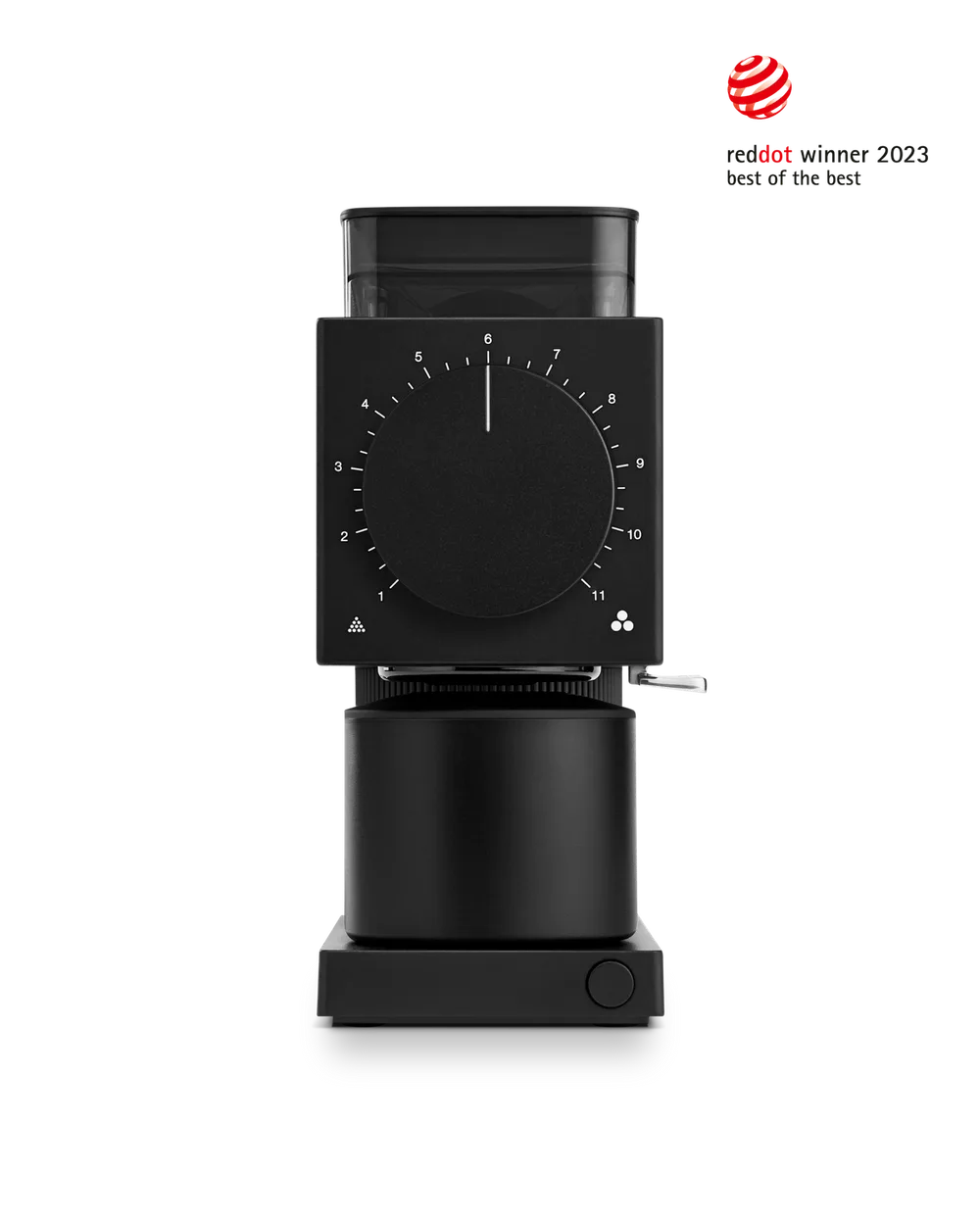
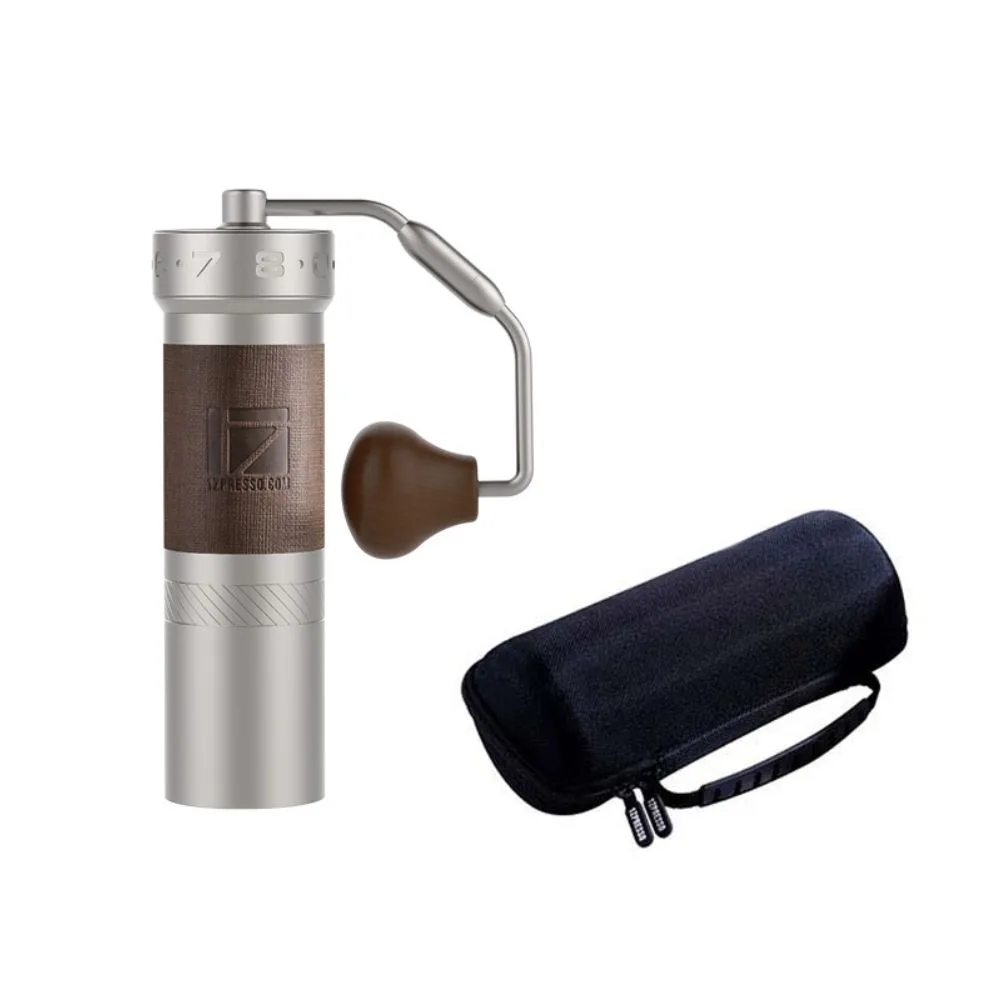
The Fellow Ode Gen 2 is our starting point for most people making light-roast filter coffee at home. It combines capable standard brew burrs with a convenient daily routine. For one or two cups and a little hand-powered ritual, choose the 1Zpresso ZP6 Special instead.
Espresso changes the answer. The DF64 Gen 2 is our accessible starting point for someone who wants espresso now and compatible burr options later. The Mazzer Philos with I200D burrs has the stronger premium light-espresso case in the reviews we examined, but costs considerably more. For committed filter drinkers, the Timemore Sculptor 078 is an upgrade to consider for its particular cup profile.
The useful question is what you want to taste. A light-roast label does not tell us whether you prefer delicate, distinct flavors or a rounder, more blended cup. Nor does it say whether you are brewing a V60 or trying to dial in an espresso shot before the train leaves.
Autumn 2026 · US buying guide · Researched September 23, 2026. These recommendations combine current specifications and attributed outside reviews. Supply Coffee has not tested these grinders. All purchase links are non-affiliate.
Start with your brewer
Five choices, with filter and espresso kept distinct
| Grinder | Who it suits | Price | Main compromise |
|---|---|---|---|
| Fellow Ode Gen 2 | Everyday electric filter brewing | $399.95 | No espresso; standard Gen 2 brew burrs |
| 1Zpresso ZP6 Special | Manual filter, distinct flavors | $209 | Hand grinding; not our espresso choice |
| Timemore Sculptor 078 | A deliberate filter upgrade | $799 | More particular taste appeal; filter-only 078 |
| DF64 Gen 2 | Espresso and future burr experiments | $399 | Bellows routine; upgrades cost extra |
| Mazzer Philos · I200D | Premium light-roast espresso | $1,495* | Large commitment; confirm availability |
Prices exclude applicable tax, import charges and additional delivery costs. *Mazzer’s US page displayed $1,495, an unavailable label and a notice of a rise to $1,595 on October 1; confirm the selected I200D configuration and actual checkout price. These are dated references, not live offers. Exact sources are linked in each section.
Only brew filter? Start with the Ode or ZP6. Need espresso too? Start with the DF64; the Philos is the expensive alternative. The Ode and filter-only 078 do not become espresso recommendations because they contain flat burrs.
Our everyday filter choice
Fellow Ode Gen 2
$399.95 · Standard Gen 2 brew burrs · Electric filter grinder · Exact configuration
Choose the Ode when you want to enjoy the coffee more than you want to manage the grinder. Its numbered front dial, magnetic cup, anti-static system and automatic stop make a sensible daily combination. The listed 100g capacity also leaves room for a larger batch; a family breakfast should not require several miniature grinding ceremonies.
There is relevant light-roast evidence behind the convenience. In Arne Preuss’s Gen 2 review at Coffeeness, a washed Ethiopian Yirgacheffe produced rewarding clarity and depth. He held a 20g coffee/300g water recipe constant while changing grind size and reported differences in sweetness, texture and body. That supports the standard burrs’ capability, rather than a requirement to buy an upgrade immediately.
Choose something else if: espresso is part of the plan. Fellow explicitly excludes it. The Ode’s case here is everyday filter use with its supplied Gen 2 burrs; an SSP-equipped Ode is a different purchase with a different taste argument.
For one carefully made cup
1Zpresso ZP6 Special
$209 · Filter-focused conical burrs · Listed 30–35g capacity · Manufacturer listing
The ZP6 is our manual choice for someone who enjoys picking out fruit and floral flavors in light-roast filter coffee. “Clarity” describes how distinct those flavors seem. It is a preference worth exploring, not a test you must pass to appreciate good coffee.
In Asser Christensen’s original 1Zpresso comparisons, he preferred the ZP6 over K-Max and X-Pro in blind tastings with very light roasts. He also found it less engaging with some chocolate-and-nut profiles. Those are specific comparisons and a useful boundary; they do not establish a universal win over the Ode, K-Ultra or every electric grinder.
The external adjustment ring is convenient when changing coffees. You still turn the handle and unscrew the grounds cup for every dose, and Christensen reports slower grinding than other leading 1Zpresso models. Try the physical routine if you can, particularly if you regularly brew several cups.
Choose something else if: you want an espresso grinder or dislike manual effort. Buy this for its filter role. Its conical burrs are also a useful reminder that flat burrs do not own the word “clarity.”
Upgrade for a preference
Timemore Sculptor 078
$799 · 078 Turbo burrs · Filter only · Exact black 078 listing
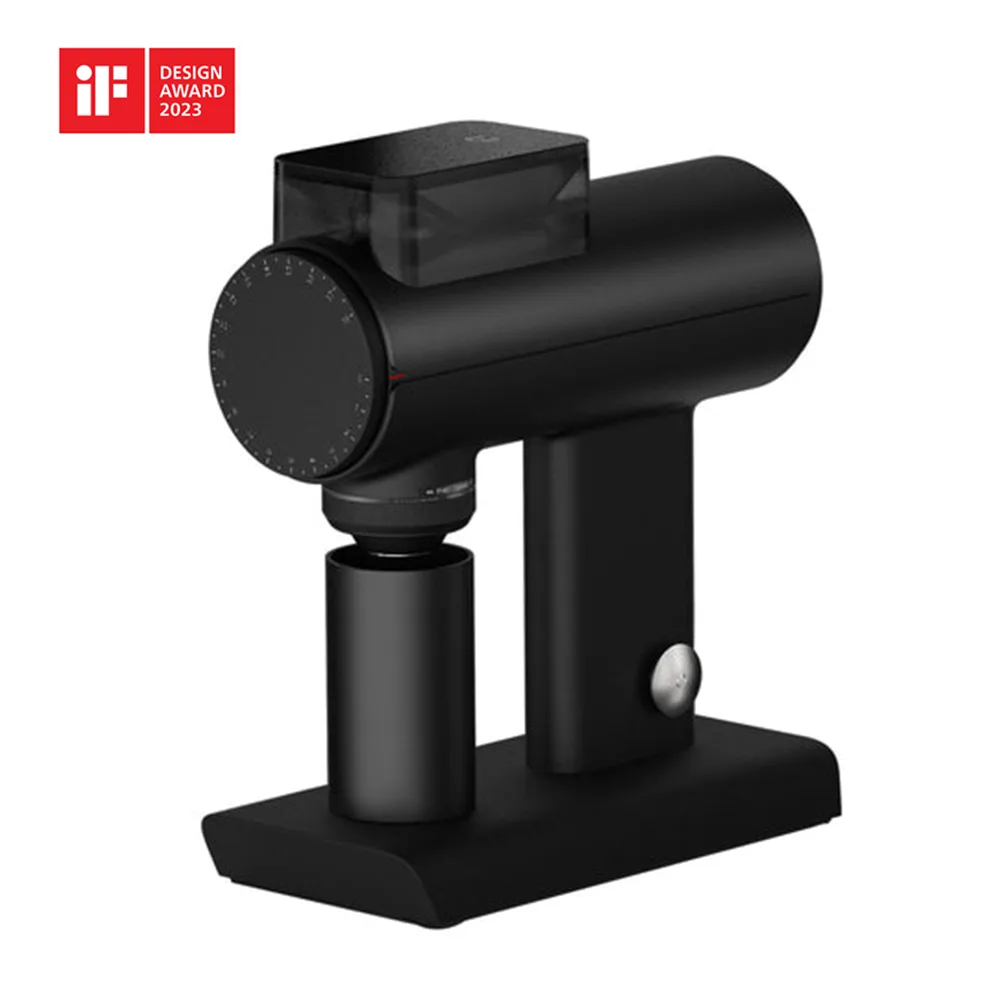
The 078 is worth considering when you already know what you like about very light filter coffee and want to explore a different presentation. Its variable motor speed and rotary chute knocker give it a distinct routine as well as a different burr design. We would audition it with familiar beans before committing roughly $400 more than the Ode.
Christensen’s long-term review is particularly enthusiastic about some natural and anaerobically processed coffees. It is more reserved about washed coffees, for which he often preferred other premium grinders. Processing describes how the coffee was handled after harvest; it is separate from roast level. This distinction is why we do not call the 078 the automatic winner for every light-roast bag.
The same review reports hopper feeding and bouncing-bean frustrations. Timemore’s FAQ lists roughly 30g standard hopper capacity and a 60-second shutoff, which is a timeout rather than the Ode’s grind-completion stop. A 50g batch fits within the Ode’s stated capacity but exceeds that standard 078 allowance.
Choose something else if: you want an uncomplicated first filter grinder or large single loads. The 078S is also a different burr configuration; do not borrow this filter review’s findings for its espresso performance. Our Ode vs 078 comparison goes further into the tasting evidence.
An accessible espresso platform
DF64 Gen 2
$399 · MiiCoffee US version · Stock 64mm steel burrs · Configuration · USD price reference
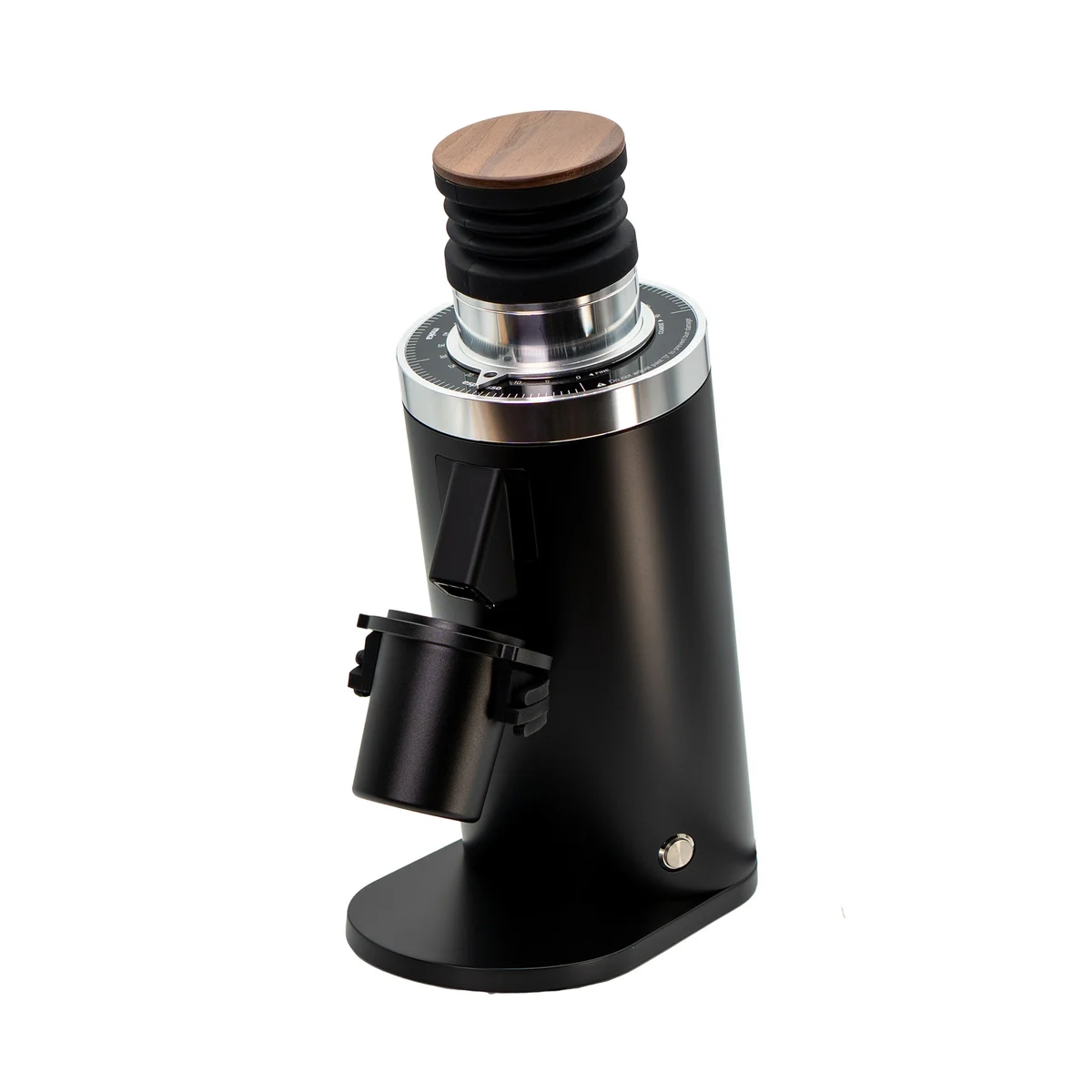
Choose the DF64 if you want to make light-roast espresso, occasionally brew filter and leave room for later burr experiments. Its stepless adjustment lets you make small changes between shots. The price buys the standard burrs, not a ready-made SSP setup.
In his Gen 2 review, Christensen found more acidity and a more modern flavor profile than in the original DF64, with body and flavor separation in espresso. He also liked the newer stock burrs for light and medium roasts. This supports a capable starting point; it is an older Gen 2 test, not independent validation of every running hardware revision.
MiiCoffee currently lists V2.6, including changes to the anti-popcorn disc after earlier chute revisions. Confirm the actual supplied version. We would start with stock burrs, weigh each dose and learn the bellows routine. Only price a compatible replacement once you can describe what you want to change in the cup.
Choose something else if: you have no interest in the 64mm burr ecosystem and simply want affordable espresso. The $229 DF54 deserves consideration: Christensen found its stock-burr espresso very similar. The DF64 is here for flexibility, not because we have proved a $170 taste improvement.
The premium espresso consideration
Mazzer Philos · I200D
$1,495 checked reference · I200D burrs · Verify stock and October price · US store
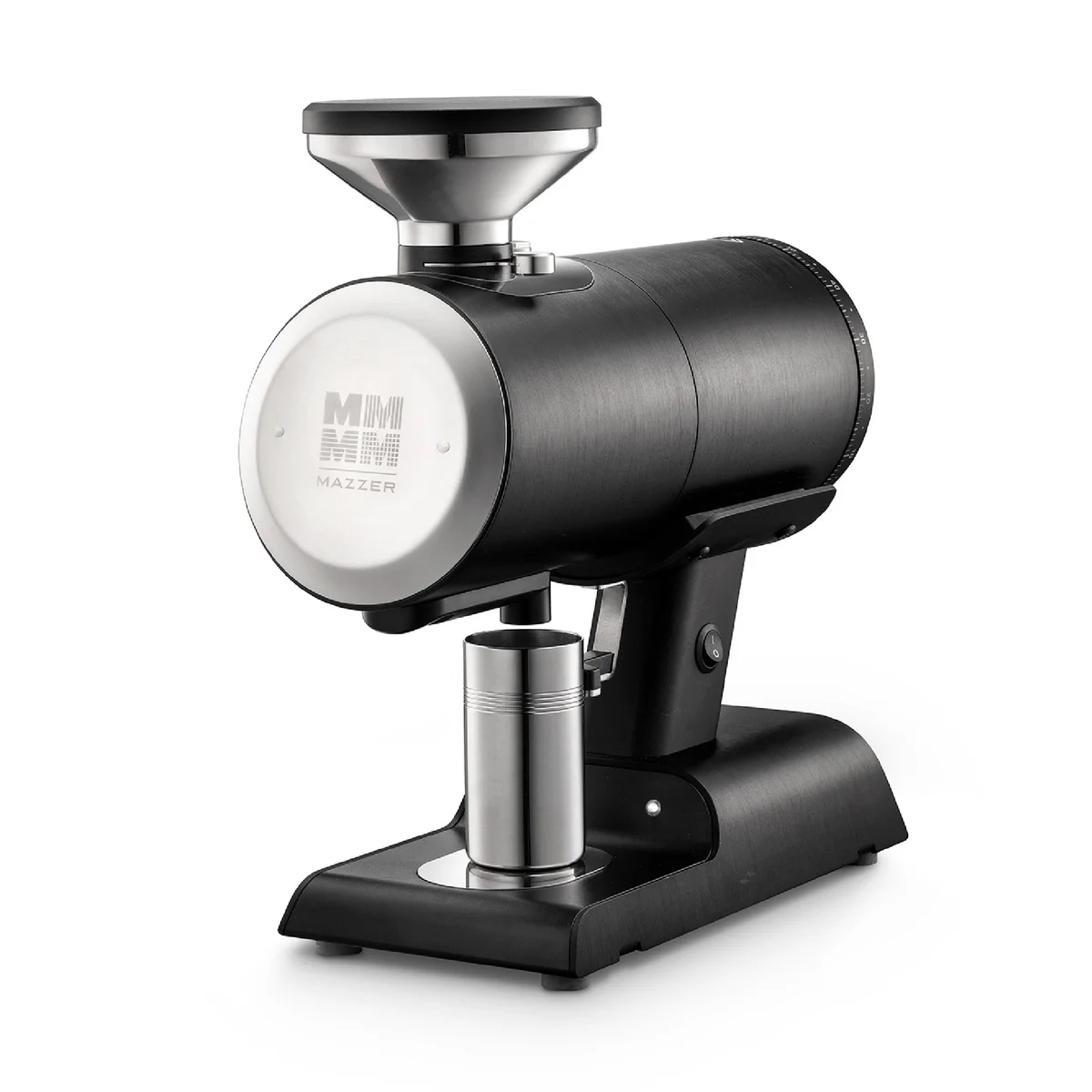
The Philos is the expensive choice for someone whose main interest is light-roast espresso. Specify I200D: Mazzer also sells the machine with I189D burrs, aimed at a different flavor preference. The photograph shows the exterior, not which burrs are inside.
In Matthew Korfhage’s WIRED review, a month with the I200 configuration produced notably sweet, full-bodied espresso from lighter coffees across several machines. His filter results were less decisive: he did not find them better than what he could achieve with an Ode Gen 2. That is a strong reason to reserve this recommendation for espresso-led households.
The front-access grinding chamber makes cleaning an appealing part of its design. But the listed 12.5kg weight and 351mm depth call for a proper place on the counter, with access to the rear adjustment. This is not a grinder you casually put in a drawer after breakfast.
Choose something else if: you mainly brew filter or need a confirmed immediate delivery. Mazzer’s page showed unavailable language alongside its price and announced $1,595 from October 1. Confirm the exact order before budgeting. We have no controlled evidence that it produces a fixed percentage improvement over the DF64.
Spend with a question in mind
Before buying a new grinder—or new burrs
First decide what is missing. “The flavors blend together,” “I cannot make a small enough espresso adjustment,” and “I dislike grinding by hand” are three different problems. A new grinder might answer one and leave the other two untouched.
- Keep a reference coffee and recipe. Use the same beans, water, dose and brewer while making small grind changes. Taste as the drink cools. Otherwise, a new bag or different recipe can take the credit for an equipment change.
- Separate brightness from an unpleasant cup. Wanting less sharpness does not automatically mean you need the grinder described as having the most clarity. Ask the roaster for a starting recipe, then change one variable at a time.
- Price the actual configuration. Burrs, installation, alignment work and support can change the value. Compatibility is about the exact burr and grinder revision, not just two matching diameter numbers.
SSP is a manufacturer, not one universal upgrade. Christensen’s DF64 review describes different results from Multipurpose V1, V2, Cast and High Uniformity sets. An “SSP grinder” comparison without the burr version tells you too little. Our flat vs conical burr explainer covers why shape alone is an unreliable shopping shortcut.
The purchase you actually make
Read the return policy before planning a home tasting
A grinder’s flavor is personal; its return terms can be quite specific. The table describes the named direct sellers, not every retailer. Confirm US voltage for electric models, dispatch, repair destination and the complete delivered cost.
| Seller / grinder | Warranty established | Return consideration |
|---|---|---|
| Fellow / Ode Gen 2 | Two years standard | 30 days from purchase, original condition; listed US return label $15 for a separately purchased electric product, with exceptions. |
| 1Zpresso / ZP6 | One-year limited coverage | Direct page mixes faulty-item instructions and an original-condition refund table. Confirm change-of-mind terms and any deductions before ordering. |
| Timemore / 078 | Limited coverage; duration not established on reviewed policy | Seven days from purchase, new and unused; buyer pays non-quality return freight. Warranty-service shipping excluded. |
| MiiCoffee / DF64 | One year from delivery; buyer pays inbound repair freight | Request within 30 days of receipt; reasonable use accepted, original packaging/accessories required. Non-defect return freight is buyer-paid. |
| Mazzer US / Philos | 365 days from warehouse shipment; inbound repair freight normally buyer-paid | 14 days from receipt, like-new with packaging and authorization; listed 20% restocking fee and nonrefundable freight. |
At the checked $1,495 Philos price, 20% is $299 before freight. That makes “order it and see” a meaningful financial decision. MiiCoffee explicitly excludes grind dissatisfaction and clogging from its defective-product definition; read the ordinary return terms even if a grinder’s results disappoint you.
For the ZP6, allow for any applicable import charges and verify dispatch: the direct page still carries an old February holiday notice alongside its shipping guidance. A listed price is evidence of a reference cost, not proof that a particular color will reach your kitchen next week.
The rest of the decision
Other options and useful questions
Do I need to spend $400 for light-roast coffee?
No. The ZP6 is the lower-cost specialist here, and the DF54 is the cheaper electric option worth comparing if burr upgrades are not your aim. Existing grinders also deserve a careful recipe adjustment before replacement. Our under-$200 guide covers a lower spending ceiling; those picks should not be mistaken for winners of a blind light-roast comparison.
What about K-Ultra, J-Ultra and newer hand grinders?
Our hand-grinder guide covers broader all-purpose and espresso priorities, including the Mavo Phantox Pro value challenge. Here the ZP6 earns its place through specific light-filter evidence. We also screened the newer 1Zpresso Diamond A, but did not establish sufficiently strong original light-roast comparison evidence to make it a recommendation.
Will fewer fines always make better coffee?
No. Fines are the smaller particles within the grounds; “fewer” is not a taste score. Consider the complete burr design, brewing method and the result you enjoy. The ZP6 and 078 reviews above show why a highly distinct presentation can be appealing with one coffee and less satisfying with another.
Is a grinder upgrade worthwhile if I already like my coffee?
Perhaps, if you want an easier routine or a different flavor. First try your familiar beans on the proposed grinder if a shop or friend can demonstrate it. A cup made with someone else’s exceptional coffee is enjoyable evidence about that cup; it is an expensive basis for predicting every breakfast.
Research & limits
How we chose these grinders
We compared current product configurations, US price references and ownership policies with original reviewer reports relevant to light-roast filter coffee and espresso. We prioritized a clear brewing role, usable adjustment, everyday handling and a reason to spend more. This is a curated home-use shortlist, not a test of every grinder on sale.
Coffeeness supplies full Gen 2 Ode experience; Coffee Chronicler supplies specific ZP6, Sculptor and DF64 observations; WIRED supplies the Philos I200 experience. These publications use commercial links. Several recommendations therefore share one specialist reviewer’s palate, and some tests concern earlier retail units. We have not established every review unit’s acquisition terms.
We have no standardized, same-bean comparison across all five current stock configurations, no multi-person effort test and no comparative failure-rate dataset. Specifications establish what the products offer; reviewers provide attributed experience; the buying priorities are our judgment. Controlled blind tastings across several roast and processing styles would be the most valuable next addition.