The Supply edit Comparison / Autumn 2026
Fellow Atmos vs Airscape: Which Coffee Canister Should You Buy?
Twist or press. Two handsome homes for your beans, and how much ceremony your morning coffee really needs.
A research-based comparison. We have not hands-on tested these canisters. How we chose
Choose your canister Where to buy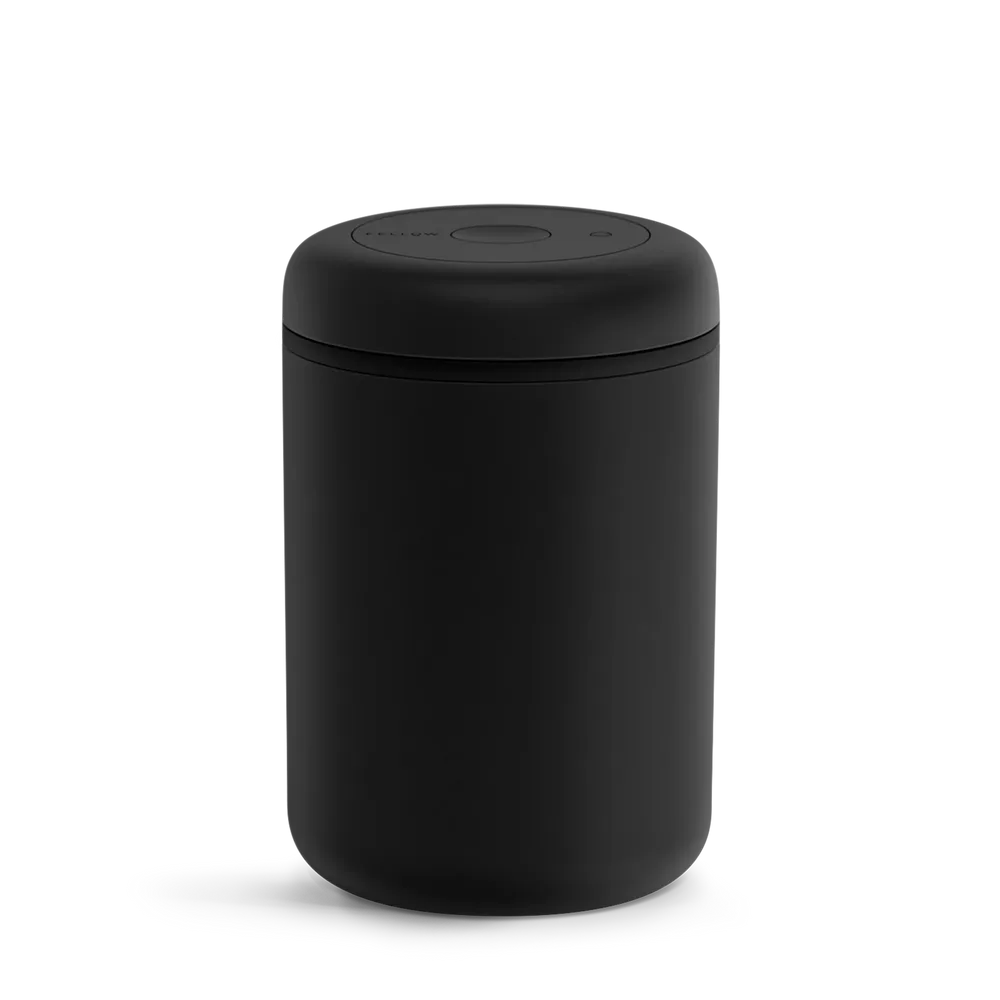
Buy the Airscape Classic (external site, opens in a new tab) for a bag you open every morning. Its inner lid presses down toward the beans, then closes with a flip of the handle. We prefer that straightforward routine to repeatedly pumping the Manual Atmos. Choose Fellow Atmos (external site, opens in a new tab) if you specifically want vacuum storage and will keep up with its twisting and care instructions.
This is a choice between two useful objects, rather than a cure for old coffee. A canister earns its counter space by making storage convenient; it cannot put the floral notes back into beans that have already lost them. And if your coffee comes in a good resealable bag, you may already own all the storage you need.
Autumn 2026 · US comparison · Researched October 5, 2026. Main contenders: Manual Atmos, 1.2 L matte-black stainless steel, and Airscape Classic, medium / 500 g matte black. Electric Atmos is a separate upgrade discussed below. Supply Coffee has not tested these canisters. Research source links are non-affiliate; shopping links are disclosed above.
The short answer
Choose the habit you will actually keep
Our everyday choice
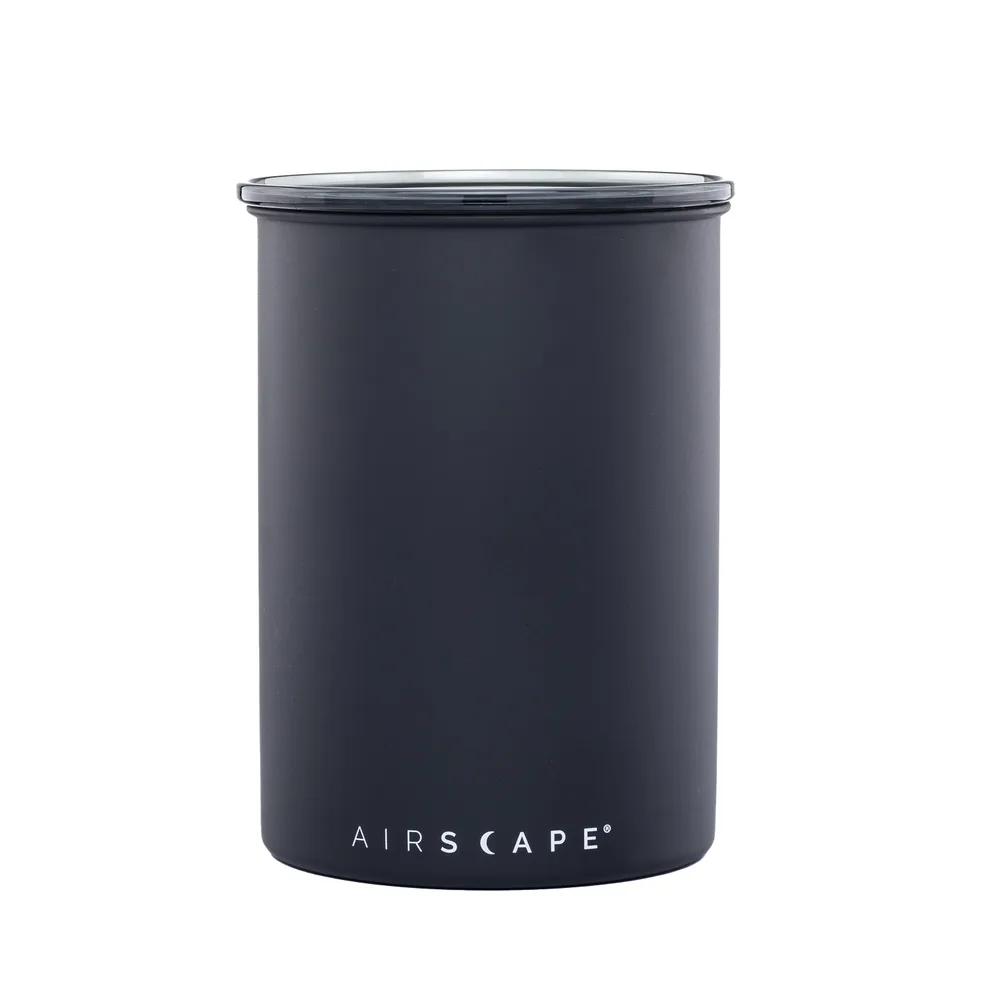
Airscape Classic
For someone who wants to scoop, seal and get on with breakfast. The plunger follows the shrinking supply of beans, and replacement inner lids are sold separately.
The compromise: it displaces air above the coffee; it does not pull a vacuum or remove all the air between beans. There is also an inner lid to set aside whenever you open it.
Medium matte black: $44 reference price, available direct when checked.
For the vacuum-minded
Fellow Manual Atmos
For someone who values an active pump and a visible vacuum indicator, and considers a little lid-twisting an acceptable part of the ritual. The opaque steel version suits a counter better than clear glass.
The compromise: repeated pumping and more particular lid care. A vacuum is something to maintain, rather than a lifetime promise of freshness.
1.2 L matte black: $39.95 reference price, unavailable direct when checked. Check an authorized retailer or another finish before ordering.
Airscape is not our budget winner: this size costs $4.05 more than the listed Manual Atmos. Our preference is about daily use. If you already own a functioning Atmos and like using it, this comparison is no reason to replace it.
Side by side
Vacuum versus less empty space
Think of the air above the coffee as unused seating. Airscape moves the ceiling down. Atmos pumps air out of the room. Neither creates a perfect, oxygen-free environment, and those different mechanisms do not automatically translate into a taste difference you will notice.
| What matters | Manual Atmos · 1.2 L steel | Airscape Classic · Medium steel |
|---|---|---|
| How it closes | Twist the lid back and forth to pump air out; watch the vacuum indicator. | Press the inner plunger toward the beans; fold the handle to close the vent, then fit the outer lid. |
| What it reduces | Air pressure inside the canister. | The air-filled space above the coffee, without a vacuum pump. |
| Listed bean capacity | Up to 16 oz of light/medium roast; a full pound of dark roast may not fit. | 500 g model; maker also describes capacity as approximately 1 lb. Treat this as approximate. |
| Between openings | Fellow advises re-twisting every 4–5 days to maintain the vacuum. | No recurring pumping step; reseal after each use. |
| Cleaning | Hand wash body; protect pump from water. Ground coffee is discouraged. | Hand wash; inner lid can be washed in warm soapy water and thoroughly dried. |
| Selected US price / direct availability | $39.95 (external site, opens in a new tab) / unavailable | $44 (external site, opens in a new tab) / available |
Sources: Fellow’s product listing, Atmos care guide, Airscape’s product listing and Planetary Design’s instructions. Availability is a dated observation, not a checkout guarantee.
Beyond the hiss
Which actually keeps coffee fresher?
There is a reasonable case for vacuum storage. There is much less evidence for a universal number of extra delicious days. Roast, starting age, how often you open the container and what you consider a good cup all complicate that calculation.
In James Hoffmann’s 2020 canister comparison, a coded blind cupping of the same batch of roughly six-week-old, relatively light espresso roast showed small differences, with vacuum containers doing somewhat better overall. He preferred Atmos among the tested containers. Airscape arrived after the experiment began and was excluded from the tasting; he liked its construction and operation, but this was not an Atmos-versus-Airscape flavor test.
Basic Barista’s July 2025 comparison offers more direct experience: the retailer reports better retention of brightness and complexity with Atmos in side-by-side tastings, while praising Airscape’s ease of use. It does not provide enough detail about coffee, duration, blinding or repetitions to establish a reliable size of advantage. It also sells the products. That is useful testimony, with limits.
We therefore give Atmos credit for its vacuum mechanism and the favorable outside evidence. We give Airscape the everyday recommendation because we judge its closing routine easier to sustain. We cannot promise equal flavor preservation, nor a fixed shelf-life extension for either. Fellow’s “Fresh 2x Longer” marketing is not our independently verified result.
Before the first cup
One lid asks for a twist. The other asks for somewhere to sit.
Atmos puts the clever part in a single lid. Release the vacuum, remove the lid, take your dose, replace it and pump again. The green indicator gives you a clear stopping point. The cost is the repeated back-and-forth motion, especially when you open the jar several times a day.
Food & Wine’s August 2026 guide chose Manual Atmos as its overall pick, but reported that pumping requires increasing effort and may be awkward for people with wrist problems. Its Airscape review covers the larger Kilo, so we do not transfer that model’s handling observations to the medium Classic.
Airscape has two lids. Lift the outer lid, raise the inner handle to open its vent and lift out the plunger. After dosing, press it back toward the beans, lower the handle and replace the top. The spare lid on the counter is the small domestic tax you pay for skipping the pump. Try the motion in a shop if grip or hand strength matters; “simpler” does not establish universal accessibility.
Owners in a February 2024 discussion describe both satisfaction with Atmos and frustration with seals or pumping; several prefer Airscape’s usability. Some describe successful replacement lids. These are self-selected anecdotes about older units, not comparative failure rates. They reinforce a practical question: will you enjoy using this every day?
A home for one bag
Buy for your beans, not your ambitions
For a 250 g or 12 oz bag, either featured size leaves room. For a full pound, the Atmos caveat matters: Fellow says dark roast may not fit the 1.2 L model. Bean capacity changes with the coffee, so litres and grams are not interchangeable promises.
Airscape’s medium is sold as 500 g / 1 lb, although those weights are not identical: a US pound is about 454 g. We would treat the listing as approximate bag capacity rather than a measured 500 g guarantee for every roast. Its descending lid is particularly appealing as the bag dwindles.
Keep the roast label with the jar—or note the coffee and roast date on it. Do not top up old beans with a new bag indefinitely. Finish one batch, clean as needed, then refill. An immaculate black cylinder is less useful when nobody remembers what is inside.
For a slow-drinking household, smaller purchases may solve more than a larger canister. For a bag you finish promptly, a well-made opaque resealable bag remains a sensible option; Hoffmann also reached that qualified conclusion. You need not buy a $40 object to earn the right to enjoy good coffee.
After the unboxing
Cleaning and spare parts belong in the buying decision
Follow Fellow’s care instructions: keep liquid out of the Atmos lid, wipe it with a damp non-abrasive sponge, and wash removable gasket/filter parts separately when needed. Neither lid nor body is dishwasher safe. Ground coffee and fine powders can clog the valve; Fellow warns that using them may void the warranty.
Planetary Design specifies warm soapy water for Airscape’s inner lid, then moving it inside the canister with the handle open to clear moisture from the vent. Air-dry it open for 8–10 hours. Let either container dry fully before adding beans. Simplicity does not exempt a lid from washing.
| Ownership question | Fellow Manual Atmos | Airscape Classic |
|---|---|---|
| Warranty | One year for non-electric coffee storage. Electric Atmos is listed separately at two years. | Five years for stainless steel products; two years for included lids and plunger assemblies. Keep proof of purchase. |
| Change-of-mind return | 30 days from purchase, original condition. Listed US non-electric return shipping: $5; exceptions apply. | 30 days from purchase, unused. Confirm return freight before ordering. |
| Replaceable lid | Manual and Electric lids are offered separately; check selected type, availability and compatibility. | Classic steel 4-inch / 7-inch inner lid: $9 before shipping. Glass, ceramic and Kilo parts are distinct. |
Those terms help explain our preference for the Classic as an everyday object, but they are published policies, not our experience making claims. Compare the final delivered cost: a single canister may fall below a store’s free-shipping threshold. Do not add something unwanted merely to “save” on postage.
The button option
Does Electric Atmos change the answer?
It changes the interaction. The 1.2 L matte-black Electric Atmos was $79.95 and available direct when checked. A button starts sealing, and Fellow describes automatic vacuum maintenance. Its separate electric lid can also fit existing Atmos bodies, so an owner need not automatically buy another entire canister.
For someone who likes vacuum storage but dislikes manual pumping, that is a relevant alternative. It adds charging and an electronic lid to a job Airscape handles mechanically. Fellow currently specifies roughly three months of daily use per charge; that is a manufacturer estimate, not our battery test.
We would spend the extra money for the easier interaction if it solves a real difficulty. We would not spend it on the assumption that a motor proves better-tasting coffee than a properly maintained Manual Atmos. This article’s main price comparison remains manual versus Classic.
Before you decide
A few useful questions
Is Airscape a vacuum canister?
No. Its inner lid displaces air above the contents and seals. Atmos actively pumps air out. “Airless” branding should not be read as eliminating every pocket of oxygen among beans.
Can I store ground coffee?
Choose Airscape between these two for ground coffee: its maker permits dry goods including fine ingredients, while Fellow explicitly discourages ground coffee in Atmos. Use a clean, dry container and buy amounts you will use promptly. A jar cannot undo the effects of grinding.
Does a disappearing Atmos indicator mean the seal failed?
Not necessarily. Hoffmann observed freshly roasted beans releasing gas and changing the indicator without establishing outside-air ingress. Follow Fellow’s pumping and cleaning guidance; ask support about persistent trouble rather than assuming every pressure change is a broken gasket.
Should I choose glass or stainless steel?
For a countertop, we prefer opaque steel to keep light off the beans and avoid a breakable body. Glass is attractive for seeing what remains, but keep it in a dark cupboard. Our featured Atmos photograph and price refer to steel.
Will either keep coffee fresh for months?
We have not established that promise. These are our options for an open supply of coffee in regular use. Match the amount you buy to how quickly you drink it; do not confuse a closed lid with a paused roast date.
Research & limits
How we reached this recommendation
We checked manufacturer specifications, exact US variant prices and availability, care instructions, replacement parts and support policies on October 5, 2026. We read original reviews alongside official instructions and owner accounts, keeping the model and size behind each observation explicit. Mechanism and capacity are maker facts; the everyday verdict is Supply Coffee’s judgment.
Our outside evidence includes Hoffmann’s 2020 blind cupping and handling comparison, Basic Barista’s 2025 account, Food & Wine’s guide updated August 25, 2026, and older owner discussions. Hoffmann describes Patreon funding and supplies shopping links; Basic Barista sells the contenders; Food & Wine discloses compensation from shopping links. None is a Supply Coffee test.
We have no controlled current-retail-unit head-to-head tasting, oxygen measurements, representative durability survey or hands-on accessibility assessment. Airscape was absent from Hoffmann’s tasting; Basic Barista’s tasting protocol is under-described; Food & Wine’s Airscape is a different size. A repeatable direct tasting across coffees and realistic daily opening would be the most valuable addition. Until then, the honest decision rests on a credible mechanism, daily effort and ownership terms.
Where to buy
Shop the featured products
Check the seller’s current price, configuration and availability before buying.
Fellow Manual Atmos
Airscape Classic